
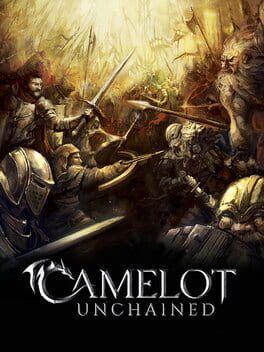

Camelot Unchained update 0.53 adds the first pass of King’s Systems, giving losing realms new keep-based buffs while improving the minimap, repairs, stealth balance, and weekend RvR testing flow.
Image: IGDB
Store links: Camelot Unchained on Steam
Camelot Unchained’s newest test build puts losing realms under the microscope
Camelot Unchained update 0.53 is live, and its most important addition is the first pass of King’s Systems, a realm-balance framework that City State Entertainment says is designed to help factions that are “on the back foot” in realm-versus-realm fights. The practical tension is clear: the studio is trying to give losing sides enough help to keep fighting without making keep control feel meaningless for the realms that earned it.
According to the official 0.53 patch notes posted on November 13, realms now receive faction-wide boons based on how many Keeps they control. A realm holding two or more Keeps gets no benefit. A realm reduced to a single Keep receives the Last Defender boon to help secure it. A realm with no Keeps gains an Underdog boon when attacking any Keep. MMOHuts also reports the same structure, describing the update as the first pass of the game’s King’s Systems and noting that the developers plan to share more later this month.
That lack of full detail is important. The patch notes confirm the conditions that activate the buffs, but they do not list exact numbers, durations, scaling rules, or whether these effects change by population, time, or battlefield state. For now, Camelot Unchained underdog buffs should be read as an early balance tool in live testing rather than a finished competitive ruleset.
The underdog system targets a classic RvR failure point: collapse after losing keeps
In a keep-based RvR MMO, the danger is rarely limited to the first lost objective. Once a realm falls behind, the weaker side can lose map presence, rally points, morale, and the ability to contest the next siege. Camelot Unchained update 0.53 addresses that snowball problem directly by tying aid to Keep control, which is one of the clearest possible measurements of strategic position.
The design is deliberately tiered. A realm with one Keep is treated as endangered but still defending territory, so it receives Last Defender. A realm with zero Keeps is treated as fully displaced and receives the stronger Underdog boon only when attacking a Keep. The distinction matters because the no-Keep bonus, as described by the developer, is aimed at counterattack behavior rather than passive survival. It encourages the losing realm to return to siege play instead of simply existing as a weakened faction with no strategic lever.
From a strategy standpoint, that is the smarter version of comeback support. A flat always-on buff for the losing realm can distort open-field fights and reward sandbagging. A keep-attack condition narrows the intervention to the activity Camelot Unchained most needs to test: whether outnumbered or displaced factions can form a credible assault and re-enter the territorial game. The official notes say City State believes the change should address concerns over faction imbalance and make fights more interesting when one side is outnumbered and trying to strike back. That is the confirmed developer intent, while the actual competitive impact will depend on numbers the studio has not published in the provided notes.
Repairs and anti-repair pressure make the keep game less binary
The King’s Systems arrive alongside siege-support changes that could shape how those buffs are felt during play. Update 0.53 allows gates to be repaired with craftable Repair Kits, giving defenders a clearer logistical tool once a structure is damaged. At the same time, the patch adds a status effect to damaged walls and gates that prevents repairs while they are actively under attack.
Those two rules pull in opposite but useful directions. Repair Kits give defenders a reason to prepare and invest in recovery. The active-attack lockout prevents defenders from erasing damage while the enemy is still applying pressure. In a keep fight, that combination should make timing more legible: attackers need to maintain pressure to stop repairs, while defenders need to create breathing room before reconstruction becomes possible.
This is where the underdog layer becomes more interesting. If a zero-Keep realm receives its Underdog boon while attacking any Keep, and repairs cannot occur under active attack, then the comeback faction has a clearer tactical job: get to the wall or gate, sustain damage long enough to deny repairs, and force the owning realm to respond. The sources do not say how strong the Underdog boon is, so it would be premature to claim that 0.53 solves faction imbalance. But the surrounding rules show the patch is not treating underdog support as a menu buff in isolation. It is being tested inside the keep-damage, repair, and attack-state loop.
Minimap tweaks reduce friction in a game built around battlefield orientation
The Camelot Unchained minimap tweaks are smaller than the King’s Systems on paper, but they address a different kind of RvR problem: players need to understand where they are, when they are moving, and how to coordinate without fighting the interface. The official patch notes confirm that update 0.53 adds a day and nighttime clock to the minimap and adds a compass to the mini map. MMOHuts also identifies those UI additions as part of the update’s practical changes.
A compass sounds basic until you place it inside a realm war. Directional calls, regrouping, scouting, flanking, and retreat paths all rely on shared orientation. A clock is similarly useful if day and night visibility, player schedules, or timed group movement matter during tests. The patch notes do not claim new day-night mechanics, so the safest reading is that the clock improves information clarity rather than adding a new strategic system.
Update 0.53 also changes leveling flow. Players can now select several abilities to unlock at once when leveling a class, then confirm the selection or reset it before use. That matters for weekend build testing because friction in character setup can reduce the quality of battlefield data. If testers can make several ability choices in one pass and correct mistakes before committing, more time can go into keep assaults, defense, stealth play, repairs, and group coordination.
Stealth and assassin changes narrow long-range pressure while improving movement
The patch’s class balance changes are concentrated but relevant to RvR testing. Under general class changes, the official notes say Stealth now imposes a maximum range of 45 meters on all enemy-targeted abilities, while the movement speed reduction from Stealth has been removed. For Assassins, Shadow Walker’s Shadow Step range has been reduced from 60 meters to 45 meters.
That is a meaningful tradeoff. Stealthed characters lose longer enemy-targeted reach, and Shadow Walker specifically loses 15 meters of Shadow Step range. In exchange, stealth no longer carries a movement speed penalty. The likely design pressure is to keep stealth mobile without letting it project too much threat from too far away, although the developer does not spell out that reasoning in the notes.
In siege terms, this affects scouting, ambushes, backline disruption, and pursuit. A 45-meter cap on enemy-targeted abilities gives opposing players a clearer danger radius than a 60-meter Shadow Step. Removing the movement penalty, however, may keep stealth classes relevant in repositioning and approach play. Whether that becomes healthier depends on encounter density and detection tools not detailed in the source material. The important confirmed point is that 0.53 is tuning mobility and engagement range at the same time it is tuning realm-scale comeback mechanics.
This weekend build fits a broader push to make RvR testing more coherent
The timing of update 0.53 matters because it is framed as a weekend build for a game still being presented through Early Access update material. The linked Camelot Unchained YouTube listing is titled “Early Access Update 0.53,” and the official patch notes say the team remains at work on CU while promising more information later this month on Realm Progression and other Autumn Roadmap items.
That makes this patch feel less like a content drop and more like a systems test. Massively Overpowered recently reported, in an October 31 item, that Camelot Unchained had introduced breakable walls, class balance, and a friend list in its latest build. Update 0.53 now adds repair rules, underdog boons, minimap orientation tools, leveling quality-of-life changes, stealth tuning, trap marker visual effects, updated logging node models, and a revised Prospecting point of interest location in Camelot Hills. Taken together, the confirmed changes point toward one immediate priority: making battles over keeps easier to initiate, read, sustain, and evaluate.
The unanswered questions are the ones competitive players will care about most. The patch notes do not reveal the numerical strength of Last Defender or Underdog, whether the boons scale with population imbalance, how long they persist, or how they interact with future Realm Progression. The developer explicitly says this is only one small part of King’s Systems, with more to discuss later this month. For players following the Camelot Unchained RvR MMO, the practical advice is to treat the weekend build as an early test of comeback logic rather than a final verdict on faction balance.
The signal to watch is whether losing realms actually counterattack
The success metric for Camelot Unchained update 0.53 is not simply whether losing factions feel stronger. It is whether they re-enter the keep war. The confirmed structure of the system rewards a realm with no Keeps when it attacks a Keep, which means the best evidence will come from battlefield behavior: Do wiped-out realms regroup faster? Do defenders of a single remaining Keep last long enough to create a meaningful fight? Do dominant realms still feel rewarded for holding multiple Keeps even though they receive no boon?
That is the core strategic test. If Last Defender is too weak, a one-Keep realm may still collapse. If Underdog is too strong, ownership can start to feel temporary or artificial. If the repair lockout makes sustained pressure decisive, organized attackers may benefit more than casual groups. If the minimap compass and clock reduce coordination friction, the same buff values may produce better fights simply because players can navigate and call targets more cleanly.
City State’s own wording frames 0.53 as an early piece of a larger system, and that is the fairest way to read it. The update gives Camelot Unchained a clearer comeback mechanism, better siege repair boundaries, and more usable battlefield UI. It does not yet answer whether King’s Systems can carry long-term realm balance. That answer will require the follow-up details on Realm Progression and more live RvR testing than one weekend build can provide.