

After a decade of delays and controversy, Camelot Unchained has quietly appeared on Steam in Early Access form. We break down what the listing actually signals, how the community is reacting after years of missed milestones, and whether this old‑new RvR MMO still has a viable audience in 2026.
Camelot Unchained’s name has been floating around MMORPG circles for so long that it often felt more myth than game. Kickstarted back in 2013 as a spiritual successor to Dark Age of Camelot, the RvR‑focused MMO spent years in prototype limbo, system rebuilds, and controversy over side projects.
Now, in 2026, Camelot Unchained has quietly appeared on Steam with an Early Access page and a live but tightly gated early access phase for existing backers. It is the most concrete, public‑facing step the project has taken in years. It is also arriving in front of a community that has grown deeply skeptical.
What the Steam Early Access page actually says
The new Steam page is simple but revealing. It confirms that Camelot Unchained is coming to Steam Early Access, sets broad expectations for the state of the game, and even gives a target for leaving Early Access around December 2026, if development stays on track.
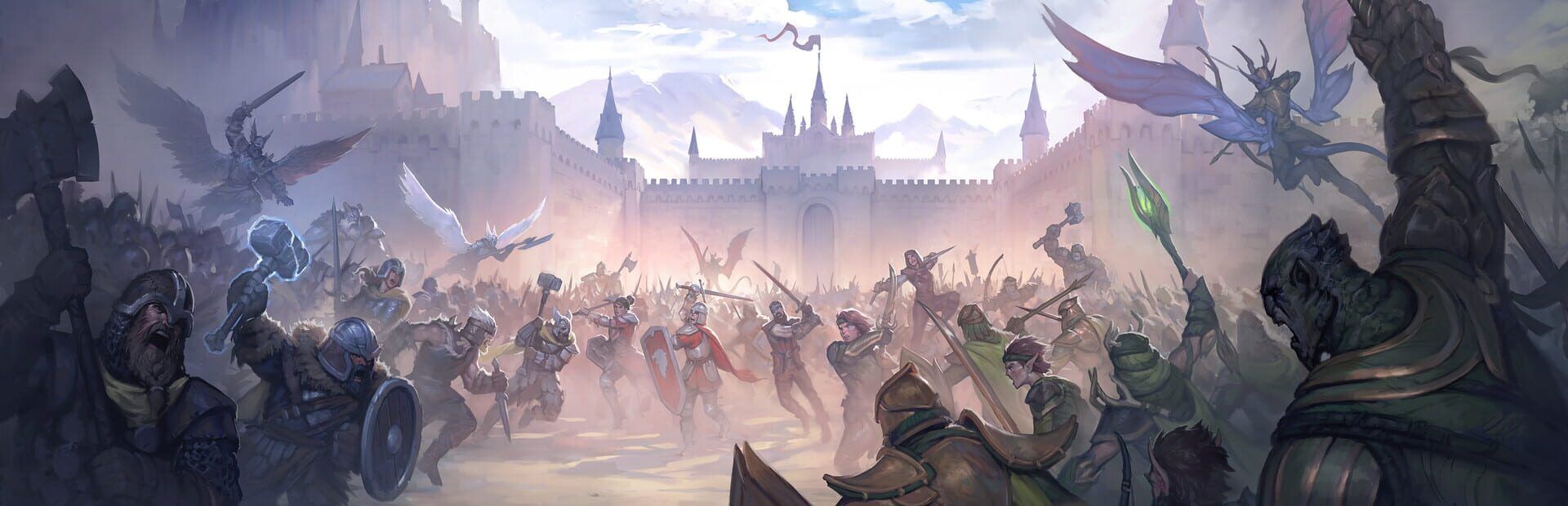
The listing describes Camelot Unchained as a large‑scale realm‑versus‑realm MMORPG built around siege warfare, massive PvP battles, and player‑driven crafting. That pitch is familiar to anyone who remembers the original Kickstarter, but the Steam copy doubles down on the idea that Early Access will be used to tune large‑scale combat, performance, and balance using real player data.
Missing from the page are the details that usually arrive with a high‑profile MMO debut. There is no firm public launch date for Steam access, no pricing, and no founder packs on sale yet. Players can wishlist the game, but not buy in. City State Entertainment appears to be treating the page as a stake in the ground rather than an outright launch announcement.
For a project with this history, that still matters. A Steam footprint gives curious onlookers a single, visible place to track development instead of digging through years of blog posts and newsletters.
A long road to “Early Access”
To understand why this relatively small step is being dissected, you have to look at the project’s timeline.
Camelot Unchained was funded via Kickstarter in 2013 with a pitch built around three factions, massive RvR warfare, and an engine capable of putting thousands of players and bots in the same battle. Early backer communication originally suggested a much earlier launch target in the mid‑2010s.
The reality was a long string of technical overhauls, especially around the game’s custom engine and ability system. Public tests did happen over the years and tech demos showed off big battle counts, but each new milestone seemed to come with another delay. A previously promised Early Access window in 2025 slipped into 2026, with the formal early access phase for existing backers only beginning in late March 2026.
Even that early access is not yet a typical Steam Early Access launch. The build is limited to existing backers, and entry for new players is closed while the team focuses on stability and core gameplay loops. Recent roadmaps from the studio emphasize continued closed testing, performance work, and incremental feature additions before letting the wider Steam audience in.
In this context, the Steam listing reads as the latest step in a cautious rollout. It signals that the team is thinking about a broader audience, but avoids committing to a date until they are more confident in the build.
The Devout archetype and current design focus
Alongside the Steam page’s appearance, recent updates introduced the Devout archetype, a support‑oriented role that helps flesh out the game’s group composition. The Devout leans into healing, defenses, and battlefield utility, reinforcing the idea that Camelot Unchained wants parties to function as coordinated military units rather than loose collections of solo heroes.
The broader roadmap points to a game still in the middle of building out its fundamentals instead of polishing for launch. Work continues on class kits, siege systems, crafting loops, performance under load, and basic progression. While some large‑scale testing is happening, with thousands of humans and bots in controlled scenarios, the gameplay loop is not yet at a feature‑complete “theme park” state.
This matters for expectations on Steam. The Early Access description paints Camelot Unchained as a work in progress focused on system depth, scale, and stability over content breadth. Players looking for a modern, polished theme park MMO should not expect that at initial Steam availability. Those who were originally attracted to the idea of raw, large‑scale RvR sandboxes may find the current focus more promising.
Community skepticism after a decade of waiting
If the Steam page is meant to be a hype moment, it is running up against a community that has seen delay after delay. In comment sections and MMO forums, reactions to the listing and to recent dev posts often split into three broad camps: cautiously hopeful backers, jaded veterans who feel the project squandered its goodwill, and newcomers who are simply curious about another RvR entry.
Backers, especially those who have followed every update, generally acknowledge that the game feels more real now than it has in years. A playable early access build, regular test events, and a concrete Steam presence are all major improvements over the project’s lowest communication points. For them, the Steam page is a kind of validation that the MMO they paid for is closer to existing.
Long‑time critics look at the same developments and see a pattern that is hard to forgive. Camelot Unchained is arriving more than a decade after funding, in an MMO market that has largely moved on. The repeated slipping of milestones has conditioned many observers to treat new dates as soft targets. Some are also wary of the studio’s prior attempt to spin up a separate game project while Camelot Unchained was still unfinished, which damaged trust with parts of the community.
Then there are the MMO players who never backed the game and are discovering it through Steam for the first time. For them, the long development history is a curiosity rather than a personal grievance. Their question is simpler: what does Camelot Unchained actually play like today, and is it worth caring about when so many other PvP options exist?
Does Camelot Unchained still have a viable audience?
The Early Access listing forces a harder question. After all this time, who is Camelot Unchained really for, and can it still carve out a niche in 2026’s crowded online space?
On one hand, the market has grown more hostile to long‑running crowdfunded MMOs. High profile projects that overpromised and underdelivered have made players wary of buying into years‑long development stories. Live service games, battle royales, and more modern MMOs with aggressive content pipelines dominate attention. In this environment, a low‑profile, PvP‑heavy MMO needs a very clear identity.
Camelot Unchained does at least have that. It is unabashedly targeted at players who fondly remember Dark Age of Camelot’s realm‑vs‑realm sieges, or who feel existing PvP MMOs have become too instanced and too small in scale. Its custom engine and stress‑test history are aimed squarely at one selling point: enormous, persistent battlefields with deep class interaction and crafting support behind the front lines.
Steam could be the best remaining way to find that niche audience. The platform’s discovery tools, wishlists, and reviews can surface a game to exactly the kind of players who want experimental large‑scale PvP if the experience is solid enough to generate word of mouth. Early Access, meanwhile, lets the team frame the game honestly as work in progress while they gather data and iterate.
The catch is that Early Access also makes it easy for players to walk away. If the first wave of Steam users encounters instability, thin content, or confusing onboarding, negative reviews can harden community sentiment around the project just when it needs a clean slate.
What the surprise listing signals about the project’s health
For all the uncertainty, the very existence of a functioning Steam page, a running early access build for backers, and an active roadmap suggests that Camelot Unchained is more alive than its most pessimistic observers assumed.
The studio is running scheduled and ad hoc tests, outlining goals toward a projected end‑of‑2026 Early Access exit, and building out core archetypes like the Devout. That does not erase the past decade, but it does point to a project that is still actively staffed and moving forward instead of quietly fading away.
At the same time, the quiet nature of the Steam debut hints at a team that knows it must prove itself through the game rather than through flashy announcements. There was no giant trailer drop or marketing beat tied to the listing, only a silent appearance followed by coverage from MMO‑focused sites and community sleuths.
In practical terms, the most likely short‑term future looks like this. Closed early access continues to iterate on core combat, sieges, and performance. At some point, the Steam page flips from wishlist‑only to an actual buy button, probably with a carefully framed early access launch that leans into transparency about scope and remaining work.
Should you care about Camelot Unchained in 2026?
That depends on what you want from an MMO.
If you are a backer who has stuck with the project, the Steam Early Access page is the clearest sign in years that the studio intends to deliver something shippable. It is not a guarantee, but it turns years of promises into a concrete storefront presence and a public development window.
If you are a lapsed fan or former DAOC player who wrote Camelot Unchained off as vaporware, the surprise listing and ongoing tests may be a reason to take another look, preferably once the game opens to new players and there are unbiased hands‑on impressions.
If you are simply browsing Steam for your next PvP MMO, Camelot Unchained is not yet an impulse buy. You cannot jump in today, and even when you can, it will be a rough‑edged early access title with a narrow, siege‑centric focus.
The Steam page, then, is less a finish line and more a line in the sand. It signals that after years of delays, missteps, and quiet periods, Camelot Unchained is finally preparing to stand alongside other MMOs on the most visible PC storefront in the world. Whether anyone still wants to march into battle for its three realms will depend on how well the team can turn this slow, careful reintroduction into a game that finally feels worthy of that decade‑long wait.