
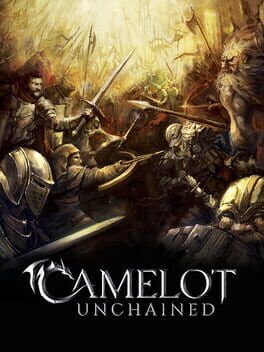

Camelot Unchained’s late summer and fall roadmap refocuses the Early Access MMO on high-level RvR, siege mechanics, combat cleanup, and level cap testing. Here is what backers can realistically expect next.
Image: IGDB
Store links: Camelot Unchained on Steam
September’s clearest test is siege, but the larger bet is RvR progression
Camelot Unchained’s fall plan has one especially concrete milestone: siege weapons are scheduled to return to internal testing in September, beginning with one or two weapons and siegeable doors, according to MMOHuts’ report on City State Entertainment’s September 1 production roundup. If that internal pass goes well, the studio plans to move the feature into player testing later. Additional siege weapons and destructible wall sections are described as later fall goals rather than immediate guarantees.
That staged approach defines the whole Camelot Unchained roadmap. City State Entertainment is moving away from its recent emphasis on the new-player experience and back toward the core RvR loop, MMOHuts reports, with the studio’s stated near-term aim being to give players more reasons to fight over contested territory. MMORPG.com similarly describes the late summer and fall roadmap as covering progression updates, siege equipment, and more, while Aroged frames the coming months around RvR-format PvP, combat improvements, and expanded character progression.
The tension is obvious for longtime backers: the roadmap points toward the high-level war game Camelot Unchained has long been built around, but the deliverables described in the source material are incremental, test-first systems. Siege will not arrive as a finished fortress warfare package in one drop. Level cap increases are planned, but the current cap remains 10. Combat fixes are coming “very soon,” according to MMOHuts’ summary, but the roadmap still depends on iteration, weekend testing, and backer feedback.
The level cap plan pushes players out of safe territory
The current character level cap is 10, and City State Entertainment’s roadmap positions future progression beyond that point as a pressure system for RvR. MMOHuts reports that higher levels are planned to require activity outside home realms, pushing players into conquest rather than letting them continue developing entirely from protected territory. Aroged’s account matches that reading, saying that after level 10 players will have to leave the safety of their kingdom and participate in disputed-territory conquest to keep developing.
That is the most important strategic idea in the Camelot Unchained fall update. A raised cap, by itself, would be a standard Early Access progression extension. Tying that cap to activity beyond home realms changes the map economy. If the implementation follows the roadmap’s stated direction, contested areas become advancement routes, not optional PvP playgrounds. That gives the game a clearer incentive structure: character power, specialization, and territory pressure start feeding each other.
The sources do not give a date for the level cap increase, nor do they specify exactly how much higher the cap will go. They do state the intended reward shape. Higher levels are planned to bring bonuses and customization points, giving characters more ways to specialize in and out of combat. For backers, that means the next meaningful progression tests should be judged less by the number attached to the cap and more by whether realm conflict becomes the efficient, expected path forward.
Combat cleanup has to carry the RvR plan before the war gets bigger
The roadmap’s RvR ambitions depend on basic combat feel holding up under pressure. MMOHuts reports that combat improvements are due “very soon,” including a better combat log, more responsive movement, and improved ability queue timing. Aroged also lists a more detailed combat log, responsive character controls, and an improved ability queue system among the upcoming changes, describing them as responses to issues players have raised since Early Access began.
Those are not glamorous systems, but they are foundational for large-scale realm fighting. A clearer combat log gives testers and developers a better way to understand damage, healing, crowd control, mitigation, and timing problems. More responsive movement matters because RvR combat magnifies small control delays. Ability queue timing is especially important in a PvP game where players build muscle memory around sequence, counterplay, and burst windows.
The practical expectation should be modest but significant. Backers should not read “combat improvements” as a full balance pass across every class and battlefield role. The reported items sound closer to instrumentation and input reliability, the sort of work that makes later balance data more trustworthy. In strategy terms, the studio appears to be trying to stabilize the combat layer before asking players to test deeper objectives, siege defenses, and higher-level specialization.
Siege is being rebuilt in pieces, which explains the cautious rollout
The fall roadmap’s siege section is narrow by design. MMOHuts reports that City State Entertainment is starting with internal tests for a “proper siege,” centered on one or two siege weapons and siegeable doors. If those tests succeed, regular players may be included. Later in the fall, the plan expands to destructible wall sections and more siege weapons. Aroged reports the same sequence: September internal testing first, player participation later, then destructible wall elements and additional siege tools in future iterations.
The most useful technical detail is what the studio is not doing. MMOHuts reports that older siege functionality from C.U.B.E. is not being reused, and that the current Camelot Unchained siege tech is being built from scratch. Aroged likewise says the previous object-destruction technology from C.U.B.E. is not being used for the new siege system.
That matters for expectations because rebuilding siege technology reduces the chance of a polished, all-at-once fall release. It also gives the studio a cleaner path to test how doors, wall sections, siege weapons, performance, and server behavior interact under controlled conditions. For players, the first useful question will not be whether siege “feels complete.” It will be whether the earliest door and weapon tests create reliable attack-and-defense loops without breaking the battlefield or exposing obvious scaling problems.
Crafting, realm control, classes, and world objectives fill out the autumn frame
The Camelot Unchained roadmap is not limited to siege and levels. MMOHuts reports that crafting and realm control are being positioned as larger parts of the RvR loop, while the King’s System, expanded world objectives, random events, and more classes remain on the roadmap. Aroged adds several fall targets from the published roadmap, including a new archetype for the Scout class, crafting skill specializations, improvements to item crafting quality, a friends and player ban system, sound updates, a new siege system, and additional kingdom levels.
Those systems are important because high-level RvR needs reasons for different player types to participate. A war game built only around direct combat risks flattening into zerg movement and respawn attrition. Crafting specialization and item quality improvements, if tied cleanly to realm control, can create supply-side pressure. World objectives and random events can move fights around the map. Additional class archetypes can alter scouting, target selection, and group composition once players have enough incentive to leave home territory.
The sources do not describe final numbers, tuning rules, recipes, class ability kits, or exact timing for these items. They should be treated as roadmap targets rather than locked patch notes. The valuable signal is the clustering. City State Entertainment is trying to reconnect multiple progression channels around contested territory, which is the correct strategic shape for Camelot Unchained RvR. The unresolved issue is whether those channels arrive close enough together to create an actual loop rather than isolated test features.
Backers should expect work-in-progress builds, not a fall relaunch
Camelot Unchained remains in Early Access, and MMOHuts reports that the studio is framing rough edges as part of its current release approach. Instead of holding major features for larger, less frequent drops, City State Entertainment plans to keep pushing work-in-progress builds and collecting feedback from backers and Steam players during weekend testing. The Steam Community listing supplied in the source material confirms the game’s Steam community presence, while MMOHuts specifically refers to Steam players as part of the feedback pool.
That makes the practical guidance fairly clear. If you are a backer waiting for Camelot Unchained to resemble a coherent territory war, the fall roadmap is a better signal than a finished destination. Watch September siege testing first, because it is the most concrete dated item. Then watch whether combat responsiveness and ability queue changes land before broader player siege tests. After that, the level cap and contested-territory progression plan become the key proof point for whether the RvR economy can create repeatable conflict.
Players hoping for a fully rounded MMO should wait. The roadmap itself, as reported by MMOHuts, MMORPG.com, and Aroged, describes phased testing across core systems rather than a finished launch push. Players who are comfortable testing unfinished mechanics may have more to evaluate this fall: doors that can be attacked, early siege weapons, combat readability improvements, and the first signs of post-10 progression pressure. The most optimistic reading is that Camelot Unchained is refocusing on the right battlefield. The realistic reading is that backers are about to test the scaffolding of that battlefield, one system at a time.