
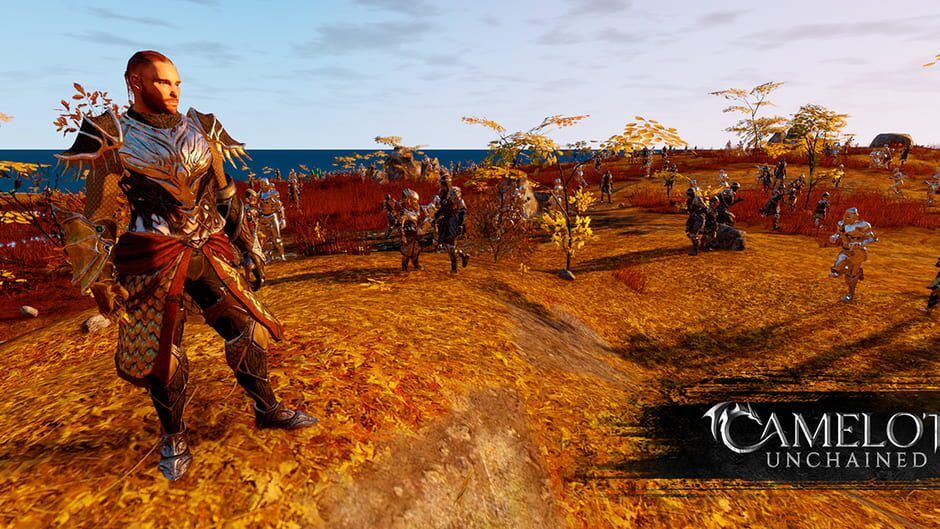

Camelot Unchained has officially missed its 2025 Early Access target and is pivoting into aggressive “break the build” testing. Here’s where the MMO really stands now, what that testing phase involves, and what its long road says about crowdfunded realm-vs-realm projects going forward.
Camelot Unchained has finally said the quiet part out loud: Early Access is not happening in 2025.
After hinting throughout the fall that late 2025 was the new target, Unchained Entertainment’s year-end post on December 26 quietly confirmed that the window is gone. Instead of dates, the studio is talking about process. The game has been taken “down to the studs,” regular backer tests have resumed, and January is being framed as a “break the build” month that will decide how fast Camelot Unchained can realistically move toward any kind of launch.
For a crowdfunded MMO that began life on Kickstarter back in 2013, this is another delay in a very long story. The difference this time is that the team is finally putting hard focus on large-scale technical proof rather than aspirational dates.
Where Camelot Unchained Stands Right Now
In its latest updates, the studio makes three things clear: the 2025 Early Access window is dead, the current build is the product of a major rebuild, and the near future is all about structured testing instead of new promises.
The developers describe having taken the game “down to the studs,” a phrase that signals more than a few refactors. Core systems underpinning Camelot Unchained’s identity as a realm vs realm MMO have been rewritten or heavily overhauled. The engine that powers its massive battles, the networking stack that keeps players in sync, and combat systems that have to scale under load are all under the microscope.
Alongside that internal work, backer testing has slowly come back to life. Internal Testers have been back in regularly, with access widening in stages to higher-tier Kickstarter backers. These tests are not yet a traditional beta loop. Instead, they are about validating that the new foundations can handle what the game has always promised: huge, persistent battles across a three-faction war.
The studio has tried to visually back up its claims through fresh trailers showing large-scale fights outside Niefelheim, populated by masses of ARC, or Autonomous Remote Clients. These simulated players are used to flood the battlefield and stress-test performance while letting the team show off something that looks like an actual siege.
Still, despite that visible progress, the update pointedly avoids replacing the lost 2025 target. Early Access is now described as something that will happen “soon thereafter” once the upcoming test cycle is completed successfully. How soon is left deliberately vague.
What “Break The Build” Testing Actually Means
The next concrete milestone is January’s “break the build” phase. It is not a marketing slogan. It is a development philosophy that fits where Camelot Unchained is at: a rebuilt MMO that needs to find its limits fast.
In practical terms, “break the build” is a series of focused, high-intensity test events that push the game to failure on purpose. The studio has laid out a general order of operations. First, Internal Testers get the build in a controlled environment so the developers can chase obvious crashes, logic errors, and server faults without a large, noisy player population. Once that internal round stabilizes, access widens to all eligible backers.
Those larger tests are where the phrase “break the build” really earns its name. The goal is not a smooth play session; it is to find the exact conditions where the current technical stack falls over. That can mean deliberately packing hundreds or thousands of clients into a single combat space, forcing siege weapons, spells, and physics objects to interact, and watching for cascading failures in the engine or database layer.
For an RvR MMO like Camelot Unchained, these tests matter more than they would for a lighter instanced game. Large open battles sit at the center of the design. If the build cannot handle synchronized abilities, pathing, and projectile calculations across a giant battlefield, it does not matter how polished the UI or lore might be. The January push is about proving that the new “down to the studs” architecture can survive the kind of punishment its own marketing has been promising for over a decade.
When the studio talks about opening the game more often after these tests, the implication is that successful breakage and repair will let them move from sporadic stress events toward more continuous testing. That, in turn, would finally resemble a conventional early access cycle, even if the label itself is still to come.
A Long-Running MMO At A Crossroads
Camelot Unchained is not a typical late MMO project. Its timeline is unusually long even by crowdfunded standards.
The game began as a nostalgia-infused successor to Dark Age of Camelot, led by DAoC designer Mark Jacobs and funded in large part by a 2013 Kickstarter campaign. It promised tri-realm warfare, full-scale sieges, and a deep crafting and building system intertwined with the war effort. Over the years, though, timelines have repeatedly slipped, systems have been rewritten, and communication missteps have eroded trust among some of its earliest backers.
The most recent missed window carries extra weight because it came after a public recommitment. In 2025, the studio started talking more loudly again, floated a late 2025 Early Access aim, and pushed out videos to re-engage lapsed followers. The December admission that this goal is not being met lands differently when it comes after that brief revival of confidence.
At the same time, the current trajectory suggests a more sober internal assessment than in previous years. Instead of offering yet another new window, the team is centering the conversation on test plans, ARC-driven stress scenarios, and the idea that only battle-proven code should gate Early Access decisions. For a project this old, honesty about technical limits might be the only viable path back to credibility.
What This Says About RvR Crowdfunding In 2025 And Beyond
Camelot Unchained does not exist in isolation. It is part of a generation of crowdfunded, PvP-forward MMOs that rode early-2010s nostalgia and frustration with theme park design into multimillion dollar Kickstarter campaigns. A decade later, that entire cohort is being judged not on ideas but on execution.
For realm vs realm projects in particular, Camelot Unchained’s current situation highlights several hard lessons.
First, RvR at the scale fans remember from the early 2000s is technically brutal. Modern players expect higher fidelity visuals, smoother combat responsiveness, and more complex character builds. Stitching all of that together in a single shared battlefield pushes server and client tech to its limits. Camelot Unchained’s need to tear systems down and rebuild them so late in development shows how easy it is for even veteran teams to underestimate the challenge.
Second, crowdfunded budgets and timelines are often mismatched with this kind of ambition. Backers buy into a dream of siege warfare and realm pride, but the funding rarely matches the long-term burn rate of building custom engines, networking tech, and tools. When delays stack up, teams have to choose between cutting scope and attempting the same grand design on thinner resources. Camelot Unchained leaning into ARC testing and incremental rebuilds suggests it is still trying to preserve the original vision rather than aggressively shrinking it.
Third, communication rhythm can make or break community faith. In 2025, after years of skepticism, MMO players are quicker to tune out projects that announce dates and miss them repeatedly. The current choice to replace a calendar promise with a testing roadmap hints at a broader shift in how crowdfunded studios may present progress. Milestones like “complete break the build events with X population” could be more believable to backers than another vague launch year.
Finally, Camelot Unchained illustrates a broader pivot for ambitious crowdfunded RvR titles going into the late 2020s. The projects that survive are likely to be the ones that can prove their technical core in public, even with small but intense testing cohorts, before declaring any kind of release phase. Stress labs, mass-battle tech demos, and brutally honest test reports may become as central to marketing as cinematic trailers ever were.
What To Watch For Next
In the short term, Camelot Unchained’s January tests will be the real barometer of where the MMO stands. If backers come away from break-the-build weekends talking about thousands of entities on screen with acceptable performance and responsive combat, the conversation around the game will shift. It will not erase a decade of delays, but it will reframe the project as late and scarred rather than doomed.
If, on the other hand, the tests repeatedly crumble under load or stall out with limited participation, the lack of a new Early Access date will start to feel less like caution and more like avoidance. In that scenario, the project risks becoming a cautionary tale about how far a crowdfunded RvR dream can drift from its promises.
For now, Camelot Unchained lives in a narrow space between those outcomes. The early access delay acknowledges the reality that the game is still not ready. The upcoming “break the build” phase offers one more chance to prove that its rebuilt foundation can finally support the kind of realm vs realm warfare that inspired its creation in the first place.
Whatever happens next will echo beyond a single MMO. It will inform how future crowdfunded PvP projects pitch themselves, how skeptical players judge long timelines, and whether large-scale RvR can still be built outside the orbit of mega-publishers in the decade to come.