
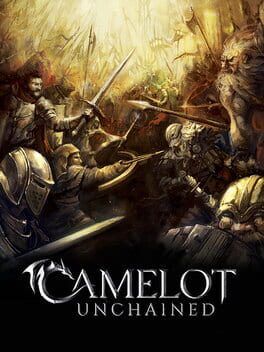

After years of delays and skepticism, Camelot Unchained has entered early access for existing backers. Here’s who can log in, what the current build offers, what the spring roadmap promises, and whether this milestone actually changes the game’s troubled reputation.
Camelot Unchained has actually done the thing many backers had written off as wishful thinking: it has entered early access. The catch is that this rollout is limited to existing backers, not a full public Steam launch, which makes this feel less like a triumphant debut and more like a high‑stakes check‑in on a project that has been grinding away since its 2013 Kickstarter.
Who can actually play right now
Access is restricted to people who already backed Camelot Unchained through its Kickstarter or later pledge programs. There is no Steam client yet, and no way for brand‑new players to buy in at this moment. Unchained Entertainment says store access and a wider early access release are planned, but for now this is a closed circle of long‑term supporters.
Backers get access to early access weekends, with servers scheduled to run from Friday evening through Monday afternoon. This cadence leans heavily into structured testing rather than a traditional live‑service MMO that never goes offline. If you are a lapsed backer thinking of reinstalling, this is very much still a test environment that happens to be called early access, not a soft launch.
What the build looks like in spring 2026
The current build is positioned as a large step up from the old Beta One tests. The studio is touting more than 60 square kilometers of playable space, with realms pushing against each other in the open world rather than in tiny isolated scenarios. The engine work that has quietly dominated the project for years is meant to support huge Realm vs Realm battles, echoing Dark Age of Camelot’s mass fights and siege warfare.
Visually the game has received upgraded lighting and general presentation passes compared to the early beta era. It is still an indie MMO made on a custom engine rather than a glossy blockbuster, but it is not the rough greybox that many backers remember. Between overhauled character stats, updated combat under the hood, and a more cohesive world to run around in, this build is clearly intended to prove there is a playable game rather than just a tech demo.
At the same time, it is not content‑complete. The studio is upfront that this is a work in progress. Systems exist, but not all of them are fully mature or tuned for long‑term play. If you log in today, you are stepping into a test realm that finally has enough scaffolding to resemble an MMO, yet still lacks the breadth and polish that most players expect from a commercial launch.
What backers can actually do now
If you hop in as a backer, you can create characters, pick a realm, and throw yourself into large scale RvR. The core fantasy of lining up with a faction and smashing into enemy players and keeps is finally there in more than a purely theoretical form.
Beyond raw PvP, there is more structure than older tests offered. Royal quests tie your activities to the broader war effort, nudging groups toward contested objectives instead of leaving everyone to open‑field zerging. Gathering and crafting systems let you participate in the realm economy, feeding resources into the war machine even if you are not always on the front lines.
The stats overhaul touches almost every moment to moment decision. Different builds feel more distinct, and the underlying math that supports tankiness, damage and survivability has been reworked from the ground up. In practice, that means returning testers will likely find their old assumptions about class performance and stat priorities no longer apply.
Most importantly, there is now a sense of progression that stretches beyond logging in just long enough to help stress test the servers. You can fight, craft, push your realm’s interests and start to see the shape of a persistent world that has been promised for over a decade.
The new spring roadmap in plain language
Alongside the early access announcement, Unchained Entertainment laid out a spring roadmap that gives the most concrete near‑term promises the project has had in a while.
April is focused on expanding both combat and crafting. The Devout class is planned to join the roster, adding a new archetype to realm war compositions. Two additional tradeskills are also scheduled to arrive, which should deepen the crafting and resource game, particularly for players who prefer to contribute indirectly to battles.
May’s targets shift toward environmental and PvE variety. A forest zone is on the slate, which should help relieve some of the visual sameness that can creep into long testing sessions. New NPC enemy types are also planned, rounding out the world with more than just other players to fight. For a game rooted in RvR, having meaningful PvE elements helps the experience feel like a world instead of a string of battle arenas.
June is supposed to tie the whole early access loop together with realm‑wide reward systems and yet another new class. Realm‑wide rewards, if they land, are especially important for a three‑faction war game. They are the glue that gives meaning to territory flips and big pushes, providing tangible incentives for players who join organized campaigns instead of just chasing skirmishes.
None of this is a full feature list, and timelines in MMO development are always at risk of slipping, but this roadmap is at least specific enough to be measured against reality over the next three months.
Does this change the project’s troubled reputation
Camelot Unchained’s history is long and bruised. Kickstarted in 2013, it spent years in prototype and tech work, followed by a 2018 Beta One phase that proved large‑scale battles were possible but did not look or feel like a modern MMO. Since then the project has been dragged by delays, refund controversies and the diversion of effort into a second game built on the same engine that was later sunset.
In that context, early access for backers is a milestone that matters more for credibility than for pure feature count. It demonstrates that the team can ship a persistent build with weekend uptime and enough content to sustain regular playtests. It also comes attached to a public roadmap with near‑term goals instead of another distant promise of “we are almost there.”
That said, this move does not erase the skepticism that has accumulated over the last decade. The early access label applies only to people who already financially committed to the project. There is no new wave of Steam reviews, no flood of fresh eyes approaching the game without baggage. For the wider MMO audience, Camelot Unchained still exists in a limbo between ambitious idea and real, fully playable product.
The roadmap is short enough that it can be judged quickly, which cuts both ways. If April, May and June updates arrive roughly as described, the narrative around Camelot Unchained could shift from “perpetually delayed” to “finally climbing out of the hole.” If they slip or land half‑finished, this early access phase risks reinforcing long‑held doubts instead of dispelling them.
What remains uncertain
Several big questions still hang over Camelot Unchained even after this early access rollout. The timing of a true public release on Steam, with a reopened store and new players buying in, has not been nailed down. Without that, it is hard to gauge whether the project can attract a sustainable population beyond its legacy backer base.
Content depth is another unknown. The current build offers real activities for backers, and the spring roadmap promises solid additions, but long‑term MMO health is built on layers of systems and zones that support months or years of play. Whether Camelot Unchained can deliver enough variety in sieges, progression and realm incentives to sustain a war over time is something no roadmap bullet can conclusively answer.
Finally, there is the question of pacing and transparency. The studio is doing more open communication with this announcement, but the community has a long memory. Consistent delivery on short‑term promises may matter more now than any individual feature. Early access for backers is less a finish line and more a public test of whether Unchained Entertainment can operate on predictable, accountable timelines.
For existing backers, though, the bottom line is simple: you can log in on scheduled weekends, wage war for your realm, experiment with crafting and see for yourself how far Camelot Unchained has come. Whether that experience finally feels like the MMO you pledged for, or just another incremental step in a very long journey, is something only hands‑on time in this new early access build can answer.