
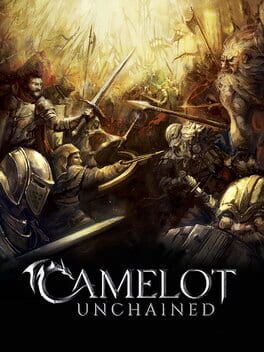

Camelot Unchained 0.54 adds Realm Renown, battering rams, scorpions, and siege tuning. Here is what the update proves, and what remains unclear.
Image: IGDB
Store links: Camelot Unchained on Steam
Camelot Unchained 0.54 puts progression and sieges back at the center
Camelot Unchained update 0.54 went live on November 25 with the long-anticipated Realm Renown system, according to the official patch notes from developer City State Entertainment. The same update adds two siege engines, battering rams and scorpions, and changes how gates and siege targeting behave in RvR combat. For a long-running MMO project built around realm warfare, that is the most concrete kind of progress to watch: persistent character goals tied directly to fighting other realms, paired with siege tools that ask groups to bring the right equipment instead of simply throwing bodies and abilities at a wall.
The tension is that Camelot Unchained 0.54 still reads like an Early Access milestone rather than a finish-line announcement. The official post says the build is being kept up from Wednesday, November 25 at 1 PM EST until Monday, November 30 at 1 PM EST because of the Thanksgiving week schedule in the United States. That gives testers an extended window, but the sources provided do not announce a launch date, a price change, new platforms, or a broader availability shift.
So the useful question for MMO players is narrower than whether Camelot Unchained is suddenly ready. Update 0.54 is best judged as a systems update: does it add a reason to keep fighting, and does it make realm warfare more legible? On paper, Realm Renown and the siege revisions both point at the game’s core promise rather than side content.
Realm Renown is a separate RvR progression track, not a general leveling extension
The official patch notes describe Realm Renown as RvR-specific experience earned exclusively by warring with other realms in Contested Zones. City State Entertainment says those gains can be spent on unique abilities and upgrades that are separate from the main ability and skill tree. MMOHuts adds a practical detail from the 0.54 update coverage: players can gain up to 30 Renown levels, with each level granting a point that can be spent through the Realm Renown tab in the Ability Book.
That separation is important. Many PvP-focused MMOs struggle when their progression paths blur together, because a player who wants realm warfare can feel pushed into unrelated grinding, while a newer combatant can feel locked out by years of accumulated power. The sources do not provide the full ability list, progression pace, respec rules, or balance values for Realm Renown, so it would be premature to call it a solved version of RvR advancement. What is confirmed is that Camelot Unchained now has a progression lane explicitly tied to Contested Zone warfare rather than the general character tree.
City State frames Realm Renown as a long-term pursuit beyond the existing level cap and as a cornerstone for character identity and realm pride. That wording matters because it tells testers how the system is intended to function. It is not presented as a temporary event reward or a cosmetic side panel. It is being positioned as part of the game’s core RvR loop, which means the health of the system will depend on whether its rewards feel meaningful without making participation feel mandatory in a punishing way.
For build-minded players, the unanswered questions are the real ones. A 30-point track can be elegant if choices are sharp and mutually defining. It can also become a checklist if everyone converges on the same few efficient upgrades. The patch notes confirm the structure, but they do not show whether Realm Renown creates distinct roles for scouts, defenders, roamers, siege crews, and frontline groups. That is the next layer testers should interrogate.
Battering rams make gate-breaking a dedicated siege job
The battering ram is the cleanest design statement in Camelot Unchained 0.54. City State says rams have an exclusively anti-gate role, built to bash down the main entrance to enemy keeps. The patch notes also confirm that gates now take increased damage from battering rams, while secondary and tertiary gates take reduced damage from player ability damage.
That is a direct push away from ability spam as the default answer to fortification. If the tuning holds, attackers will need siege preparation to crack defensive layers efficiently. That has consequences for group organization: someone has to craft or bring the ram, protect it, position it, and keep pressure on defenders long enough for it to do its work. For an RvR MMO, that kind of logistical dependency can be healthy because it creates jobs beyond damage rotations.
MMOHuts reports that battering rams were added to the craftable list and can be crafted at Weaponsmithing, Woodworking, and Leatherworking stations. The same report says battering rams have new models for Vikings, Arthurians, and TDD. Those details are small only if you treat siege as disposable scenery. In a realm-war game, craft stations, visual identity, and role clarity all affect whether siege becomes a social economy or a rarely used novelty.
There is still a practical caveat. The sources do not provide costs, crafting time, durability, deployment restrictions, transport rules, or repair behavior. Those numbers will decide whether rams become standard campaign equipment or an occasional test-night spectacle. The design direction is clearer than before, but the economic pressure around it remains unreported in the supplied materials.
Scorpions give defenders a precision answer to enemy siege
Scorpions fill the other side of the new siege equation. City State describes them as wall-mounted defensive weapons placed at predetermined points on keep walls. Their purpose is anti-siege: defenders use precision shots to take down enemy trebuchets before those engines breach walls, while also threatening players who fail to keep moving.
This is where the update’s “Rock, Paper, Scissors” language becomes more than a slogan. According to the official patch notes, the developer wants each siege weapon to have a bespoke role that demands respect when used in the right situation. Rams pressure gates. Scorpions punish exposed siege and careless players. Trebuchets remain relevant enough that scorpions are explicitly described as a counter to them. The update also improves reticle collision for siege tools, making direct hits on other siege engines easier.
For defenders, that could make keep walls feel less passive. In many siege games, holding a wall turns into waiting for attackers to finish their setup or trading ranged pressure until a breach occurs. A well-tuned scorpion gives defenders a proactive assignment: identify the threatening engine, land shots, and force attackers to screen or reposition. The patch notes do not say how many scorpions can be placed, how vulnerable operators are, or how quickly they can destroy enemy engines, so the actual counterplay still needs live testing.
MMOHuts reports that scorpions are craftable at Weaponsmithing, Woodworking, and Leatherworking stations. It also notes that scorpions have new models for Vikings and Arthurians, with TDD models planned for a later update. That last point is worth keeping in the confirmed-but-incomplete column. The feature exists, according to the 0.54 coverage, but one realm’s bespoke scorpion model is still planned for later rather than delivered in this patch.
The smaller fixes matter because siege games break at the edges
The headline systems are Realm Renown, battering rams, and scorpions, but Camelot Unchained 0.54 also includes several supporting changes that affect how those systems will feel in practice. The official patch notes confirm improved collision for the Arthurian trebuchet and increased logging spawn locations in the Home Islands, with the total number of logging harvest nodes in the Home Islands increased by two. City State also says charge abilities no longer apply a brief root when activated.
Those are not glamorous changes, but siege warfare is often shaped by friction. A collision fix can change whether an engine feels reliable. A resource-node increase can affect whether crafters can support repeated siege attempts. Removing a brief root from charge abilities may alter the feel of engagement and escape, especially in a game where positioning around walls, gates, and siege equipment is central.
MMOHuts’ coverage also lists bug fixes for abilities including Vanish From Sight, Obscuring Dust, Night’s Cloak, Rockslide, Fast Exit, and Jump Scare. Its report notes audio work as well: new Realm Renown sounds, scorpion effects, adjusted projectile flyby audio, and trebuchet impact sounds with a longer 200-meter range. Audio range sounds cosmetic until you consider siege awareness. Hearing impacts at range can help players understand where pressure is building before they see the fight.
None of these fixes independently prove a turnaround. Together, they suggest that 0.54 is not limited to adding menu progression and two objects. It touches feedback, collision, targeting, crafting inputs, class feel, and defensive readability. That is the kind of surrounding work a siege MMO needs if its large systems are going to survive contact with organized players.
A cautious read for MMO players deciding whether to return
If you are deciding whether Camelot Unchained 0.54 shows meaningful progress, the fairest answer is that it advances the game in the right categories. Realm Renown gives RvR its own progression structure, with up to 30 levels reported by MMOHuts and a separate Ability Book tab for spending points. Battering rams and scorpions add clearer siege roles, while gate damage and targeting changes push players toward tool-based warfare rather than undifferentiated pressure.
The caution is equally concrete. The supplied sources do not reveal the full Realm Renown ability set, reward balance, grind length, siege costs, population conditions, campaign rules, or any broader release plan. Without those, players should treat the update as a substantial testable milestone, not as proof that the wider project has crossed into a launch-ready state.
For current backers and Early Access testers, the practical guidance is straightforward: use the extended November 25 to November 30 build window to test the progression loop and siege counters together, not separately. Earn Renown in Contested Zones, spend points through the new tab, then see whether those choices affect your preferred RvR role. Bring rams to gates and measure whether defenders can meaningfully answer with scorpions and improved siege targeting.
For lapsed MMO players watching from the outside, Camelot Unchained update 0.54 is worth tracking because it targets the heart of the game’s pitch. It does not answer every concern that follows a long Early Access road. It does, however, add systems that can be evaluated in play: long-term realm progression, dedicated gate-breaking, wall-mounted anti-siege defense, and clearer siege counterplay. That is a better signal than a cosmetic update, and a more useful one than promises about future warfare.