
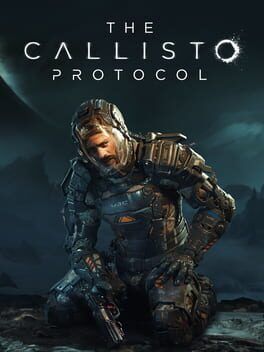
Glen Schofield says Krafton forced The Callisto Protocol to ship before it was ready. His comments have revived debate over the horror game's schedule, cuts, patches, and troubled launch.
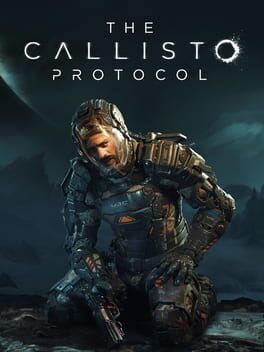
Image: IGDB
Store links: The Callisto Protocol on Steam, The Callisto Protocol: Gore Skin on Steam, The Callisto Protocol: Snake Skin on Steam
Schofield says The Callisto Protocol lost three months it needed
Glen Schofield, the Dead Space co-creator who directed The Callisto Protocol at Striking Distance Studios, has openly blamed publisher Krafton for forcing the survival horror game out before he believed it was ready. In a GamesIndustry.biz interview reported by Eurogamer, Rock Paper Shotgun, Inven Global, and OtakuKart, Schofield said the studio had expected to release the game in March 2023, only for Krafton to move the launch to December 2022.
“I was forced to ship the game,” Schofield said, according to Eurogamer and Rock Paper Shotgun. He also said he was “mad at myself,” while describing shock at the decision because the studio was still dealing with COVID-19 disruptions. The Callisto Protocol ultimately released on December 2, 2022, for PlayStation 4, PlayStation 5, Windows, Xbox One, and Xbox Series X/S, with Wikipedia listing Striking Distance Studios as developer and Krafton as publisher.
The tension in the new comments is clear: The Callisto Protocol was sold as a high-budget spiritual successor to Dead Space from one of that series’ defining creators, but it arrived to mixed reviews and failed to meet Krafton’s sales expectations, according to Wikipedia. Schofield’s account now puts the game’s rocky landing back under a harsh light, shifting attention from player disappointment alone to the production decisions behind the prison walls.
COVID disruption was central to Schofield’s account
Schofield’s version of events is not simply that the team wanted polish time in the abstract. He tied the missed runway directly to the pandemic. Eurogamer quotes him saying that “every single month, four to six people” at the company were getting sick, and that a small team in Spain was shut down at times, temporarily costing Striking Distance rendering support. Inven Global’s report similarly says Schofield described repeated infections, remote work strain, and the health of team members becoming the immediate priority.
That context matters for a game like The Callisto Protocol because survival horror is unusually sensitive to small failures of timing and feel. A dodge window that reads poorly, a stutter during a melee exchange, an encounter that drains ammunition in the wrong place, or a boss that has not been tuned long enough can turn pressure into irritation. The Callisto Protocol’s design asked players to move through linear spaces, gather resources, collect audio logs, and fight infected prisoners with a mix of melee and firearms. Wikipedia’s gameplay summary notes that decapitation alone does not guarantee a kill and that players must manage enemy mutations by damaging tentacles before they transform.
That kind of combat loop lives or dies in iteration. Schofield’s claim is that the team lost the very period that would normally be used to sand down those edges. That does not prove every design criticism was caused by Krafton’s schedule, but it does explain why his comments have touched a nerve with players who remember launch complaints about combat, performance, and technical issues, points OtakuKart cites in its coverage of the game’s reception.
The December 2022 date created a production squeeze
According to Schofield, the March 2023 date was meant to give Striking Distance several extra months to absorb pandemic delays. Eurogamer reports that he had discussed the denial of those three extra months before, but the new interview is more direct in assigning responsibility to Krafton’s management. Rock Paper Shotgun reports his claim that the original date was pulled forward to December 2022, giving the studio less time than allegedly promised.
Inven Global adds a useful timeline detail: The Callisto Protocol’s December 2, 2022 release date had already been publicly announced around June 2022. That means, based on the reporting provided, players saw a firm holiday-season date months before launch, while Schofield now says the studio had previously expected a March 2023 finish line.
That holiday timing carried obvious business pressure. A December release put The Callisto Protocol in front of gift-season buyers and horror fans looking for a prestige, cinematic sci-fi nightmare. It also placed a new IP under a bright spotlight while it still had to support five major platform targets. The result, according to Schofield’s account, was a game that reached shelves before Striking Distance had finished the work it believed was needed.
Platform demands and publishing work reportedly added to the strain
The schedule claim is only one part of Schofield’s broader criticism. Eurogamer reports that Schofield said Krafton lacked the necessary experience to release a single-player physical game, which forced Striking Distance to build an internal team to handle that work. Rock Paper Shotgun also reports Schofield’s claim that the studio had to handle parts of publishing and marketing itself.
He also pointed to cross-generation development as a major added burden. According to Eurogamer, Schofield said Krafton mandated a PlayStation 4 release alongside PlayStation 5, which he said would cost “another $20 million” and required sending 200 dev kits to developers during a global chip shortage. The released game did ship across PS4, PS5, Windows, Xbox One, and Xbox Series X/S, as listed by Wikipedia.
For players, cross-gen support can look like a simple platform checklist. For a horror studio, it can mean extra memory budgets, extra performance targets, extra certification work, and extra risk that the atmosphere breaks in the places it should be tightest. The Callisto Protocol leaned heavily on close camera work, viscera, animation priority, and dark industrial corridors. Those elements demand stability. If Schofield’s figures are accurate, the platform strategy made a difficult horror production heavier at the exact moment the team says it needed breathing room.
Cuts, crunch reports, and patches now sit at the center of the debate
Rock Paper Shotgun reports that the shortened schedule resulted in reported crunch conditions while less vital elements were cut, with some material later returning through post-launch DLC. Inven Global and OtakuKart both report Schofield’s claim that bosses, levels, and one or two enemy types were removed as the team scaled back the original vision.
Schofield also argued that the story did not end at launch. Rock Paper Shotgun quotes him saying that while Krafton was complaining, Striking Distance was making patches. He said the team put out 86 patches after release while finishing DLC. Rock Paper Shotgun notes that The Callisto Protocol did receive narrative DLC and new modes after launch.
That patch count has become one of the sharpest details in the discussion because it cuts two ways. On one hand, it supports Schofield’s argument that the team kept grinding after release to improve the game. On the other, it underlines the central player complaint: buyers who arrived on day one were asked to pay full attention, and likely full price depending on platform and edition, for a horror game that its own director now says needed more time. In survival horror, trust is part of the resource economy. If the frame pacing, enemy behavior, and combat response feel unstable, the fear leaks out and frustration takes its place.
Krafton’s public disappointment clashes with Schofield’s postmortem
Krafton’s side, as represented in the provided source material, is more limited. Rock Paper Shotgun reports that Krafton CEO CH Kim said The Callisto Protocol “fell short of market expectations.” Wikipedia similarly states that the game received mixed reviews and failed to meet Krafton’s sales expectations. Schofield’s stronger phrasing is his own: Rock Paper Shotgun quotes him saying Krafton “thought Callisto was a complete failure.”
There is no new Krafton response to Schofield’s latest claims in the provided reports. That gap matters. Schofield is a central witness to the production, but he is also a former studio head who left Striking Distance Studios in 2023, according to Rock Paper Shotgun, and has since retired from game development. His account is valuable, especially on staffing disruption and internal pressure, but it is also one side of a publisher-developer breakdown.
Rock Paper Shotgun is notably cautious on that point, observing that Schofield’s comments place heavy blame on the publisher while offering limited personal responsibility. That is the unresolved part of the story. Schofield describes himself as both a creative and business leader in the reporting, yet he also says he did not want to handle business operations. The Callisto Protocol debate has returned because those roles collided: creative ambition, production reality, publisher expectation, and a launch date that could not absorb the damage around it.
What players can take from the renewed Callisto debate
For anyone approaching The Callisto Protocol now, the practical question is less about assigning courtroom blame and more about expectations. The confirmed facts are that the game launched December 2, 2022, across PlayStation 4, PlayStation 5, Windows, Xbox One, and Xbox Series X/S; it came from Striking Distance Studios under Krafton; it received mixed reviews; and it later gained patches, new modes, and narrative DLC, according to the provided reports and public summaries.
The claim that changes the conversation is Schofield’s allegation that the game was supposed to have until March 2023 and was forced into December 2022 despite COVID disruption. That remains his account as reported from the GamesIndustry.biz interview, not an independently confirmed Krafton admission in the supplied material.
If you bounced off The Callisto Protocol at launch because the combat felt brittle or the technical state broke the mood, Schofield’s comments offer a plausible production explanation without erasing the experience you had. If you are considering it now, the reports indicate the game was substantially patched after release, but the sources provided do not give a current platform-by-platform performance verdict. The safer read is to treat it as a polished-later survival horror release with a divisive foundation: dense atmosphere, brutal close-range combat, and a development history that still feels like something scraping behind the walls.