
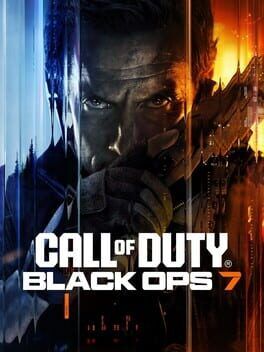

Breaking down the Nicolas Cage operator in Call of Duty: Black Ops 7 and Warzone, how it fits Activision’s live‑service crossover strategy, and why players are both delighted and exhausted by increasingly unconventional skins.
“Absolute cinema”: Nicolas Cage crashes Black Ops 7
Call of Duty has finally gone full Cage. With Season 4 Reloaded, Call of Duty: Black Ops 7 and Warzone are getting a fully playable Nicolas Cage operator, complete with bespoke skins, event pass, and marketing that leans into the “blockbuster action” fantasy as hard as possible.
On paper, it is a simple pitch. Buy into the seasonal event, grind the tiers, and unlock Nicolas Cage as a fully voiced operator, along with an “Unlimited” Nick Cage skin that pushes his action‑hero persona into stylized territory. In practice, the collaboration arrives at a strange moment for Call of Duty, where Activision is publicly promising to tone down crossovers in future titles while Black Ops 7 doubles down on celebrity operators and themed passes.
The Cage bundle is not an isolated oddity. It is a statement about where CoD’s live‑service model is right now and how far the series is willing to stretch its tone to keep players engaged.
How the Nicolas Cage operator works
The Nicolas Cage crossover is built around a limited‑time Nick Cage Event. As with earlier collaborations like Robocop, the event runs two parallel tracks: a free path that hands out weapons and cosmetics for simply playing, and a premium track tied to the Cage bundle itself.
Buying in gives you the Nick Cage operator immediately, then dangles more rewards as you complete challenges and level the pass. Progression unlocks additional cosmetics themed around his filmography and general action‑movie energy, with the highlight being the “Unlimited” operator skin. Think exaggerated, larger‑than‑life Cage: dramatic silhouette, bold color accents and just enough stylization to feel like an event skin without completely abandoning Black Ops’ grounded aesthetic.
In Warzone and multiplayer, Cage is treated like any other operator. He slots into existing loadouts, uses the same weapons and abilities, and appears in cutscenes and intros. The performance work and animation polish are the selling points. The marketing trailer leans into the joke, showing Cage striding away from an explosion in slow motion while the tagline promises “blockbuster battles” and “absolute chaos.”
For Black Ops 7, which has struggled to find a positive identity with fans, that kind of loud, self‑aware spectacle is part of the appeal.
CoD’s crossover problem, and why Cage is different
Call of Duty has spent the last few years chasing the Fortnite model, packing its store with crossovers that range from nostalgic to outright surreal. Comic book antiheroes, horror icons, cartoons and memes have all turned up as operators or skin bundles. Somewhere along the way, many players felt the series crossed a line from playful to incoherent.
Black Ops 7 launched into that fatigue. Core fans were already complaining that the identity of Call of Duty had been eroded by a flood of wacky collaborations. The Beavis and Butt‑Head bundle in particular became a lightning rod, a shorthand example of how far from “military shooter” the franchise had drifted.
Nicolas Cage lands in a slightly different spot. He is still a celebrity out of place in a Black Ops firefight, but he is also a genuine action‑movie icon whose peak era lines up with the tone Treyarch is chasing. The Season 4 Reloaded campaign leans into 90s and early‑2000s blockbuster aesthetics, right down to the trailer editing and poster art. Framing Cage as a grizzled, hyper‑competent operative makes the crossover feel closer to casting than cosplay.
That matters for players who want Call of Duty to be heightened but not chaotic. Compared to anime heroes and cartoon mascots, “Nick Cage as a Black Ops legend” feels at least adjacent to the universe. It is still a spectacle grab for the live‑service economy, but it is one that tries to be tonally compatible.
How it fits Activision’s live‑service strategy
From a live‑service perspective, Cage ticks several important boxes for Activision.
First, he is a recognizable name that cuts beyond the usual CoD audience. A Nicolas Cage event is instantly memeable, shareable and easy to sell in a single image. That helps with discovery for lapsed players or casual Warzone fans who might not care about a new rifle but will log in to see Cage scream his way through a lobby.
Second, the crossover is built around a structured event pass, not just a one‑off bundle. That “Nick Cage Event” framework is critical to CoD’s seasonal design. It layers long‑tail engagement over the top of an operator drop, encouraging daily play to clear challenges and ascend both free and premium tracks. The fact that the free path includes the returning AN‑94 assault rifle is not accidental. If you care about the meta, you are nudged toward the event. If you care about Cage, you are nudged toward the premium unlocks.
Third, the collaboration arrives at a moment when Activision is publicly talking about calming things down in future entries. Modern Warfare 4 is being positioned as a course correction, with fewer out‑of‑universe skins and a stronger focus on a grounded military fantasy. That in turn makes Black Ops 7 the “anything goes” playground, a space where crossovers like Cage can exist without directly contradicting the marketing promises for the next mainline release.
In other words, Cage helps Black Ops 7 absorb the most experimental side of CoD’s live‑service ambitions while the broader franchise tries to walk some of it back.
Player reception: amused, exhausted, cautiously optimistic
Community reaction to the Nicolas Cage reveal has been telling. On social channels and subreddit threads dedicated to Black Ops 7, the mood is more amused than angry. Many players who were burnt out on prior crossovers greeted the announcement with a kind of resigned excitement: they may roll their eyes at the idea in principle while also admitting that yes, they will absolutely queue into Warzone as Nick Cage.
A common sentiment is that Cage “makes sense” in a way the most chaotic bundles did not. Fans draw a line between absurdity that supports the fantasy of being an over‑the‑top action hero and absurdity that totally breaks the fiction. Nick Cage walking through a warzone like he is on the set of Con Air fits the series’ bombastic campaigns and Zombies tone more naturally than cartoon mascots or internet memes.
That does not mean everyone is happy. There is still a consistent undercurrent of frustration that collaborations are eating oxygen that could be used on core features, balance passes or more traditional operator designs. Some players point to Black Ops Classic Mode and the return of older movement philosophies as proof that Treyarch knows exactly what long‑time fans want. To them, the Cage event feels like a marketing distraction bolted onto a game that is still trying to fix its fundamentals.
At the same time, even vocal critics are acknowledging a subtle shift. Recent crossovers, including the Cage bundle, are more “universe‑adjacent” than the most jarring skins of the past few years. They still push tonal boundaries, but they also try to match the aesthetic language of CoD’s cinematics and key art. If this is the compromise for a live‑service shooter that must constantly sell cosmetics, some fans see it as a more palatable direction than the anything‑goes model.
What this means for the future of CoD skins
The Nicolas Cage operator is unlikely to be the last big‑name collaboration in Black Ops 7. If anything, its existence hints at a blueprint for how Activision wants to handle crossovers going forward.
First, expect more “casting” style collabs. Bringing in recognizable actors as in‑universe operatives lets CoD trade on celebrity appeal without fully abandoning its tone. It also opens doors for narrative integration, where seasonal storylines can be headlined by a familiar face rather than a fully fictional character.
Second, expect event passes structured around each marquee collaborator. The Cage event’s dual‑track design, with a desirable weapon on the free side and a fully realized operator suite on the premium side, will be reused and iterated on. Live‑service design in CoD is now about creating micro‑seasons inside the broader seasonal churn, with each cross‑promotion treated like a mini battle pass.
Third, expect more explicit separation between “serious” CoD and “wild” CoD. If Modern Warfare 4 and future entries stick to their promise of fewer out‑of‑universe skins, Black Ops 7 and similar titles may become the home for loud, celebrity‑driven events. That allows Activision to serve two overlapping audiences at once: players who want a grounded shooter and players who view CoD as a chaotic sandbox for pop‑culture mashups.
In that landscape, Nicolas Cage is less an outlier and more a signpost. He proves that CoD’s live‑service machine is not done with collaborations, but it may be learning to calibrate them.
Final thoughts
Call of Duty: Black Ops 7 is in a complicated place, trying to win back skeptical fans while also upholding a demanding live‑service economy. The Nicolas Cage operator encapsulates that tension perfectly. He is at once a nostalgic, tonally appropriate nod to the series’ blockbuster ambitions and another example of the brand leaning on spectacle to keep players logging in.
Whether you see the Cage event as a shameless cash‑in, a genuinely fun celebration of action cinema or a bit of both, it is an important data point in CoD’s ongoing experiment with celebrity crossovers. If future collaborations can strike the same balance between personality and plausibility, the era of wild skins might feel less like a mid‑life crisis for the franchise and more like a confident embrace of what Call of Duty has quietly become: not just a military shooter, but an ever‑running action movie that occasionally invites its stars to step directly onto the battlefield.