
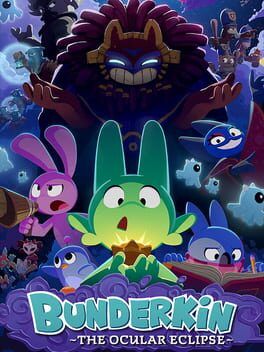

Studio Zubio’s puzzle-heavy stealth action-adventure Bunderkin: The Ocular Eclipse is coming to Nintendo Switch, with a Kickstarter campaign nearing $100,000 and a strong indie hook built around a spooky festival, a 3-day time loop, and Zelda-inspired structure.
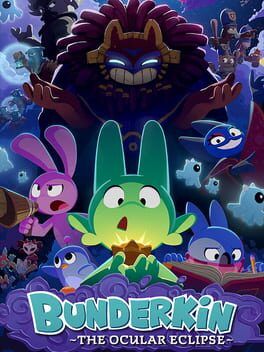
Image: IGDB
Store links: Bunderkin: The Ocular Eclipse on Steam
Bunderkin is now confirmed for Switch, but the big questions remain open
Studio Zubio’s Bunderkin: The Ocular Eclipse has been confirmed for release on Nintendo Switch, according to Nintendo Everything, which reported the news alongside the game’s new Kickstarter campaign. The campaign has raised close to $100,000 so far, the outlet said.
That confirmation gives Switch players a new indie adventure to keep on their radar, but it also creates the practical tension around this announcement: the source material confirms the platform and the crowdfunding push, while leaving several buyer-facing details unannounced. There is no release date in the provided sources, no price, no Nintendo eShop listing details, no file size, no performance target, and no publisher information beyond Studio Zubio being named as the developer behind the game.
For players tracking upcoming Switch indie games, that makes Bunderkin The Ocular Eclipse a watchlist candidate rather than an immediate preorder decision. The firm news is simple and useful: Bunderkin Switch is happening. The unknowns are the parts that determine when and how most players will actually buy it.
A puzzle-heavy stealth adventure with a very specific indie pitch
The official overview shared by Nintendo Everything describes Bunderkin: The Ocular Eclipse as a “puzzle-heavy stealth action-adventure” starring Beedee the Bunderdragon, an outcast from Bunder Hollow who is trying to sneak into a rare festival celebrating the Ocular Eclipse. The setup gives the game a clean mechanical identity before it gets to the lore: this is framed around sneaking, observing, solving, and navigating a hostile or unwelcoming town space.
That combination is where the indie appeal starts to sharpen. Plenty of small-scale adventure games borrow the surface language of classic console adventures, but Bunderkin’s announced mix is more specific than a broad nostalgia pitch. Puzzle-heavy design suggests deliberate gating and timing. Stealth implies readable patrols, social spaces, or environmental rules. Action-adventure promises some amount of exploration and direct player movement rather than a pure puzzle-box structure.
The official description also says Beedee must “memorize the rhythms of his hometown.” That phrasing matters because it hints at a game built around patterns, schedules, and repeated attempts. For a Switch audience that has embraced compact, systems-driven indies, that is the part worth watching most closely. If Studio Zubio can make Bunder Hollow feel legible and surprising across repeated loops, The Ocular Eclipse Nintendo Switch release could land in the sweet spot between cozy discovery and tense route-planning.
The visual hook is spooky, odd, and proudly GameCube-flavored
The announcement leans hard on a visual and tonal identity that is easy to understand at a glance: a kooky, spooky festival, a Bunderdragon outcast, body-snatching parasites called the Oculi, and lunar rays tied to a rare celestial event. The official overview cited by Nintendo Everything names The Legend of Zelda: The Wind Waker and The Legend of Zelda: Majora’s Mask as inspirations, specifically calling out the “stylish whimsy” of GameCube-era classics and the time-pressure calamity associated with Majora’s Mask.
Those comparisons are ambitious, and they should be treated as stated inspirations rather than evidence of quality. Still, they help explain what Studio Zubio appears to be chasing. Wind Waker is a useful reference point for expressive, stylized adventure worlds. Majora’s Mask is the obvious touchstone for a world under a repeating deadline, where townsfolk routines become part of the puzzle language. Bunderkin’s pitch combines those two reference points with its own strange festival mythology.
That visual and thematic hook is important for eShop browsing behavior, even before a store page exists in the provided material. Switch players scanning rows of upcoming indie releases often make the first cut on silhouette, color, premise, and mechanical promise. Bunderkin: The Ocular Eclipse has a premise that can be communicated quickly: an outcast sneaks into a once-in-a-lifetime festival, discovers a parasitic lunar threat, and has three days to learn the town well enough to save it.
The 3-day loop is the design risk and the potential standout feature
According to the official overview, Bunderkin: The Ocular Eclipse traps players in a 3-day time loop where they must “master each moment” and create the perfect day, or see Bunder Hollow fall into darkness. That is the strongest mechanical promise in the announcement, and also the area where the game has the most to prove.
Time-loop adventure design lives or dies on clarity. If a town’s schedule is too simple, repetition becomes busywork. If it is too opaque, players can feel punished for failing to read rules the game has not properly taught. The source material’s emphasis on memorizing hometown rhythms suggests Studio Zubio understands that the loop itself is a core system, not background flavor.
For puzzle and platformer-minded players, this is the part to track in future footage or Kickstarter updates. Does Beedee’s stealth rely on precise timing, disguises, route knowledge, or environmental manipulation? Do townsfolk routines change across the three days? Are puzzles solved once and remembered, or do they need to be re-executed under pressure? The provided sources do not answer those questions yet, but the announced structure makes them the right questions to ask.
Kickstarter momentum helps, but it does not answer launch specifics
Nintendo Everything reports that the Switch confirmation comes as part of a new Kickstarter campaign where close to $100,000 has been raised so far. That figure is a sign of early audience interest, but it should not be mistaken for a full launch plan. Crowdfunding news tells players that a community is forming around Bunderkin The Ocular Eclipse, not that the final release timing, scope, or console implementation are locked in through the information currently available here.
The provided YouTube source identifies an official Kickstarter campaign video for Bunderkin: The Ocular Eclipse, but the retrieved source text does not include additional production details from the video itself. Because of that, the safest read is narrow: Studio Zubio is publicly campaigning for the game, the Switch version has been confirmed through Nintendo Everything’s report, and the project has already drawn meaningful funding attention.
For Switch owners, Kickstarter-backed games require a slightly different kind of patience. A console confirmation is valuable, especially for players who prefer handheld play or want their indie library in one ecosystem. But until Studio Zubio or a storefront listing provides timing, pricing, and technical details, it is too early to judge availability or performance.
How Switch players should track Bunderkin from here
If Bunderkin: The Ocular Eclipse is on your radar because of the Switch announcement, the next useful updates will be concrete ones: a release window, Nintendo eShop page, price, publisher or self-publishing confirmation, supported languages, file size, and whether the Switch version arrives alongside other platforms or later. None of those details are present in the supplied source material.
What is confirmed is enough to justify attention from players who like characterful indie adventures with puzzle structure and a strong sense of place. Studio Zubio is pitching Bunderkin around Beedee the Bunderdragon, Bunder Hollow’s festival, a parasitic lunar threat, stealth, puzzles, action-adventure exploration, and a 3-day loop inspired by two major Zelda reference points. That is a dense pitch, but it has shape.
The best reason to watch Bunderkin Switch news is not the Zelda comparison by itself. It is the way the announced ideas fit together: a town that must be learned, a festival that gives the world a memorable frame, and a loop that could turn every character routine into a puzzle clue. If future updates show clean readability, playful stealth, and a town worth repeating, The Ocular Eclipse Nintendo Switch release could become one of the more distinctive upcoming Switch indie games to follow.