
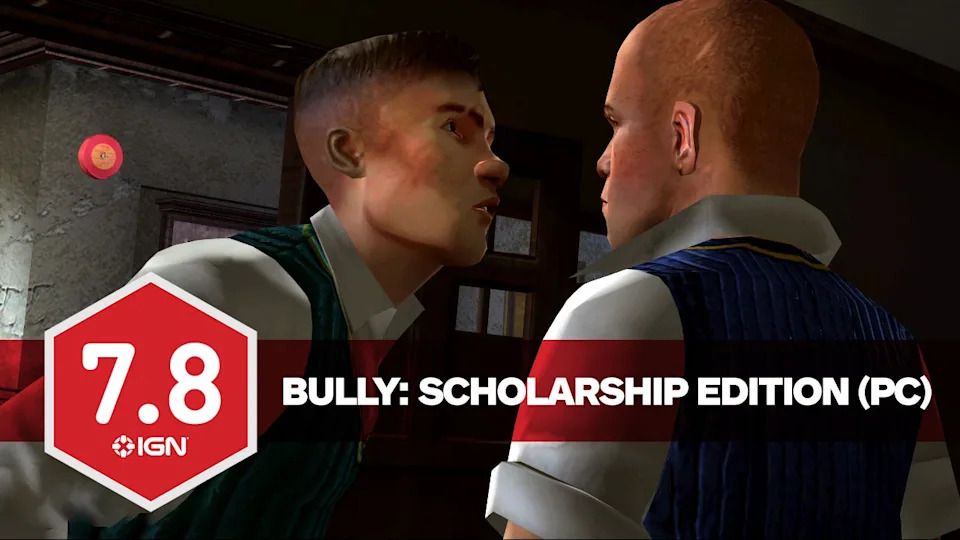
Dan Houser says Bully was difficult because Rockstar had to build an open-world game without GTA’s cars and guns, forcing the studio to find a new rhythm at Bullworth Academy.
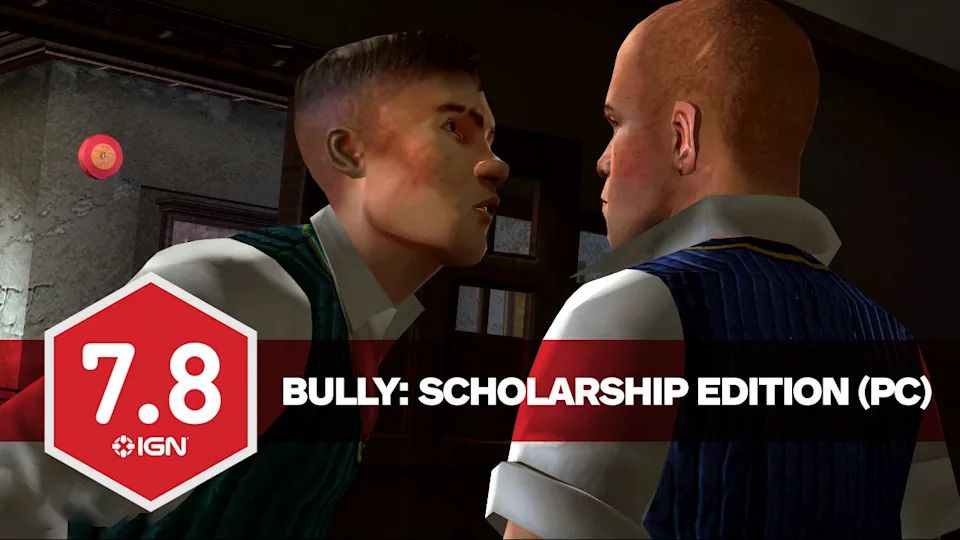
Image: yahoo.com
Dan Houser says Bully nearly lost its shape without GTA’s core tools
Dan Houser has described Bully as a game that was “in trouble all of the time,” telling IGN that Rockstar struggled to define the project after moving from Grand Theft Auto’s familiar open-world language into a school setting where cars and guns could no longer carry the action.
In IGN’s new interview, the former Rockstar VP and Bully writer said the 2006 game “came together very late” and that he was not sure during development whether it would be good. GamingBolt’s report on the same interview highlights the blunt design problem inside Rockstar at the time: once the studio took away “the cars” and “the guns,” the team had to answer what the game actually was.
That tension is the heart of this Rockstar Bully interview. Bully arrived just over a year after Grand Theft Auto: San Andreas, according to IGN, at a point when Rockstar’s public identity was inseparable from crime, vehicles, weapons, radio chatter, police heat, and escalating chaos. Bully kept the open-world frame, but changed the fantasy completely. Its map was Bullworth Academy rather than a city built for car chases, and its protagonist was Jimmy Hopkins, an unruly student navigating a school year rather than a criminal climbing an underworld ladder.
Houser’s comments make Bully sound less like a side experiment that naturally fell into place and more like a production trying to invent a new action-adventure grammar under the shadow of Rockstar’s biggest series.
The missing cars and guns changed the rhythm of the entire game
IGN reports that one of Bully’s internal challenges was making Rockstar’s open-world action-adventure style work from a teenager’s perspective. The school setting meant that driving cars and shooting guns had to be set aside, even though IGN describes those mechanics as vital to Grand Theft Auto.
That single constraint changes almost everything about pacing. GTA’s structure can lean on distance, speed, pursuit, and firepower. A mission can begin with a drive, spike into a shootout, and end in a getaway. Bully could not use that same tempo without breaking its premise. If Jimmy Hopkins is a student at Bullworth, the design has to generate friction from corridors, classrooms, cliques, authority figures, pranks, fistfights, and routines.
Houser’s “what is the game?” problem, as reported by GamingBolt, is therefore not a small mechanical note. It is a question about verbs. What does the player do moment to moment when the most bankable Rockstar verbs of the era are gone? How do you build tension when the player is not barreling through traffic? How do you make conflict readable when the stakes are schoolyard trouble rather than criminal escalation?
The answer, based on the details Houser discussed, was not to replace GTA’s tools with equivalent spectacle. It was to shrink the scale and sharpen the social space. Bully’s action had to come from proximity. The player was not cutting across a city at high speed, but moving through a campus where a joke, a fight, or a class bell could redirect the scene.
Bully found itself through school rules, lessons, and one cruel little gag
According to GamingBolt, Houser said the team was still confused about what players would do in Bully until development began to cohere around school-specific ideas such as the class schedule and lessons. VGTimes, summarizing Houser’s IGN conversation, points to another small mechanic as a turning point: a designer added a gag where a “Kick me” note could be stuck on a character’s back.
That detail is easy to underestimate because it is small by Rockstar standards. It is not a heist, a car chase, or a gunfight. But as a piece of design language, it fits the world instantly. It tells the player that Bullworth’s rules are social, childish, mean, and reactive. It gives the game a kind of combat rhythm built around humiliation and consequence rather than lethal force.
Houser told IGN that the game “came together really well” in the end and credited the team for making it “a sort of really strong game.” His phrasing matters because it suggests Bully’s identity was discovered through iteration rather than locked from the start. The project was an out-there concept, in his words, and the final shape emerged late.
For an action-adventure game, that late identity can be dangerous. Systems need to speak to each other. The world has to make sense under player pressure. Bully’s eventual distinction comes from how clearly its school premise disciplines the player’s behavior. You are still causing trouble, but the trouble belongs to that setting. The best evidence from Houser’s comments is that Rockstar had to stop asking how to make a smaller GTA and start asking how Bullworth itself could create play.
The public fight around Bully left less room to explain the game
Houser also told IGN that Bully’s development problems were compounded by controversy before release. He said new IP is stressful because a team is doing something no one has done before, and that Bully faced controversy around its name from people who had not seen it. In his view, one challenge was that the game “never got the attention it deserved” because Rockstar was focused on getting retailers to stock it and trying to prevent protests before launch.
IGN places that pressure inside a broader mid-2000s Rockstar climate. The outlet cites Manhunt’s ultraviolence and the Hot Coffee mod controversy around Grand Theft Auto: San Andreas as part of the environment surrounding the studio. Houser said there was “huge hysteria” around Bully and that Rockstar spent much of 2006 diffusing it rather than promoting the game in the usual way.
That context helps explain why Bully’s premise was so vulnerable to misunderstanding. A school game from the makers of GTA sounded inflammatory before many people had a clear sense of its actual structure. IGN notes that Bully was originally known in Europe as Canis Canem Edit, another sign of how the game’s title and framing sat at the center of its public reception.
Houser’s recollection also separates two difficulties that can blur together in memory. One was internal and creative: Rockstar did not immediately know how to build a satisfying open-world game without GTA’s familiar tools. The other was external and commercial: the studio had to manage protest, retailer anxiety, and public assumptions while still trying to finish and sell a new IP.
The cult classic status makes more sense through those constraints
GamingBolt describes Bully as a Rockstar game that became a cult classic in its own right, while IGN calls it an open-world adventure that launched to critical acclaim. Those descriptions fit the strange position Bully still occupies in Rockstar’s catalog. It resembles GTA from a distance because of its open-world structure and antiheroic tone, but Houser’s comments show how much of its identity came from what it could not borrow.
Bully’s scale is the key. IGN describes it as a smaller-scale, less X-rated version of GTA, but that should not be read as a simple reduction. Smaller spaces can create tighter loops. A campus can make recurring characters more visible. A school schedule can turn time into pressure. A prank can function as a set-piece when the world is built to react to it.
That is why Bully still feels distinct despite being born from the same studio instincts that shaped Grand Theft Auto. Rockstar kept its taste for unruly characters and institutional satire, but the action had to be re-scored. Instead of engines, sirens, and weapons, Bully leaned into bells, cliques, classes, and social punishment. The tempo is different because the fantasy is different.
Houser’s interview also complicates the idea that Bully was an obvious layup for Rockstar. From the outside, the premise now looks clean: GTA energy in a boarding-school setting. From the inside, according to Houser, the team spent development wrestling with whether that premise could sustain a game at all.
No new Bully announcement, but a clearer view of Rockstar’s hardest pivot
The current reports are retrospective. IGN’s interview, GamingBolt’s coverage, and related summaries discuss how Bully was made, not a new Bully sequel, remake, remaster, release date, platform plan, price, or upgrade path. Readers looking for product news should treat this as development history rather than a signal of an imminent announcement.
What is confirmed is still valuable. Dan Houser says Bully was difficult, uncertain, controversial, and late to cohere. He says the team did not have the luxury of leaning on GTA’s cars and guns. Reports on the interview describe school systems, lessons, schedules, and the “Kick me” note gag as part of the process by which the game’s identity came into focus.
The unanswered question is how much of that design lesson Rockstar would ever want to revisit. A modern Bully-style project would face the same core challenge Houser outlined, perhaps with even more scrutiny around school settings and player behavior. It would need a world that produces mischief without collapsing into a GTA imitation.
That is the lasting value of this Bully Dan Houser account. It frames Bully’s distinctiveness as the result of pressure: creative pressure from losing Rockstar’s most reliable mechanics, public pressure from a controversy-heavy era, and production pressure from a game that Houser says came together very late. Bullworth Academy endured because Rockstar eventually found a rhythm that belonged to the schoolyard, not the street.