
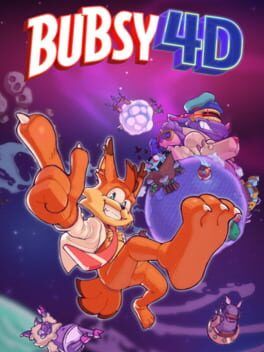

A nostalgia-meets-modern deep dive into Bubsy 4D, covering Fabraz’s full 3D reboot, what the new trailer reveals about level design, movement, and humor, and how smart pricing, broad platforms, and the Pawsome Edition could finally redeem Bubsy.
Bubsy is the punchline that refuses to die. From the awkward SNES and Genesis days through the infamously rough Bubsy 3D, the wisecracking bobcat has spent decades as shorthand for how not to do a mascot platformer. So the idea of Bubsy 4D, a new fully 3D entry from Fabraz and Atari, sounds like a setup for more jokes.
But the reveal trailer and early details suggest something different this time. Bubsy 4D is shaping up as a deliberate nostalgia-meets-modern reboot that understands exactly what went wrong before and leans into what made 90s mascots fun in the first place.
It is still loud, still colorful, and still packed with yarn, but Fabraz appears to be wrapping all that chaos around genuinely thoughtful 3D platformer design.
From cautionary tale to confident 3D platformer
The big question around Bubsy 4D is simple: can a series that flopped its first 3D outing really pull off a comeback in 2026?
Fabraz’s answer seems to be to avoid chasing realism or cinematic swagger and instead go all-in on readable, tactile platforming. The camera work and movement shown in the trailer are intentionally clear and controlled, with wide lanes for running and jumping, strong color contrast on platforms, and level geometry that echoes the best of collectathon-era 3D games without the disorienting complexity that plagued Bubsy 3D.
Bubsy’s moveset is central to this reboot. Running, jumping, and gliding return, but they are now joined by wall-clawing and a new hairball roll that lets Bubsy puff up into a ball and rocket along slopes and corridors. Rather than relying on awkward momentum or twitchy physics, the trailers show generous air control, snappy direction changes, and movement that keeps the character visible and centered.
The result looks closer to a hybrid of A Hat in Time’s snappiness with the toy-box structure of classic 3D platformers than a throwback to the stiff, floaty feel of Bubsy’s 90s outings.
Intergalactic yarn chasing and BaaBot brawling
Bubsy 4D’s premise is cheerfully absurd in exactly the right way. The Woolies, his long-time alien foes, escalate their mischief by stealing all of Earth’s sheep. The sheep revolt, get outfitted with Woolie tech, and return as robotic BaaBots who then set their sights on Bubsy’s prized Golden Fleece.
That setup justifies a tour through space across a series of craft-themed alien worlds. The trailer teases planets built from oversized household junk, neon-lit space docks, and wool-and-felt landscapes that look like someone spilled a craft store across the galaxy.
Enemies are equally playful. BaaBots waddle, charge, and patrol in predictable patterns that invite pouncing and rolling through them, often arranged in arcs and lines that double as movement puzzles. Fabraz’s experience with kinetic platformers comes through in how these enemies are placed to reinforce flow: a downhill ramp into a cluster of BaaBots practically begs you to trigger the hairball roll and mow through them in one satisfying burst.
Collectibles are, of course, everywhere. Yarn litters platforms, hidden alcoves, and air routes, encouraging risky glides and wall climbs. Rather than leaning on pure collectathon bloat, the design seems focused on weaving yarn trails into the critical path so chasing them naturally teaches routes, shortcuts, and high lines through each level.
Level design that respects modern players
Where previous Bubsy games often felt like obstacle gauntlets with jokes stapled on, Bubsy 4D looks more like a proper 3D platformer built around varied goals and layered routes.
Stages appear to be semi-open spaces that support multiple objectives, whether that is hitting specific challenge routes, hunting yarn clusters, or experimenting with movement abilities. Ramps, half-pipes, and looping paths are everywhere, giving the hairball roll a dedicated playground. Verticality matters too, with walls and cliffs designed to be clawed up or glided across rather than acting as dead ends.
Crucially, camera framing and geometry do the work that old Bubsy games left to trial and error. Hazards are large, cleanly colored, and often telegraphed well before you reach them, minimizing the cheap hits that defined Bubsy’s worst moments. Checkpoints are tucked into natural pauses rather than invisible corners, and platforms usually sit in clear sightlines.
Fabraz also seems keenly aware that 3D platformers live or die on readability. Collectibles shine against backgrounds, enemies pop with bold outlines and color blocking, and key landmarks like launch pads, ramps, and secret entrances stand out even in busy scenes.
The result is a game that looks designed for both veteran platformer fans and younger players who may be meeting Bubsy for the first time.
Old-school wisecracks with self-aware writing
Bubsy’s personality has always been divisive. His constant one-liners and 90s mascot energy helped him stand out back in the day, but over time they also made him an easy target.
Bubsy 4D’s trailer and marketing lean into that history with a rare degree of self-awareness. The announcement copy, framed as Bubsy talking about his own “questionable track record,” acknowledges the memes while promising that this is finally the game he always deserved. That tongue-in-cheek tone carries into the footage, where quips feel shorter, punchier, and more reactive to gameplay events rather than endless background noise.
Importantly, the humor does not appear to be at odds with the action. On-screen gags are grounded in the levels themselves: BaaBots getting pinned in yarn contraptions, slapstick environmental traps, and setpiece moments like being shot out of cannons toward oversized craft supplies. Visual jokes complement Bubsy’s dialogue instead of competing with it.
This blend of self-aware writing and playful slapstick is key to making Bubsy tolerable, even likeable, in 2026. He is no longer the unironically radical mascot of the 90s, but a knowing throwback that is in on the joke.
A budget price and broad platform support
All of this would be promising on its own, but Atari is pairing the reboot with a strategy that makes Bubsy 4D genuinely hard to ignore: the game is coming in at a budget price and launching on just about everything.
Bubsy 4D is targeting a lower-than-standard AAA price point, positioning it as an impulse buy or a no-brainer pick for platformer fans and families. Instead of competing directly with premium blockbuster releases, it sits in the sweet spot usually occupied by indie darlings and AA passion projects.
Equally important is availability. The game is set to hit PlayStation 5, PlayStation 4, Xbox Series, Xbox One, Nintendo Switch, the upcoming Switch successor, and PC. That sweep covers essentially the entire current console landscape along with PC players, which both matches Bubsy’s historically broad reach and gives this reboot the best chance to build word of mouth.
For a series trying to rehabilitate its image, being playable everywhere at a friendly price might matter as much as any design decision.
The Pawsome Edition and the power of physical nostalgia
Atari and Fabraz clearly understand that Bubsy’s appeal is more cultural artifact than beloved mascot, and the Bubsy 4D physical Deluxe release leans into that nostalgia with unapologetic gusto.
The so-called Pawsome Edition for Nintendo Switch and its successor platform wraps the game in the kind of retro-leaning package that collectors crave. A proper cartridge, a tuck-in outer box, a printed manual, a poster, and an artbook turn what could have been a throwaway budget release into something that feels archival.
That matters for two reasons. First, it acknowledges that many of the people curious about Bubsy 4D are older players who grew up renting Bubsy games or seeing them on store shelves. Giving them a tangible, shelf-ready product taps straight into that memory of cardboard boxes and chunky manuals.
Second, it signals confidence. You do not invest in a deluxe physical run if you think your game will be forgotten overnight. The Pawsome Edition implies that Atari expects Bubsy 4D to have a life beyond launch and wants to cement this reboot as the new canonical face of the series.
Why this might actually work
Taken together, Bubsy 4D looks far less like a cynical nostalgia cash-in and far more like a genuine attempt to rehabilitate one of gaming’s longest-running punchlines.
A movement system built around gliding, wall-clawing, and the hairball roll gives Fabraz something mechanically distinctive to tune. Intergalactic, craft-themed levels use that toolkit to create readable, playful spaces instead of obtuse mazes. Humor is self-aware enough to disarm skepticism without sliding into full parody. And a budget price, wide platform list, and collector-focused Pawsome Edition all make it easier for curious players to give the bobcat another shot.
Bubsy may never sit alongside Mario or Sonic in the platformer pantheon, but Bubsy 4D is positioned to do something more interesting: transform a cautionary tale into a cult favorite. If the final game delivers on the promise of its trailer, this could finally be the adventure that lets Bubsy land on his feet.