
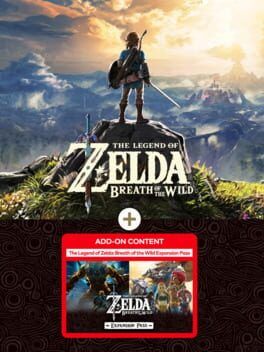
Famitsu’s game survey puts Zelda: Breath of the Wild at the top of Japan’s memory-wipe replay list, reinforcing its long-tail value for Switch and Switch 2 players.
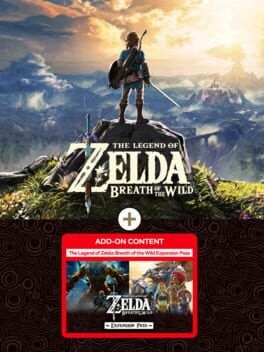
Image: IGDB
Breath of the Wild leads Japan’s memory-wipe replay vote
The Legend of Zelda: Breath of the Wild was named the game Japanese players most want to erase from memory and experience again, according to My Nintendo News’ report on a nationwide Famitsu survey of 5,400 people. That makes Nintendo’s open-ended Zelda the top answer in a field crowded with story-heavy RPGs, visual novels, and formative console classics.
The immediate tension is in the wording of the survey itself. This was not a vote for the most technically advanced game, the best-selling game, or even the most influential game. Famitsu’s question, as reported, asked which game people would like to wipe from memory and replay from the beginning. That framing rewards first contact: surprise, discovery, pacing, and the feeling that a game’s world is still unreadable.
According to the published results relayed by My Nintendo News, Breath of the Wild finished ahead of Chrono Trigger, Steins;Gate, Final Fantasy X, Final Fantasy VII, 13 Sentinels: Aegis Rim, Undertale, Dragon Quest I, Danganronpa, and Dragon Quest III in the top ten. The top 20 also included Dragon Quest V, Urban Myth Dissolution Center, Ace Attorney, Final Fantasy XIV, NieR: Automata, Persona 5 Royal, Dragon Quest XI, Xenogears, Ever 17: The Out of Infinity, and Mother 2.
The list favors games built around revelation
Breath of the Wild’s placement looks sharper when read against the rest of the ranking. Famitsu voters did not simply pile onto one genre. The list moves from turn-based classics to murder mysteries, modern RPGs, visual novels, MMO storytelling, and games whose reputations often rest on the player learning how their worlds work. Chrono Trigger and Final Fantasy VII carry generational memory. Steins;Gate, Danganronpa, Ace Attorney, Ever 17, and 13 Sentinels depend heavily on plot structure and late-game turns. Undertale and NieR: Automata are often discussed for player expectation and narrative recontextualization.
Breath of the Wild winning that kind of poll says something specific about its appeal. In this company, Zelda is being remembered less as a completed checklist and more as a first journey. Its strongest memory is the opening stretch of uncertainty: seeing distant terrain, testing the rules, misreading danger, and learning the rhythm of movement and combat without a guide already living in your head.
That is where the Breath of the Wild survey result becomes useful rather than merely flattering. A replay poll asks players to separate a game’s lasting admiration from the one thing a second run can rarely restore: ignorance. Famitsu’s voters, as reported by My Nintendo News, put Breath of the Wild above games famous for twists and endings, which suggests the original act of exploring Hyrule remains the draw.
Famitsu’s broader anniversary polling adds a second angle
A separate Nintendo Everything report from June said Famitsu held a large nationwide survey for its 40th anniversary, with over 5,000 people involved. That report covered different categories, including the first game respondents played, the most influential game, favorite character, favorite developer, and related topics. In those results, Nintendo was chosen as the overall favorite developer, Mario was the top character choice, and Breath of the Wild was selected as the number one title people would recommend to others.
That recommendation result sits neatly beside the later memory-wipe replay ranking. One poll, as reported by Nintendo Everything, frames Breath of the Wild as the game players would hand to someone else. The other, as reported by My Nintendo News, frames it as the game players wish they could hand back to themselves before they knew its language.
There is also a useful contrast. In the Famitsu anniversary results shared by Nintendo Everything and echoed in a Famiboards thread quoting that report, Breath of the Wild placed nineteenth in the “most influential game” category. Dragon Quest led that list, followed by Final Fantasy VII, Dragon Quest III, Pokemon Red and Green, Dragon Quest V, Final Fantasy X, Chrono Trigger, Super Mario Bros., Kingdom Hearts, and Resident Evil. So Breath of the Wild is not being presented by these surveys as Japan’s singular historical foundation. Instead, it is showing up as the modern game people most want others to play and most want to experience fresh again.
Zelda’s replay value is different from nostalgia
The Famitsu game survey arrives in a culture of rankings where older names often dominate long-term memory. Dragon Quest, Final Fantasy, Chrono Trigger, Mother 2, and Xenogears all appear across the reported results in different forms. Those are games with decades of attachment behind them, and several of them shaped player expectations for Japanese RPGs and narrative design.
Breath of the Wild’s win in a “forget and replay” context is a different kind of durability. It is not nostalgia for a childhood startup screen or a single legendary cutscene. It is closer to the sensation of waking up in a place where the horizon itself is the next prompt. From an action-adventure standpoint, that is the difficult trick: building a game whose first hours feel authored without constantly telling the player where to stand.
That helps explain why Zelda Breath of the Wild replay interest remains unusually sticky. Many action-adventure games replay well because combat gets cleaner or routes get faster. Breath of the Wild, based on this survey’s framing, is being valued for the opposite experience: the messy first run, when a player does not yet know which cliff is safe, which encounter is avoidable, or whether an improvised solution will actually work.
The Switch 2 audience is the practical pressure point
For Nintendo, the long-tail lesson is obvious, though the survey itself does not announce a product. Breath of the Wild continues to function as a discovery engine for players entering the Switch library late and for readers now following Nintendo Switch 2 Zelda conversations. Nintendo Everything filed its June Famitsu anniversary report under Switch and Switch 2, and its surrounding coverage includes Switch 2 reviews, Switch 2 editions, and features about revisiting Switch 1 games on Switch 2. That site context reflects where the audience is looking, even if Famitsu’s poll is about player memory rather than hardware plans.
What is confirmed by the supplied reports is narrow: Famitsu polled thousands of people, Breath of the Wild topped the memory-wipe replay list, and it also ranked first in the separate recommendation category reported by Nintendo Everything. What is not confirmed in these sources is equally important. There is no announcement here of a new Breath of the Wild release, no confirmed Nintendo Switch 2 Zelda upgrade path, no price, no performance target, and no timing for any updated version.
That distinction matters for buyers. If you already own Breath of the Wild, this survey is a reminder of the game’s cultural staying power, not a reason to repurchase anything on its own. If you have somehow avoided it and are deciding what belongs in a best games to replay or first-time Switch backlog, the Famitsu results strengthen the case that going in blind still has value. If your question is specifically whether to wait for a Switch 2 version or enhancement, the provided sources do not give enough confirmed information to answer that.
A poll about forgetting becomes a measure of endurance
The most revealing part of the Breath of the Wild survey is that it asks for erasure, not preservation. Players were not asked which box they would protect, which soundtrack they would frame, or which series they consider historically dominant. They were asked which experience they would sacrifice their knowledge of in order to feel its opening movement again.
That is a hard category for a long-running franchise to win. Familiarity is usually Zelda’s advantage: iconography, tools, dungeons, music, enemies, and the expectation that a new adventure will echo an old rhythm. Breath of the Wild’s top placement in Famitsu’s reported ranking suggests that, for many respondents, its defining memory is the moment before familiarity settles in.
For Nintendo’s Switch and Switch 2 audience, that is the enduring commercial and creative signal. Breath of the Wild remains a game people recommend, a game people remember as a first-time event, and a game whose replay conversation is still active years into the Switch era. Famitsu’s poll does not change the game, announce a new edition, or settle any platform question. It does show that among Japanese respondents, the wish to return to that first unknown climb is still stronger than the pull of some of gaming’s most famous endings.