
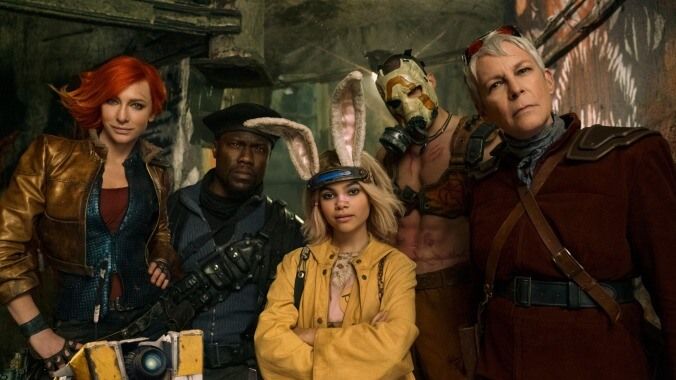
Eli Roth says studio cuts made the Borderlands movie a PG-13 compromise that "belonged to nobody," a claim that lines up with the adaptation’s harsh critical and fan reaction.
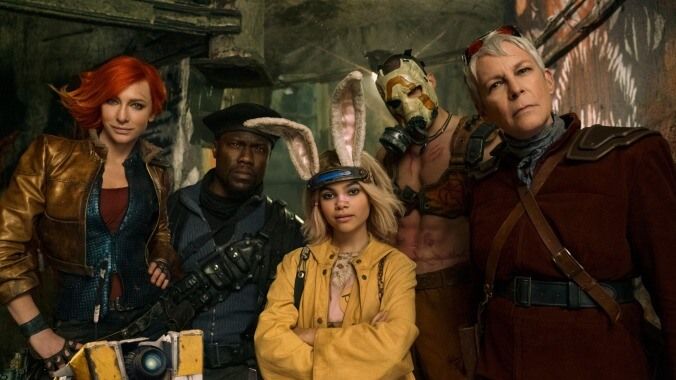
Image: avclub.com
Eli Roth says Borderlands was cut into a movie with no clear audience
Eli Roth has put the Borderlands movie failure on the kind of studio compromise that can flatten an adaptation before it ever reaches a theater. In an interview with Variety, Roth said the $120 million video game adaptation moved farther away from his “punk rock vision” as studio executives pushed for cuts and tweaks to earn a PG-13 rating.
His diagnosis is blunt. “You got something that belonged to nobody,” Roth told Variety. “It’s not a kids’ movie, but it’s trying to appeal to everybody. It’s for gamers, but it doesn’t have the violence the gamers want because it can’t be that extreme because it costs too much. You just wind up with a movie that’s neither fish nor fowl.”
That is the central tension of the Eli Roth Borderlands postmortem. Roth, best known for violent horror films such as Hostel, Cabin Fever and The Green Inferno, was hired for a property associated with loud weapons, crass jokes and exaggerated wasteland carnage. According to Roth, the final film’s PG-13 target pulled it away from the edge that might have made his version distinct, while still leaving it too abrasive and strange to function as broad family entertainment.
The flop was measurable, not a matter of taste alone
The Borderlands movie did not merely split opinion. By the numbers cited across the trade and games press, it failed hard. Variety describes the film as a $120 million adaptation that bombed with audiences and critics when it opened in 2024. Kotaku also cites a $120 million budget, excluding the expensive marketing around its summer blockbuster release, and says the film made back barely a quarter of its production cost.
Video Games Chronicle gives a slightly different production figure, reporting that the movie grossed just $33 million worldwide against a reported production budget of roughly $115 million, plus $30 million in marketing and distribution costs. Those figures differ on the exact production spend, but they point to the same outcome: this was a large studio bet that did not recover its costs theatrically.
The critical reception was just as severe. VGC reports that the first 25 critic reviews after the embargo lifted were negative, leading to an initial Rotten Tomatoes critic score of 0 percent. The same outlet notes that the score later rose to 10 percent. GamesRadar also frames the film around that 10 percent Rotten Tomatoes rating. For readers following the Borderlands movie flop, Roth’s comments now give the failure a sharper production-side explanation, though they do not settle every question about where responsibility belongs.
The PG-13 fight cuts to the heart of the adaptation problem
Roth’s argument is not simply that an R rating would have saved the film. The stronger point is about tonal ownership. Borderlands as a game series has been rated M by the ESRB, as Kotaku notes, but Kotaku also pushes back on the idea that gore alone defines it, arguing that the games’ violence is cartoony and filtered through a cel-shaded, comic-book style.
That distinction matters because the Borderlands adaptation had to translate game rhythm into movie rhythm. In the games, combat can be loud, repetitive and absurd because players are steering the chaos. In a film, the same material needs set-piece shape, escalation and payoff. If the violence is softened, the jokes sanded down and the danger kept within PG-13 boundaries, the action can lose its snap without gaining a new emotional center.
ComicBasics adds another layer, reporting that the film’s stunt coordinator said the creative team shot Borderlands as an R-rated movie, with sequences involving characters blowing people’s heads off and cutting feet off, before post-production decisions shifted the target toward a broader audience. That claim is separate from Roth’s Variety interview and should be treated as reported production context rather than a full accounting of the edit. Still, it lines up with Roth’s broader complaint that the finished cut landed between audiences.
Fans and critics had already identified the same sanitized feeling
Roth’s comments arrived after months of audience and press reaction that often circled the same wound: the movie felt too safe for the brand it was adapting, yet too messy to win over newcomers. Kotaku calls it a letdown to existing fans and exceptionally chaotic for average moviegoers. PC Gamer’s framing is even harsher, saying the Borderlands film “was not good” and that the writer had not seen anyone say something nice about it online.
VGC points out that many reviews leaned on the idea that the film felt sanitized. The Hollywood Reporter’s review, quoted by VGC, suggested longtime fans might conceivably get more out of it, but added, “I wouldn’t count on it.” ComingSoon.net, also cited by VGC, scored the film 3 out of 10 and called it one of Roth’s weakest films, offering little excitement or laughs. Collider’s 5 out of 10 review, as cited by VGC, said the source material had far more to offer in its characters and themes.
That reaction is important because it shows Roth’s explanation is not arriving in a vacuum. Viewers and reviewers were not only complaining that the Borderlands movie lacked blood. They were responding to a larger loss of attack: weak comic timing, diluted mayhem, thin character work and action that did not deliver the charge expected from a game famous for constant firefights.
Roth’s next move shows how strongly he took the lesson
The Borderlands PG-13 cuts are now part of Roth’s public case for leaving the studio model behind on his next film. Variety reports that Roth’s Ice Cream Man is being made outside the traditional studio system through The Horror Section, the independent genre company he founded in 2025. The film has a $5.5 million budget, raised mostly through foreign pre-sales and tax credits, and it shot in Canada.
Roth told Variety that larger projects naturally make studios more risk averse, while his own instinct is to do “the thing that’s left of center.” He frames Ice Cream Man as the opposite of Borderlands, a low-budget, independently released horror movie where he will not be pressured to tone down the carnage. Variety reports that The Horror Section plans to distribute two to four horror films annually in theaters, with lower budgets meant to preserve creative freedom.
That context does not erase the Borderlands adaptation’s problems, but it explains why Roth is talking about them now. He is contrasting a costly studio tentpole, built to reach the widest possible crowd, with a smaller unrated or harder-edged genre model where the target audience is narrower and the creative identity is easier to protect.
The unresolved question is whether a sharper cut would have been enough
The practical takeaway for Borderlands fans is limited but clear: Roth has offered an explanation, not a rescue plan. None of the provided sources report a new director’s cut, an R-rated version, a re-release or any official plan from Lionsgate, Gearbox or Take-Two to revisit the film. The confirmed development is Roth’s public criticism of the PG-13 process and his claim that the movie lost its audience by trying to satisfy too many of them at once.
There is still a major unanswered question. If the Borderlands movie had retained more violent material, would that have fixed the pacing, jokes, character choices and newcomer confusion cited by critics and games outlets? The sources do not prove that. They do support a narrower conclusion: the released film was widely received as a compromised adaptation, and Roth now says the studio’s PG-13 push was central to that compromise.
For anyone searching the Borderlands movie controversy after the fact, that distinction matters. Roth’s comments are a revealing postmortem on how a loud, abrasive game property became a broad-market movie that pleased very few people. They are not proof that an unseen version would have worked. They are evidence that, by the director’s own account, the final cut lost the hard edge he believed the material needed.