
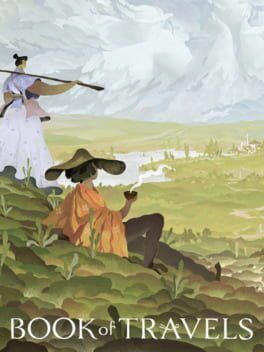

Might and Delight is sunsetting Book of Travels’ online service, but instead of disappearing, the "tiny MMO" is becoming a cheap offline RPG with full mod support. Here is why that unusual exit matters for game preservation and the future of struggling live-service titles.
Book of Travels was never a typical MMO. Marketed as a "tiny MMO" set in a watercolor world of quiet train rides, chance encounters and wordless greetings, it always felt like an experiment running against the live service mainstream. Now, five troubled years after its early access launch, it is ending in a way that is just as unorthodox: the servers are sunsetting, but the game is not really dying.
Instead, developer Might and Delight is turning Book of Travels into a permanent offline single-player RPG sold for around the price of a coffee, opening it to unrestricted modding, and explicitly framing this as a preservation‑minded exit rather than a shutdown. In an industry where online worlds routinely vanish the moment they stop being profitable, that choice is worth unpacking.
From Kickstarted promise to unsustainable live service
Book of Travels began with a strong pitch. Backed by Kickstarter and a niche community that wanted a slower, cozier alternative to mainstream MMOs, it promised a world built around ambience and light social contact rather than combat treadmills or loot grinds. Its October 2021 early access launch delivered that atmosphere, but development almost immediately ran into trouble.
Reports over the next few years painted a picture of a small studio caught between ambition and capacity. Might and Delight suffered layoffs, struggled to push out updates, and admitted that the game’s technical foundation was eventually deemed unsustainable. The live online architecture they had built simply could not support the broader vision the team had sold to backers and early adopters.
By 2026, the writing was on the wall. Active player numbers on Steam were low, development cadence had slowed to a crawl, and the studio publicly conceded that it had taken on more than it could handle. Crucially, though, stopping development did not automatically mean wiping the world clean. Instead of folding Book of Travels entirely, the team looked for a way to reduce ongoing costs while keeping the work accessible.
Why sunset the MMO and keep the world?
The MMO portion is what makes the game expensive to maintain. Servers must be hosted, monitored and patched. Networked systems need constant care to cope with exploits and bugs. Live service frameworks require ongoing content updates to keep subscriptions or in‑game spending flowing. For a tiny studio and a niche audience, that model had become financially and technically untenable.
The core art, design and systems of Book of Travels are not inherently tied to being a live MMO, though. Its slow traversal, its focus on gentle encounters and its unique atmosphere can function perfectly well in a solitary context. Converting to offline play removes the monthly infrastructure burden and the expectation of endless updates while preserving what made the game distinctive.
Might and Delight is explicit that it cannot continue building new content, but it can ship a stable, final version that players actually own and can run locally forever. The sunsetting of online support is less an execution of the project and more a controlled landing, trading persistent servers for a self‑contained work.
Rebalancing as a single‑player RPG
Simply cutting off the network would not have been enough. A world built for gentle social contact needed adjustments to work as a solitary journey. As part of this transition, Book of Travels has been rebalanced for lone players, positioning the experience as wandering the Braided Shore as a solitary traveler rather than one of a few scattered souls.
Systems tuned around random co‑presence are now expected to function without other humans. Progression has been adjusted so that story discoveries and character building do not rely on unpredictable cooperation. The design still keeps the rhythm of long walks, quiet contemplation and environmental storytelling, but with the implicit promise that any challenge in the game can be met with no one else around.
This repositioning also changes how the game fits into a player’s library. It is no longer a hobby world competitors log into every night for social rituals. It is now closer to a beautifully illustrated storybook RPG a player might revisit every few years, especially if new mods give fresh reasons to return.
A steep discount and a different value proposition
Alongside the shift to offline play, Might and Delight dropped the price of Book of Travels from a mid‑tier premium tag to a very low entry point. The studio is candid that this is no longer a growing live service, but a finished artifact at version 1.0.
For players, that reframes expectations. You are not buying into a future pipeline of updates or events. You are effectively purchasing a preserved world, complete with all its quirks and imperfections, that you can keep indefinitely and modify. That is a different value pitch from the typical MMO or live service, where value is framed around ongoing content streams and community activity.
From an industry perspective, this move also sets a precedent for what a sunset period can look like. Instead of running a fading game at a loss until the plug is abruptly pulled, a developer can choose to declare the project complete, cut the price to match its static nature, and invite a long afterlife driven by players rather than servers.
Letting players download and keep their characters
One detail that signals how preservation‑conscious this exit is lies in character handling. Before the servers go dark, players are able to download their online characters and bring them into the offline version. In many MMO closures, progress, cosmetics and achievements are simply lost, sometimes with token compensation in other titles owned by the publisher.
Here, Might and Delight is effectively handing character data back to players, acknowledging that the time invested in the world has value beyond the life of a central database. Character continuity becomes part of the preservation story. Even if the sparse multiplayer crowds are gone, individual travelers can continue their journeys in a personal version of the Braided Shore.
For long‑time MMO players used to having entire histories erased by server shutdowns, this small design choice feels quietly radical. It treats characters less as disposable entries in a live service economy and more as co‑authored creations that deserve to be kept.
Opening the door to unrestricted modding
The most striking part of Book of Travels’ transition may be its attitude to modding. As the studio steps away from active development, it is inviting the community to step in by enabling unrestricted mods and expressing a willingness to support modders as far as resources allow.
This does several things from an industry standpoint. It hands some measure of authorship to the community, potentially turning a static final release into a living platform for fan‑driven content. It also spreads the burden of preservation. Instead of one small team maintaining code and assets indefinitely, modders can step in to fix issues, translate text, rebalance systems or even expand the world in directions that were never possible during development.
The decision to be mod‑friendly acknowledges that in the long term, official support is finite but player creativity is not. Many classic single‑player games survive functionally today not because their original creators still patch them but because communities have made compatibility fixes, fan patches and total conversions. By exiting as an open, mod‑ready offline RPG, Book of Travels positions itself for the same kind of extended tail.
Preservation‑minded exits versus dead servers
Most struggling online games take a very different route. Once metrics fall below viability, servers are closed, digital store pages vanish, and the game effectively ceases to exist outside of nostalgic YouTube videos or private preservation efforts. The reasons are obvious: legal risk around unofficial servers, the cost of maintaining infrastructure, and a monetization model that often assumes central control.
Book of Travels illustrates an alternative. By disentangling the play experience from constant server access, it sidesteps many of the usual obstacles to preservation. The game becomes a self‑contained product that can be archived, referenced and played decades later without needing Might and Delight to keep a backend alive.
This is not a perfect solution. The original social layer, the fragile sense of sharing a lonely world with a handful of strangers, cannot be reproduced exactly in an offline context. Screenshots and memories will be the only record of that version of the game. But instead of losing everything, players retain a playable record of the mechanics, art and ideas that defined it.
For the broader industry, it raises a question. If a small, resource‑strapped studio can engineer an exit that prioritizes preservation and player ownership, why are so many larger publishers still comfortable with binary on‑off switches where entire projects disappear overnight?
Lessons for future live service games
There are several takeaways here that go beyond Book of Travels itself. One is architectural. Building an online game with a clear path to an offline mode, or at least to locally runnable servers, gives studios options when the live phase is over. Another is the recognition that players value continuity and access even more than feature parity. An offline, somewhat altered version of a beloved game is preferable to having only memories.
Modding support is the third pillar. If developers are not willing or able to run a game forever, equipping communities with the tools and permissions to do their own maintenance and adaptation is a powerful alternative. It turns a sunset into a handover, with fans assuming stewardship of what is left.
Book of Travels reached this point through difficulty rather than deliberate long‑term planning. Its troubled development, unsustainable tech base and small audience forced a decision. Yet the solution Might and Delight has settled on points toward a more preservation‑aware culture for online games, one in which failure of the business model does not automatically mean erasure of the work.
The tiny MMO did not become the enduring live service some backers had hoped for. But as an experiment in how to exit the online space without annihilating the world you built, it may prove more influential than its modest player numbers ever suggested.