

Keiichiro Toyama and Bokeh Game Studio are hiring for a new large-scale game. Here is what Slitterhead established about the team’s creative identity, and what we can realistically infer from the recruitment push.
Bokeh Game Studio has barely had time to celebrate shipping Slitterhead, but Keiichiro Toyama is already talking about what comes next. In a new open letter posted on Japanese recruitment platform HRMOS, the Silent Hill, Siren and Slitterhead creator calls for developers to join Bokeh’s “new large-scale project,” describing it as the studio’s second major title.
Toyama’s message makes one thing clear. In his view, Slitterhead only brought Bokeh “to the starting line.” The creative identity the team forged there now becomes the foundation they want to expand, refine and scale up.
What Slitterhead Established About Bokeh’s Identity
Slitterhead was never just a nostalgia play for classic Team Silent horror. It was a statement of intent for what Bokeh wants to be as an independent studio.
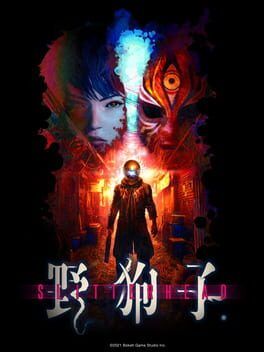
The first pillar is genre blending. Rather than pure survival horror, Slitterhead pushed toward a blood-powered action adventure set in a neon-drenched city. It mixed grotesque monster design with grappling, melee and ranged combat, plus a focus on possession and ally dynamics. For a debut project from a new studio, this willingness to occupy an awkward space between horror, action and urban fantasy showed a team less interested in recreating Silent Hill and more focused on experimenting with tone and systems.
The second pillar is visual and thematic boldness. Slitterhead’s fictional Kowlong city layered dense vertical streets, signage clutter and shadowy alleys over a lurid color palette. It used body horror and transformation as both spectacle and mechanic, turning blood itself into a resource. This was not a moody, restrained horror game but one that embraced shock, excess and a kind of pulpy grotesque energy.
Third is Bokeh’s collaborative production culture. The studio’s pre-release documentaries and dev diaries emphasized a small but veteran core trying to balance auteur vision with open internal debate. Toyama’s background on Gravity Rush, Siren and Silent Hill is one axis. The presence of other long-time collaborators in sound, art and design forms another. Slitterhead came across as a first attempt to define how those voices work together outside a big publisher structure.
Slitterhead had rough edges, and critical response reflected that, but for a studio-watch perspective it succeeded in laying out Bokeh’s DNA. This is a team that is comfortable with hybrid genres, unapologetically strange imagery and systems built directly on their narrative ideas.
A Second Game Framed As “Large-Scale”
The recruitment push for Bokeh’s second project uses the phrase “new large-scale project,” which immediately sets expectations different from a modest follow-up.
Toyama’s letter notes that the studio is hiring broadly across artists, programmers, game designers, production and marketing roles. That mix matters. It suggests Bokeh is not spinning up a small experimental side project, but gearing a full pipeline for another flagship release. Marketing roles in particular signal that the studio expects to support this new game with coordinated promotion rather than treating it as a low-key, niche experiment.
Toyama also describes the current phase as one of “trial and error,” implying that core ideas are still malleable. From a production standpoint, that usually means the team is in early pre-production or concept development. They have ambitions around scope and scale, but are still prototyping mechanics and tone to see what sticks.
Crucially, the language stresses that this is an original game, not a return to existing IP. For a creator constantly associated with Silent Hill, that is a deliberate statement. Bokeh clearly wants to be seen as a studio building its own catalog rather than orbiting around one classic franchise.
What The Job Specs Quietly Reveal About Scope
Public-facing recruitment language is always careful, but some patterns are still telling.
Across the VGC, Automaton and other reports, plus Bokeh’s own listings, a few contours emerge. Bokeh is seeking what Toyama calls “core game creators,” the kind of staff who shape moment-to-moment play rather than simply execute on an already-locked design. That supports the idea of a relatively flat, hands-on structure where mid-level and senior hires are expected to help find the game, not just build it.
The spread of roles across programming, art, design, production and marketing hints at a project roughly comparable in ambition to Slitterhead, and potentially larger. Rather than a heavily outsourced or tightly scoped indie, it looks like Bokeh is planning another full 3D production that will need a dedicated internal team to shepherd it from prototype to ship.
Some reports note that the work environment remains Japan-focused, with Japanese language ability required for applicants. This points to a studio that still prefers close, on-site communication rhythms rather than an aggressively global, fully remote workforce. Practically speaking, that can keep iteration loops tight, which is valuable when the project is in a “trial and error” stage and systemic experimentation is key.
Within that context, “large-scale” should probably be read as large for a mid-sized, independent Japanese studio, not necessarily as a AAA open world. The phrase likely covers things like a multi-hour narrative, bespoke characters and environments, and enough systemic complexity in combat or traversal to warrant a robust design and engineering staff.
How Slitterhead Informs The Next Project’s Direction
Looking at Slitterhead as a prototype for Bokeh’s identity offers a grounded way to think about the new game without drifting into wild speculation.
Slitterhead showcased a comfort with fast, kinetic action layered over unsettling imagery. Even if the next project moves closer to psychological horror or leans more on adventure storytelling, it is hard to imagine Bokeh walking away entirely from the idea that horror can be physical and expressive rather than only slow and suffocating.
The heavy emphasis on city spaces and modern, slightly off-kilter urban life is another likely throughline. Toyama has consistently been drawn to environments where the familiar and the uncanny overlap: rural Japan in Siren, distorted gravity cities in Gravity Rush, and Kowlong’s packed streets in Slitterhead. When he talks about wanting to push “unique expression,” that history suggests some form of distinctive, characterful setting rather than an abstract or purely fantastical backdrop.
From a systems angle, Slitterhead’s focus on allies and powers fueled by blood shows a desire to link story, theme and mechanics. The next project’s recruitment call for designers and programmers at this early stage backs the idea that Bokeh wants to keep tying mechanics directly to narrative ideas instead of building something more generic and skinning it later.
At the same time, describing Slitterhead as merely bringing the studio “to the starting line” hints at self-awareness about where that debut fell short. For a second game, Bokeh will be under pressure to tighten pacing, polish combat feel and refine progression without losing the willingness to experiment that made Slitterhead interesting in the first place.
Why This Hiring Wave Matters
For a small, auteur-led studio, the second game is often the real test. The first project proves the team can ship. The second determines whether they can build a sustainable identity and production model.
Bokeh ramping up with a broad recruitment push suggests a few key things about where the studio is in that journey. Financially, it implies confidence that Slitterhead’s performance, along with any external partnerships, was enough to fund another full project. Creatively, it shows that Toyama and his leads do not intend to retreat to something safer or smaller, but instead aim to push further into “large-scale” territory by expanding the team.
It also matters in terms of talent branding. The recruitment letter explicitly leans on Toyama’s history with Silent Hill, Siren and Gravity Rush while also framing Bokeh as a place for “unique expression.” For prospective hires, that is a pitch to join a studio where veteran horror and action sensibilities can be applied to something new, not simply to service a nostalgic revival.
Finally, this wave locks in expectations from players paying attention to studio trajectories. Slitterhead told us that Bokeh is comfortable being weird, messy and ambitious. The language around the new project shows they want to keep that ambition intact while tackling a larger canvas.
Until Bokeh reveals concrete details, any discussion of genre, platforms or mechanics will be guesswork. What is clear from the recruitment messaging is that the studio is treating Slitterhead as a foundation, not a peak. For anyone interested in where Japan’s mid-scale, creator-led studios go next, Bokeh’s second project just became one of the more important developments to watch.