
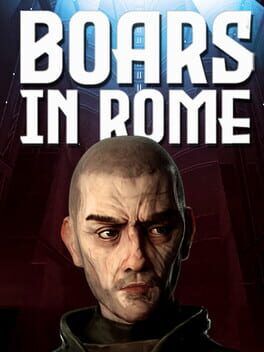

Boars in Rome is an indie parkour platformer on Steam with a live playtest, a dystopian Roman setting, and movement pitched between Mirror's Edge, Counter-Strike Surf, and Dishonored-style spaces.
Image: IGDB
Store links: Boars in Rome on Steam
Boars in Rome has a Steam playtest and a very clear pitch
Boars in Rome, an indie parkour platformer set in a ruined future version of Rome, is already playable through a Steam playtest, according to Rock Paper Shotgun's report on the game and its public Steam listing. There is no announced release date yet, but Steam users can sign up for the playtest and wishlist the game now.
That availability is the strongest concrete detail around Boars in Rome at the moment, because the rest of its appeal is built on a pitch that Steam players tend to understand instantly: fast first-person movement, urban traversal, and a city that looks designed to be read at speed. Developer Benji Savage described it on Bluesky as "Mirrors Edge x Counter Strike Surf" where players can "parkour on anything" in dystopian Rome. Rock Paper Shotgun framed it similarly, calling it a Mirror's Edge and Counter-Strike Surf inspired platformer.
Those comparisons do a lot of work, but they also create a challenge. Mirror's Edge sets expectations for precision, flow, and readable routes. Counter-Strike Surf suggests momentum, angle control, and a particular pleasure in treating architecture like a physics toy. Boars in Rome now has to prove that those references are an invitation rather than a burden.
The movement pitch is about flow, but also expression
The confirmed movement verbs described in the source material are already broader than a simple run-and-jump setup. Rock Paper Shotgun reports that Boars in Rome lets players run, jump, slide, and wallrun. The same report points to additional traversal tech, including swinging on lampposts and vaulting over low obstacles.
That mix is important for a parkour platformer because it suggests two overlapping fantasies. The first is smooth execution, where the player strings obvious routes together as cleanly as possible. The second is improvisation, where a railing, post, wall, or small obstacle becomes part of the route because the system allows it. Savage's own Bluesky phrasing, "be smooth n stylish" or "just jump around and explore," points to that wider range of play moods.
Rock Paper Shotgun also compares Boars in Rome mechanically to VHOLUME, while drawing a distinction between VHOLUME's simpler toolkit and Boars in Rome's more expressive additions. That is an impression from the outlet rather than a feature list from the developer, but it usefully identifies the game's likely sweet spot: players who enjoy mastering movement systems, but still want levels that invite playful route-making instead of only strict time-trial execution.
Dystopian Rome gives the platforming a sharper silhouette
The Steam page description quoted by Rock Paper Shotgun gives Boars in Rome its science-fiction premise. According to that listing, the player has been selected to begin a new life off planet, Earth has been abandoned, machines continue working, and nature is reclaiming what remains. The player is also described as having been frozen in time, with exploration of Rome's remnants tied to discovering what happened.
The setting is not presented as a preserved postcard version of Rome. The Steam description says historical monuments mix with futurist megastructures, and Rock Paper Shotgun notes that parts of the game lean into brutalist architecture rather than the older Roman imagery players might expect from the city. That contrast is a useful fit for first-person movement. Ancient landmarks can provide scale and recognition, while hard modern surfaces, elevated walkways, and looming future structures can provide the clean edges a parkour game needs.
For Steam players scanning a store page or a short clip, that visual identity could be the hook. A Mirror's Edge inspired game often lives or dies by how quickly the player can read the environment. Boars in Rome's promise is that Rome's ruins, machinery, vegetation, and megastructures are not only background flavor, but the surface of play itself.
The Dishonored comparison is about route choice, not confirmed genre
Rock Paper Shotgun goes further than the Mirror's Edge comparison by bringing up Dishonored, Half-Life 2, and Viktor Antonov's visual influence when discussing at least the first level. That is an aesthetic and structural comparison from the outlet, not an official claim that Boars in Rome is a full immersive sim.
Still, the comparison helps explain the tension in the game's design. According to Rock Paper Shotgun, the levels are linear and have an endpoint, but the journey through them is up to the player. That kind of structure can suit parkour especially well. A clear destination gives a level readable pressure, while optional routes let skilled players turn the same space into a personal line.
If Boars in Rome can support that promise, it may land in an appealing middle ground. It does not need the systemic density of Dishonored to benefit from Dishonored-like spatial design. It needs spaces that make players ask whether the obvious path is the best one, whether a risky wallrun saves time, or whether a lamppost swing opens a route that looked decorative on first pass.
The Steam angle is discovery, access, and uncertainty
Boars in Rome is positioned well for indie discovery because its Steam page already has two useful calls to action: wishlist the game or join the playtest. Rock Paper Shotgun reports that the playtest offers immediate access, which gives curious players a way to test the feel rather than wait on trailers and comparisons.
That matters for this specific kind of indie platformer because movement cannot be judged fully from a clip. The difference between satisfying parkour and frustrating parkour is often measured in small details: jump buffering, air control, camera behavior, collision edges, momentum retention, and how generously the game interprets a near-perfect input. None of those technical specifics are confirmed in the source material, so the practical advice is simple: if the premise grabs you, the playtest is the best available evidence.
The game's current public footprint also leaves major commercial details unanswered. The provided sources do not list a price, PC requirements, final release window, console plans, or total level count. Steam is the confirmed place to engage with Boars in Rome right now, but anything beyond that should be treated as unannounced unless the developer or store page says otherwise.
A small platformer with a strong first read
The reason Boars in Rome may catch Steam players' attention is not mystery. It has a compact, legible fantasy: move quickly through a dystopian Roman city where historical ruins collide with future infrastructure. The movement references are specific enough to attract players who miss first-person parkour, and the setting gives the game a flavor separate from cleaner sci-fi corridors or abstract challenge rooms.
The sensible caution is that all of this depends on feel. Rock Paper Shotgun's early description is enthusiastic, and Savage's Bluesky pitch is confident, but Boars in Rome remains unreleased and undated. For now, the confirmed story is a promising indie platformer Steam users can try through playtest access, with a movement set that includes running, jumping, sliding, wallrunning, vaulting, and lamppost swinging.
That is enough to make it worth a look for players who keep a corner of their library reserved for skillful traversal games. Whether Boars in Rome becomes a lasting movement favorite will depend on how those routes, physics, and city spaces hold up after the first stylish dash across the rooftops.