
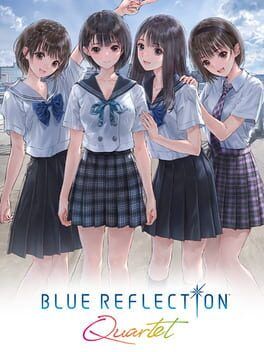

Koei Tecmo and Gust’s four-game Blue Reflection Quartet compilation is part remaster set, part resurrection project. Here’s what’s actually in the package, why the Blue Reflection Sun remake matters, and how the new PS5 / Switch 2 versions position the series for first-time players.
What Is Blue Reflection Quartet?
Blue Reflection Quartet is a digital-only compilation bringing the entire Blue Reflection project together on modern hardware on July 30, 2026. Koei Tecmo and Gust are packaging four separate releases into a single series-wide relaunch for PS5, Switch, Switch 2, and PC.
The collection includes:
Blue Reflection (2017)
The original PS4 / Vita-era RPG returns with a suite of visual and usability upgrades. Textures have been cleaned up for higher resolutions, environmental effects like water and lighting are reworked, and the package adds quality-of-life features such as autosave. Structurally it is still the intimate, school-bound magical-girl RPG about injured ballerina Hinako, but now tuned for a stable 60 FPS and sharper image on new hardware.
Blue Reflection: Second Light (2021)
Second Light is the most modern of the existing games, so the changes here focus on smoothing play rather than rebuilding content. Battles can run at higher speed, exploration movement is faster, and story scenes gain fast-forward options. Gust is also expanding the cast in combat by adding eight new playable battle characters pulled from Ray and Sun, plus extra options in the game’s already popular Photo Mode. For new players this is likely to feel like the most immediately approachable of the four titles.
Blue Reflection Ray (anime, now a condensed game)
Ray began life as a TV anime, not a game, which left a big gap for people who only followed the console releases. Quartet adapts the show into an original condensed game experience using 3D character models, new event scenes, and playable segments that retell key story beats rather than asking you to watch 24 episodes elsewhere. Gust is also layering in new short stories and writing an original prologue and epilogue to better anchor Ray in the larger continuity. For anyone approaching Blue Reflection as a game franchise first, Ray finally becomes something you can play rather than homework you need to stream.
Blue Reflection Sun (mobile, now fully remade)
Sun is the biggest swing in the package. Originally a Japan-only smartphone gacha RPG, its story and characters were effectively locked to an online service that could not realistically be preserved long term. Quartet rebuilds Sun as a standalone console RPG that borrows systems and UI foundations from Second Light. The remake drops the gacha trappings, restructures progression for a fixed-price product, and adds 24 new character events. As with Ray, Sun also gains connective prologue and epilogue chapters that help it sit cleanly inside the overall narrative timeline.
For international players this is the first time Sun is playable in a stable, complete form on consoles and PC, which turns what was once a side branch in the franchise into a proper pillar of the series.
The Reference Database And Timeline Fix
One of the biggest barriers for Blue Reflection as a brand has been its scattered format. The original game, its sequel, an anime and a mobile title all existed in different places, and they were not always clear about when each story was happening or how characters related across media.
Quartet tackles this with an in-package Reference database. It includes chronological flowcharts that lay out when each game and Ray’s events occur, plus character relationship charts and background lore entries. For a newcomer landing in 2026 it means you can treat Blue Reflection more like a traditional JRPG series and less like a cross-media puzzle box.
This is not just flavor text. For a continuity-heavy project like Blue Reflection, having an official, interactive guide bundled with the games lowers the intimidation factor, encourages players to bounce between entries, and makes the entire quartet feel like a single, curated experience instead of a pile of ports.
Why Reviving Blue Reflection Sun Matters
From a preservation perspective Sun is the crown jewel. Gacha-driven mobile RPGs tend to be the least future-proofed pieces of any franchise, and many simply disappear when service ends. By rebuilding Sun as an offline console game, Gust is effectively rescuing a large chunk of story, character work and art that would otherwise have been lost or at best relegated to cutscene compilations on YouTube.
It also rebalances the series’ center of gravity. Until now, Second Light was the easily playable modern entry while Sun and Ray felt like side material you could safely skip. Once Sun is a complete, localized console game, the world of Blue Reflection stops being a couple of niche JRPGs with vestigial spin-offs and becomes a four-part saga that treats mobile and anime content as fully fledged chapters.
For existing fans this is the first chance to engage with Sun’s narrative beats in a way that respects their time and wallet. For Gust and Koei Tecmo, it is a statement that the franchise was more than a failed gacha experiment and is worth the investment of a full remake.
The Importance Of The Platform And Visual Upgrades
Technically, none of the four components are brand-new games, but Quartet’s upgrades matter in a few key ways.
On PS5 and Switch 2 the package becomes a clean, modern entry point. Instead of telling prospective players to track down a PS4 copy of the original, watch an anime on a streaming service and hope the mobile title is still running, Koei Tecmo can point to a single digital product that works on the current console generation with higher resolution output, better performance and modern conveniences.
Visually, Blue Reflection’s identity is tied heavily to its soft color palettes, reflective surfaces and ethereal battle arenas. The improved textures, reworked water and UI clarity promised for the first game help bring that original vision closer to what Gust can render today. Second Light’s speed and control tweaks, along with extra party members, should make its already strong combat loop feel more responsive on new hardware. Ray and Sun, meanwhile, benefit from being built directly for console specs rather than streaming over mobile connections or TV broadcast budgets.
For Switch players, support for both the original system and Switch 2 keeps the barrier to entry low while offering a path to higher fidelity when fans do upgrade. On PC the unified release should also make it easier to keep the series running smoothly across future hardware generations.
Preservation, Brand Revival, Or Both?
Blue Reflection Quartet reads as both preservation project and soft reboot.
On the preservation side, bundling four entries with a common launcher, timeline database and quality-of-life pass gives the series its first cohesive, long-term home. The console remakes of Ray and especially Sun turn fragile, time-limited media into durable products that can be archived, patched and rediscovered years from now. In an era where mobile games and cross-media tie-ins evaporate quickly, this is unusually comprehensive.
At the same time, the marketing framing is not that of a museum piece. Moving to PS5 and Switch 2, writing new connective story content, and actively reworking two of the four titles to function as proper console games suggests Koei Tecmo still sees potential in Blue Reflection as an active brand. The added characters, prologue and epilogue chapters, and a centralized lore tool are about onboarding and re-engagement as much as historical record.
For new players it means Quartet can function as a jumping-on point, not just a compilation for people who were already invested. If the collection performs well, it also gives Gust a coherent, modern platform from which to launch a future third mainline game without having to apologize for missing or inaccessible story arcs.
Value And Series Positioning For First-Time Players
Evaluating Quartet as a value proposition depends on how you plan to approach it.
For someone who has never touched the series, four interconnected experiences for the price of a single new release is a strong offer. You are getting the original game in its best-performing form, the widely liked Second Light with convenience improvements and more party options, plus two previously awkward-to-access storylines rebuilt for console. The Reference database and chronological charts do a lot of heavy lifting in making sure you are not lost, even if you jump between entries or sample them out of release order.
The more interesting question is how to read the package in terms of series identity. Quartet effectively canonizes the entire Blue Reflection project. By giving Ray and Sun equal billing next to the console games and stitching them together with new scenes, Gust is asking players to see these four works as a single, multifaceted narrative rather than a core duo and some optional spin-offs.
For JRPG fans who bounced off the original release cycle because it felt fragmented, this is the first time the franchise looks approachable from the outside. For existing fans, the added story content, character events and mechanical polish provide enough new material that the bundle is more than a simple remaster set, even if the fundamental plots remain familiar.
Framed this way, Blue Reflection Quartet serves as both an act of preservation and a strategic reset. It secures the past of the series while pointing it toward a clearer, more consolidated future, and it finally gives curious players a single door through which to enter Gust’s melancholic, magical-girl universe.