
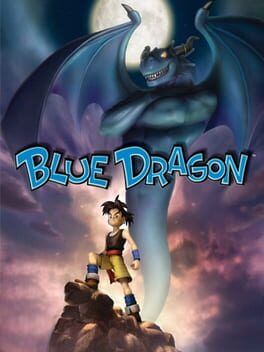
The unofficial Blue Dragon PC port re:Blue is available, adding native PC features while requiring players to supply their own Xbox 360 game discs or images.
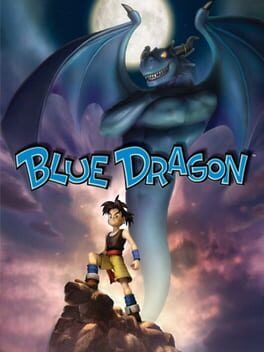
Image: IGDB
re:Blue is available, but it is still an unofficial route into Blue Dragon
Blue Dragon, Mistwalker’s Xbox 360 JRPG, now has an unofficial PC port called re:Blue, according to Video Games Chronicle. The immediate tension is clear: a game long tied to Xbox hardware can now run natively on modern PCs with substantial technical upgrades, but the project is fan made, distributed as free code, and still depends on players providing the original Blue Dragon retail discs or disc images.
VGC reports that re:Blue is a static recompilation that runs natively on Windows, Linux, and macOS, with Steam Deck compatibility also listed. That makes the Blue Dragon PC port meaningfully different from simply launching the Xbox 360 version through a general emulator. The project uses the ReXGlue SDK, described by VGC as an Xbox 360 recompilation runtime and toolkit that converts Xbox 360 PowerPC code into C++ that can be read and run on modern platforms.
The port was led by project lead and developer crack, also known as Tomcl7, with help from Rc0ld, according to VGC. A release trailer announced the port’s availability and ends with a dedication to Akira Toriyama, the Dragon Ball creator and Blue Dragon character designer who died in 2024.
What the fan port adds over the Xbox 360 version
The confirmed feature set is the reason re:Blue has drawn attention beyond the usual preservation circles. VGC says the unofficial Blue Dragon PC port allows higher frame rates, custom resolutions, and opens the door to mod support. Time Extension, citing PC Gamer’s hands-on reporting and the re:Blue launch details, lists support for resolutions up to 4K, windowed or fullscreen modes, multiple aspect ratios including 16:9, 4:3, 16:10, 21:9, and 32:9, unlocked frame rates, native keyboard and mouse support, achievements, and additional PC-oriented options.
GenerationAmiga reports a more granular set of visual controls, including field-of-view adjustment, shadow quality, draw distance, image filtering, and anti-aliasing options such as MSAA and SSAA. It also reports that re:Blue can run uncapped or be limited to 30, 60, 90, or 120 frames per second, while the game logic remains based around the original 30 Hz timing. According to GenerationAmiga, the port uses interpolation to smooth motion at higher frame rates without changing the underlying timing of the game systems.
That distinction matters for an RPG whose feel is built around menu cadence, animations, battle transitions, and exploration pace. A careless high-frame-rate conversion can destabilize old game logic or create a version that looks smoother while behaving oddly. The sources describe re:Blue as an attempt to separate presentation from simulation, keeping Blue Dragon’s original systems intact while modernizing how the game is displayed and controlled.
A native renderer makes this more than a resolution bump
Time Extension reports that re:Blue differs from some other ReXGlue projects because Tom and collaborators built a native renderer tailored to Blue Dragon’s engine and modern PC graphics cards. In PC Gamer’s reporting, quoted by Time Extension, Tom said that making a recompilation look good and adding features is often game-specific rather than something that can be fully generalized across projects.
That helps explain why this Blue Dragon fan port has attracted interest from technically minded players. Static recompilation can get an older console game running on new hardware, but RPGs from the Xbox 360 era carry many assumptions about output resolution, post-processing, input, and memory behavior. GenerationAmiga notes that some of Blue Dragon’s effects were designed for a 720p presentation, and says re:Blue adjusts areas such as bloom and gamma behavior so the image does not break down when pushed to higher resolutions.
For players who remember Blue Dragon as a bright, Toriyama-designed adventure with large expressive characters and clean silhouettes, that work is important. KitGuru argues that the game’s anime-inspired art style scales cleanly to higher resolutions compared with older realistic games that can show more artifacts when forced beyond their original display targets. That is an assessment, not a publisher claim, but it fits the practical appeal of this release: a stylized JRPG can benefit sharply from resolution, aspect-ratio, and filtering options if the renderer handles the original effects properly.
Blue Dragon’s preservation problem has always been platform-shaped
Blue Dragon first launched in Japan in 2006 and internationally in 2007, according to Time Extension and GenerationAmiga. It was developed by Mistwalker, the studio founded by Final Fantasy creator Hironobu Sakaguchi, with music by Nobuo Uematsu and character designs by Akira Toriyama, as VGC reports. Time Extension also notes Artoon’s involvement and describes the original as an ambitious RPG released across three Xbox 360 discs.
The game occupies a specific place in Xbox history. GenerationAmiga frames Blue Dragon as part of Microsoft’s broader effort to build a stronger Japanese game lineup on Xbox 360. It was a traditional turn-based JRPG with towns, dungeons, party building, and a combat system centered on characters whose shadows take physical form, granting access to classes, skills, and abilities.
That makes its limited platform availability especially frustrating for JRPG players. VGC reports that Blue Dragon remains playable on modern Xbox consoles through backwards compatibility, so it is not a lost game in the strictest sense. But that official route does not provide the same customization as re:Blue. For preservation-minded players, the difference is practical: backwards compatibility keeps access alive inside Microsoft’s console ecosystem, while a native PC recompilation can adapt the game to contemporary displays, handheld PCs, input preferences, and future community work.
The legal caveat: code is free, the game files are not
The most important reader guidance is also the least glamorous. VGC states that the re:Blue code is free to download, but installation requires all three retail Blue Dragon DVD discs or their disc images. Time Extension similarly reports that players must provide the original game files before the project combines the three discs into a single executable file.
That means readers should not treat the Blue Dragon fan port as a free copy of Blue Dragon. The sources describe re:Blue as an unofficial port and a GitHub-hosted code project, not an official Microsoft, Mistwalker, or Artoon PC release. Seeking out the port responsibly means understanding the split between the fan-made code and the copyrighted game data required to run it.
There is also a platform-rights caveat. The provided sources do not include any statement from Microsoft, Mistwalker, or another rights holder endorsing re:Blue. VGC’s report says Blue Dragon is playable on modern Xbox consoles via backwards compatibility, while KitGuru speculates that official PC support could become more likely as Microsoft expands Xbox backwards compatibility to PC and future Xbox 360 support. That is an outlet expectation, not an announced Blue Dragon PC release. As of these reports, re:Blue is the available native-style PC option, while the official supported path remains Xbox backwards compatibility.
For JRPG players, the appeal is access with control
Blue Dragon is not being rediscovered only because it is rare. Kotaku’s reaction to the port’s news focused on Nobuo Uematsu’s unusually exuberant regular battle theme, using the moment to place Blue Dragon among RPGs with memorable and unconventional combat music. That kind of response captures what preservation often looks like in practice: one technical breakthrough sends players back to the texture of a game, from its soundtrack and art direction to the way its battles move.
For completionist-minded RPG players, re:Blue’s feature set could matter across a full playthrough. Higher frame-rate presentation can make traversal and repeat battles feel less dated. Ultrawide and 4K support can make a long-form JRPG easier to live with on a modern setup. Keyboard and mouse support opens another control path, while Steam Deck compatibility gives the game a plausible handheld home outside the Xbox ecosystem. Mod support, which VGC says the port enables, is the long-term wildcard because community work can eventually touch areas such as quality-of-life tweaks, visual adjustments, or accessibility, though the provided sources do not confirm specific mods.
The right comparison is not between re:Blue and an official remaster, because no official remaster is described in the source material. The current choice is between playing Blue Dragon through Microsoft’s supported Xbox backwards-compatible version, with fewer customization options, or using an unofficial PC recompilation that requires original game media and carries the uncertainties that come with fan preservation projects. For a JRPG built by Sakaguchi, scored by Uematsu, and visually shaped by Toriyama, the arrival of re:Blue gives players a new way to study and replay a significant Xbox 360-era RPG, provided they understand exactly what is official, what is fan made, and what files they are responsible for supplying.