
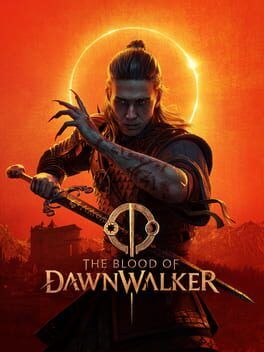
Rebel Wolves and Bandai Namco say The Blood of Dawnwalker save data can carry into future games. Here is what that Mass Effect-style plan signals for RPG choices before launch.
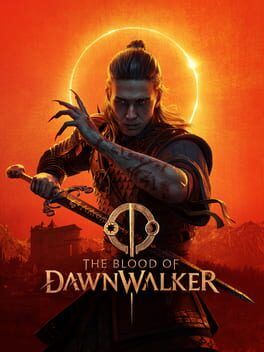
Image: IGDB
Store links: The Blood of Dawnwalker on Steam
Bandai Namco confirms the save import plan before the first choice is made
The Blood of Dawnwalker save data is being planned as part of a longer RPG saga, not as a one-game archive you forget after the credits. Eurogamer reports that developer Rebel Wolves and publisher Bandai Namco have confirmed players will be able to carry a save from The Blood of Dawnwalker into future Dawnwalker games. Bandai Namco’s clarification to Eurogamer was direct: “There will be an option to carry the save from the first game.”
That is the strongest concrete development here because it changes the pressure around the game before launch. The Blood of Dawnwalker is still an upcoming RPG, due September 3, 2026 for PS5, Xbox Series X/S, and PC according to GamingBolt and Push Square, yet Rebel Wolves is already asking players to think about their first playthrough as the opening state of a broader story.
The tension is obvious. Save imports are exciting when they make a series feel authored around the player’s history. They are also risky because every imported decision becomes a design promise the next game has to acknowledge, absorb, or quietly flatten. Game director Konrad Tomaszkiewicz told Eurogamer that the studio has been thinking about “the whole cycle” from the beginning because it “planned a few games” and wanted to tell a particular story across them. That early planning is encouraging, but the actual implementation remains unannounced. We do not yet know whether The Blood of Dawnwalker choices carry over through a full save import, a world-state summary, selected flags, character progression, relationship states, quest outcomes, or some combination of those systems.
The Mass Effect comparison is useful, but it also sets a high bar
Several outlets have reached for Mass Effect when describing the plan, and the comparison fits at the surface level. BioWare’s trilogy let players carry a Commander Shepard forward, preserving major decisions, relationships, and some character continuity across sequels. Eurogamer describes the Dawnwalker plan as “Mass Effect all over again, maybe,” while Push Square frames it as Rebel Wolves “pulling a Mass Effect” with save transfers.
The comparison should be treated as a reference point, not a confirmed feature list. Bandai Namco has confirmed an option to carry the save from the first game, and Tomaszkiewicz has spoken about player decisions being considered in future games. The sources do not confirm the granularity of the system. That distinction matters for RPG players, because importing a save can mean very different things. It might preserve Coen’s build, resources, and quest flags. It might only track narrative choices. It might translate a finished save into a curated opening questionnaire. At this stage, only the intent to carry save data forward is confirmed.
Eurogamer also notes the cost of this kind of ambition, pointing to BioWare’s experience with Mass Effect and the difficulty of carrying choice-and-consequence design across multiple games. The longer a series runs, the more branching decisions become production debt. A killed character, spared monster, betrayed faction, or missed quest can be easy to track in a database and hard to honor in cinematics, voice acting, level design, and sequel onboarding. For a Blood of Dawnwalker RPG built around reactivity, the save import plan raises a design question that will follow the game into launch: which choices are central enough to survive the jump to a sequel, and which will remain local consequences inside the first game?
Rebel Wolves says the saga was planned around Coen, centuries, and culture shifts
The clearest shape of The Blood of Dawnwalker sequel planning comes from Tomaszkiewicz’s comments to Eurogamer and earlier remarks reported by TheGamer from a CGMagazine interview. The series is centered on Coen, described by Eurogamer as a half-human, half-vampire protagonist. The first game is set in the 14th century, while Eurogamer reports that a Summer Game Fest saga trailer showed a present-day scene involving blood sachets delivered to an ailing vampire. Tomaszkiewicz told Eurogamer that this scene is actually a post-credits scene in the upcoming game.
That does not confirm a modern-day sequel. Eurogamer asked directly whether the next Dawnwalker game would be set in the present, and Tomaszkiewicz answered, “No. No, no, no.” His broader explanation was that the series can travel through ages and cultures. GamingBolt quotes him saying there is “more fun in telling different stories from many places on Earth,” because the team has to learn local cultures, legends, and historical events and then fit the supernatural story into those settings.
TheGamer, citing CGMagazine, reports a similar long-view pitch from Tomaszkiewicz: future games would lead players to different eras, countries, cultures, local legends, myths, and creatures of the night with Coen. The same report quotes him saying the promise is to keep Coen, let players shape him, and have those choices taken into consideration in later parts.
For lore-minded RPG players, that is the most interesting part of the save plan. A long-lived vampire protagonist gives Rebel Wolves a structural answer to one of sequel design’s oldest problems. The world can move forward by decades or centuries without replacing the lead. Mortal companions, kingdoms, curses, and political settlements may pass into history, while Coen remains the continuity thread. That could let a sequel treat your first game’s outcomes as legends, scars, bloodlines, grudges, or institutional changes rather than needing every supporting character to reappear unchanged.
The first game’s systems make save carry-over feel heavier than a marketing checkbox
The save import plan lands differently because The Blood of Dawnwalker is already being pitched around constrained time, consequence, and a dual nature. GamingBolt reports that players can act freely within a 30-day time limit as Coen deals with the crisis imposed by Brencis on Vale Sangora and tries to save his family, or fails to do so, with consequences attached. The same outlet notes Rebel Wolves has discussed other fantasy beings such as pixies, kobolds, gargoyles, and the possibility of other Dawnwalkers.
IGN’s recent gameplay coverage gives a smaller, more mechanical glimpse of how those systems may play in quests. In its IGN First video article, IGN describes a full quest called “Pearly and Precious,” which introduces a sanzhana, or pixie. IGN says the footage is played during the day, when Coen has access to witchcraft rather than vampiric skills. The showcased abilities include a speed-enhancing spell and the Ravenous Flock curse, described by IGN as an eruption of spectral birds that damages nearby foes, alongside sword duels and investigation around corpses.
Those details matter because imported save data is most compelling when a game’s choices are layered. If The Blood of Dawnwalker tracks whether you spend precious days on side quests, how you approach creatures like pixies, which powers define your version of Coen, and whether family, factions, or villages survive, then a future import has meaningful raw material. If it only preserves a few headline endings, the Mass Effect comparison will feel thinner.
The confirmed facts stop short of saying which layers will transfer. As a systems read, though, the 30-day structure is exactly the kind of framework that could produce sequel-ready flags. Time spent is a choice. Time wasted is a choice. A reward taken from a creature, a debt left unpaid, or a family member saved at the cost of a town could all become clean variables for a future game. That is expectation based on the disclosed design direction, not a confirmed feature map.
Planning early helps, but sequels have to survive production reality
Tomaszkiewicz’s strongest argument for the save transfer plan is that Rebel Wolves is thinking about it now rather than retrofitting it later. He told Eurogamer that when a studio knows where later games lead, it is easier to place events and story hooks in the first game. He contrasted that with starting a sequel and only then asking which decisions should be predicted, how they should connect, and how to make the save transfer feel “smooth and organic.”
That is the right production instinct. A sequel that reads a prior save needs narrative architecture from the start. Quest designers need to know which outcomes are canonically variable. Writers need to avoid closing doors they later want to reopen. Technical teams need a stable save format or an export layer that can still be read years later, across patches, editions, platforms, and storefront ecosystems. None of those details have been announced by Rebel Wolves or Bandai Namco, but they are the practical constraints behind the publisher’s one-sentence confirmation.
There is also a business reality around any The Blood of Dawnwalker sequel. GamingBolt notes that the game has more than two million wishlists, but also frames its success as still uncertain before launch. Push Square’s coverage captures some community caution in response to the sequel talk, with readers expressing hope that the first game sells well enough and is good enough to justify future entries. That skepticism is reasonable. A save transfer plan depends on future games existing, and the sources do not provide sequel titles, release windows, budgets, or platforms.
So the confirmed promise is narrower than the fantasy version of the promise. Bandai Namco says there will be an option to carry the first game’s save into future titles. Rebel Wolves says it has planned a multi-game cycle around Coen and different eras. Everything beyond that, including the number of sequels, how far the branches extend, and whether every platform will support seamless importing, remains unannounced.
Practical guidance before launch: keep the save, but wait for import details
For players planning to start The Blood of Dawnwalker at launch, the immediate advice is simple: preserve your save data. Push Square specifically tells PS5 players to keep their save on the console SSD or upload it to PS Plus cloud storage, because it may be useful for later installments. The same logic applies broadly on Xbox Series X/S and PC, though the sources do not detail platform-specific cloud behavior, cross-save support, or whether a save from one platform could ever be imported into a sequel on another.
If you are the kind of RPG player who normally deletes saves after finishing a game, this is one to archive. Keep a cleared endgame save if the game creates one. Keep backup saves before major decisions if the system allows it. If Rebel Wolves later explains which save slot is read by a sequel, you will have options rather than regrets.
The bigger buyer’s question is whether the save transfer plan should change your commitment before reviews. It should raise interest, especially for players who value long-form role-playing continuity, but it should not replace judgment about the first game. The Blood of Dawnwalker still has to stand on its own as a September 2026 RPG with satisfying quests, combat, progression, pacing, and consequences inside Vale Sangora. A future import can deepen a great playthrough, but it cannot rescue a weak one.
For now, the useful takeaway is measured optimism. The Blood of Dawnwalker save data plan is confirmed in principle by Bandai Namco, and Tomaszkiewicz’s comments suggest Rebel Wolves is designing the saga with that continuity in mind. The unanswered questions are the ones RPG players should keep asking as launch approaches: what exactly transfers, how visible those consequences are, whether builds matter beyond narrative flags, and how much of your Coen future games will truly remember.