
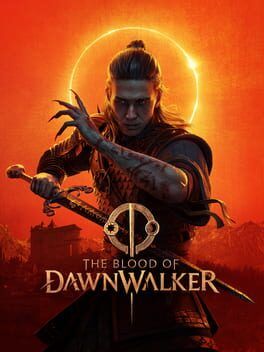

Hands-on previews of The Blood of Dawnwalker point to a time-limited vampire RPG built around day and night tradeoffs, branching quests, and visible Witcher DNA, but the promise still depends on how Rebel Wolves sustains those systems across the full game.
Image: IGDB
Store links: The Blood of Dawnwalker on Steam
A vampire RPG with a hard clock, not an endless checklist
The most concrete detail coming out of the latest The Blood of Dawnwalker preview round is also the one that gives Rebel Wolves’ debut RPG its sharpest edge: Coen has 30 in-game days to save his family from Brencis, the vampire lord ruling Vale Sangora. MonsterVine reported that setup after roughly four hours with the game at a Bandai Namco event, while IGN’s four-hour hands-on described time as a kind of currency spent when quests move forward. ScreenRant similarly noted that choosing specific missions advances the day’s clock, forcing players to decide what can be done before a major evening event begins.
That time limit is the tension holding the Dawnwalker vampire RPG together. This is still an open-world action RPG set in a 14th-century European fantasy region, with Bandai Namco publishing and Rebel Wolves developing, but the previews suggest the studio is resisting the genre’s usual invitation to clear everything at leisure. Coen’s story begins under vampire occupation, with villagers required to provide blood in exchange for survival under Brencis’ rule. In the early hours shown to press, that pressure is not background lore. It is tied to errands, investigations, family needs, and choices that may close off other options because the clock keeps moving.
That is the key reason the current conversation around The Blood of Dawnwalker gameplay feels different from a standard hands-on cycle. Previewers are responding less to map size and more to how time appears to make ordinary RPG decisions uncomfortable. The caveat is important: outlets played slices of the game, mostly the prologue and early open-world portions. The 30-day structure is confirmed in the preview material, but whether it creates meaningful long-term consequence across the full campaign remains the central unanswered question.
The prologue turns small village work into moral pressure
Across the hands-on reports, the early village sequence is doing a lot of systems teaching without presenting itself as a detached tutorial. MonsterVine described starting as a normal human Coen, helping villagers and family members with tasks such as obtaining medication or fishing. PCGamesN’s preview gave a more specific example, with Coen trying to help his mother Esme ahead of the Blood Mass, the monthly event tied to Brencis’ blood tithe. IGN’s hands-on focused on another early quest involving a stolen banner intended to honor Brencis, which sends Coen through the village interrogating suspects and using an investigative vision to follow clues.
The common thread is that the game introduces choice through domestic and civic obligations before it turns Coen loose as a supernatural fighter. ScreenRant wrote that side quests before a disastrous night directly affect what happens later, while MonsterVine said choices in village missions had visible impact on a later story event, including an unpleasant outcome involving a family member. IGN’s example frames even a tutorial investigation as a political and moral problem: the theft is not treated as simple mischief, but as an act connected to resentment under vampire rule.
For RPG players, that is the promising part of the preview consensus. Rebel Wolves appears to be front-loading the lesson that quests are not isolated errands. They are time costs, relationship tests, and future complications. That is also where the game’s risk lives. If every village choice is expected to ripple forward, the full game has to support a heavy narrative accounting burden. The previews show early reactivity, but they cannot yet prove the breadth or durability of those consequences.
Day and night are separate play styles, not cosmetic lighting swaps
The Blood of Dawnwalker’s day and night split is the clearest expression of Coen’s identity as a Dawnwalker, a half-human, half-vampire protagonist. Public gameplay descriptions and preview coverage agree on the broad structure: by day, Coen leans into human interaction, swordplay, investigation, and potentially less violent solutions. At night, his vampiric side opens traversal and combat options that are unavailable during daylight.
The public listing summarized on Wikipedia describes daytime play as focused on sword combat, including directional blocking where players select one of four directions to attack or parry. It also describes activation charges earned through damage, which can be spent on Hex magic or execution moves. At night, the same listing says Coen can use vampiric traversal and combat abilities, including vertical wall movement, Shadowstep teleportation, claws, and bites that restore health. MonsterVine’s hands-on aligns with that, reporting access to teleportation, a vampire bite used to drain enemies for health, and claws, although the writer said it was difficult in that build to distinguish claws from sword damage and effects.
This split matters because it can change quest routing, not only combat flavor. The same public gameplay description says the time of day can significantly affect quest resolution, with daytime Coen having more opportunities to speak with NPCs and find nonviolent approaches. At night, Coen must avoid detection by guards and other vampire threats. IGN’s preview language supports the idea that mastering both sides of Coen’s condition is central to saving his family, while the new IGN gameplay video for the Deep Down prologue quest showed investigation systems and swordplay before Coen is transformed.
The most interesting build question is whether Rebel Wolves can make both halves feel equally viable. Previewers saw flashes of the vampire kit, human investigation, sword combat, and magic, but MonsterVine specifically noted limited time with magic in the open world. If one form becomes the obvious efficiency choice, the day-night premise could flatten. If each form keeps distinct quest advantages and costs, the time limit becomes a build and routing problem as much as a narrative one.
The Witcher comparisons are earned, but they have limits
RPG fans are comparing The Blood of Dawnwalker to The Witcher for clear, factual reasons. Rebel Wolves includes former CD Projekt Red developers, and several sources identify game director Konrad Tomaszkiewicz as a former director or lead on The Witcher 3: Wild Hunt. IGN says the studio has presented the game with enough confidence to invite comparison to CD Projekt Red’s best-known RPG work. PCGamesN went further in its preview, pointing to recognizable presentation echoes such as question marks on the map, an investigation filter, and dialogue options presented in colors that distinguish progression from optional lines.
Those similarities help explain reader expectation, but they should not be treated as a guarantee. The Blood of Dawnwalker has a different protagonist, different pressure structure, and a day-night mechanical identity centered on vampirism. IGN’s four-hour preview concluded that the game has plenty of Witcher-like appeal while building an identity of its own. PCGamesN argued that the game is strongest when it moves beyond its obvious heritage into sharper consequence and more frantic combat. ScreenRant compared its branching plotlines and action depth to familiar RPG reference points, but that is a preview judgment from a limited session, not evidence of full-campaign quality.
The safest way to read the consensus is this: The Witcher comparison is useful as a design lineage, not as a promise of equivalent scale, polish, or payoff. The early evidence supports shared DNA in quest framing, investigation, morally messy decisions, and a dark European fantasy sensibility. The full test will be whether Rebel Wolves can maintain that density over 30 in-game days without relying on nostalgia for a different studio’s work.
Combat previews point to ambition and a few open questions
The Blood of Dawnwalker gameplay shown so far is not only about dialogue and clocks. IGN’s eight-minute Deep Down gameplay video shows a young, pre-vampire Coen exploring underground ruins, examining an ancient mural, uncovering hidden lore and loot, and fighting the Forgotten Guardian in a boss encounter. PCGamesN described a later combat challenge against Murohn the Malformed Monstrosity as difficult enough to require repeated attempts, while praising the system’s energy. MonsterVine reported basic access to vampire teleportation, biting, claws, swordplay, and magic during its session.
The emerging picture is of a combat model trying to serve several roles at once. It needs readable sword duels during the day, powerful vampire expression at night, investigation-driven questing between fights, and progression across three skill trees, as described by the public gameplay listing. The same listing says Coen gains skill points to unlock active abilities and passive bonuses, which should matter to players who care about builds rather than simply following the main story.
There are still unknowns that previews cannot answer. MonsterVine’s uncertainty about claws versus sword differentiation is exactly the kind of early note that matters in an action RPG, because form identity has to be legible through damage, utility, risk, or resource flow. Preview sources did not provide final performance analysis, PC system requirements, console mode details, or a broad look at late-game progression. The combat shown sounds promising and occasionally demanding, but it remains preview material from controlled access rather than a settled buyer’s verdict.
Release timing, platforms, and what to watch before launch
The Blood of Dawnwalker is developed by Rebel Wolves and published by Bandai Namco Entertainment. The public listing cited in the provided source material identifies PlayStation 5, Windows, and Xbox Series X/S as planned platforms and gives a September 3, 2026 release date. IGN’s game page also lists an initial release of September 3, 2026, while MMORPG’s preview text refers more generally to a September release. None of the supplied preview sources provide a price, PC requirements, upgrade details, or final performance assessment.
For players deciding whether to wishlist the Rebel Wolves RPG now or wait, the practical guidance is straightforward. If your interest is driven by reactive questing, time pressure, vampire powers, and Witcher-veteran design sensibilities, the preview consensus is unusually strong for an early hands-on cycle. MonsterVine, IGN, ScreenRant, and PCGamesN all came away highlighting meaningful choice, a dark medieval setting under vampire rule, and systems that put pressure on how players spend time.
If your concern is execution across the full campaign, patience is warranted. The available sessions covered hours, not the full 30-day arc. The strongest confirmed idea is that The Blood of Dawnwalker wants every day, quest, and transformation to carry cost. The unanswered launch question is whether that cost remains coherent after the prologue, once the open world of Vale Sangora has to support different builds, quest orders, moral decisions, and the fantasy of being both vulnerable human and dangerous vampire.