
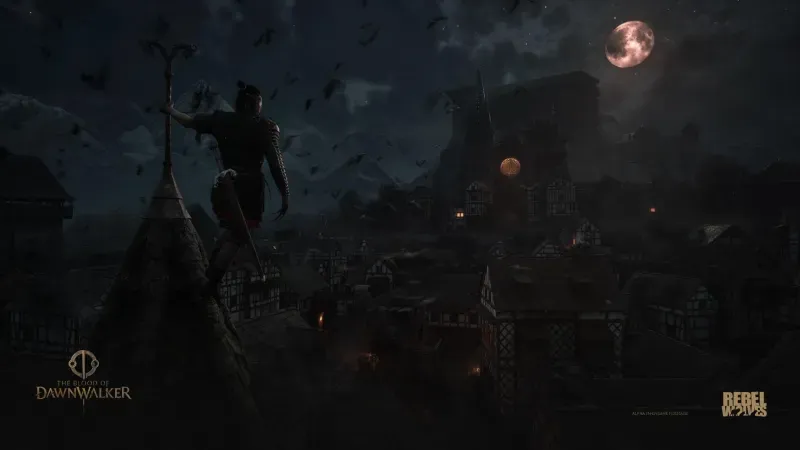

Rebel Wolves says The Blood of Dawnwalker is built around limited time, missed content, and meaningful quest choices, while Bandai Namco has confirmed the physical edition includes the full game data on disc.
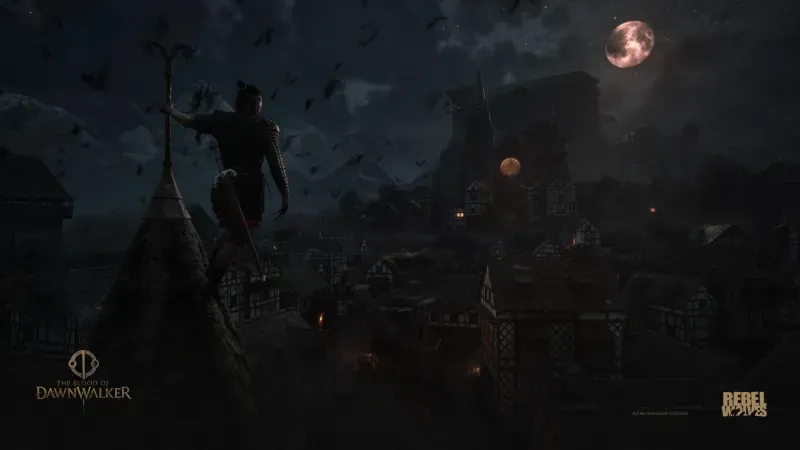
Image: gameinformer.com
The boxed version is a real disc, but the RPG is built to resist completion
The Blood of Dawnwalker will receive a physical disc release, and publisher Bandai Namco has clarified to Eurogamer that the disc will contain the full game data, with a day-one patch recommended. That is the most concrete buying information collectors have right now, and it lands at an interesting moment for an RPG that Rebel Wolves is openly designing around missed opportunities, limited time, and irreversible priorities.
Game director Konrad Tomaszkiewicz told Eurogamer, “Yes, it is coming to the disc.” Bandai Namco then gave the stronger preservation-minded clarification: “The full game data is on disc, with a day-one patch recommended.” Eteknix, citing the same Eurogamer confirmation, also reported that players will not need to download anything before they can start playing, while noting Bandai Namco’s recommendation to install the launch patch for fixes and stability.
That makes the Blood of Dawnwalker physical release a practical answer to a growing collector concern: whether a boxed game contains a playable product or only a license token. At the same time, the game itself is being pitched as the opposite of a checklist RPG. In PCGamesN’s interview, Tomaszkiewicz said the team has to “accept that people will not see everything.” For a completionist audience, that sentence is doing a lot of work. Rebel Wolves is selling a full game on disc, but the design philosophy inside that disc appears to be built around accepting incompletion as part of the role-playing.
Rebel Wolves is making scarcity a quest system, not a UI warning
The clearest official explanation of The Blood of Dawnwalker’s structure comes from a PlayStation Blog post written by Bandai Namco Entertainment Europe copywriter Elissa Dukes. The setup follows Coen, a young man in the village of Laslea, under the rule of the vrakhiri, vampires who demand blood from the village. On the day of the Blood Mass, Coen’s mother is too ill to attend, and the family risks punishment if he cannot find a solution before nightfall.
The key detail is how time moves. According to the PlayStation Blog, the day is divided into eight parts, but the sun does not move while Coen is merely wandering, listening, or observing. Time advances when the player chooses to intervene. In that prologue scenario, Coen can seek medicine from the herbalist Anca, search for an escaped pig or a lost neighbor, look into a stolen tapestry, confront villagers, practice sword skills, or uncover the beginnings of resistance against the vampires. The blog is explicit that the player may not be able to do it all.
That system reframes choice from dialogue flavor into route planning. If a quest consumes time, then accepting it is a build decision, a narrative decision, and a resource decision at once. The same official post says the player chooses how the day unfolds “in your own time,” which suggests Rebel Wolves is trying to avoid the pressure of a real-time clock while preserving the consequence of a finite day.
The Wikipedia summary included in the provided materials, which describes the game as modeled after classic pen-and-paper role-playing games, aligns with that official framing: actions that affect the plot advance time, exploration does not, and quests or story progression consume segments. Because Wikipedia is a public listing rather than a primary source, the safer confirmation is the PlayStation Blog’s prologue breakdown and PCGamesN’s developer interview. Both point toward the same design priority: the limit is not reflex speed, it is commitment.
The 30 days and 30 nights structure makes builds feel moral as well as mechanical
PCGamesN’s interview adds the larger campaign frame. Tomaszkiewicz said Rebel Wolves built The Blood of Dawnwalker around a 30 days and 30 nights structure after developing the idea of Coen as a partially transformed vampire. The game’s vrakhiri are described by Tomaszkiewicz as a unique creation for this world, a fusion of werewolf and vampire concepts that supports the day and night dynamic. Coen, he explained, worked in silver lines and has silver dust in his lungs, which prevents the transformation into a vampire from being completed.
That premise gives the progression system a useful tension. Coen is not simply choosing a faction from a menu. PCGamesN reports that Rebel Wolves does not assume whether players will embrace Coen’s vampire side or human side more. The same interview says players can continue taking on tasks in the world after the time limit runs out and the main goal of rescuing Coen’s family is resolved, but they will not be able to see everything or unlock the entirety of Coen’s skill tree.
For RPG players, that is the sharpest design claim in the current coverage. A skill tree that cannot be fully unlocked turns progression into characterization. If leveling up and questing both compete with the same finite campaign structure, then a combat talent, social route, or supernatural ability is not simply an efficiency upgrade. It is a statement about what Coen had time to become.
That does raise unanswered questions Rebel Wolves and Bandai Namco have not fully settled in the provided material. We do not yet have a complete breakdown of the skill trees, respec options, difficulty scaling, or how much post-deadline play remains meaningful after the family objective is resolved. The confirmed design intent, however, is unusually clear: The Blood of Dawnwalker choice consequence systems are meant to deny the idea that one optimal route can consume every story, every build option, and every outcome in a single run.
The Witcher 3 pedigree is relevant, but Rebel Wolves is trying a stricter structure
Comparisons to The Witcher 3 are unavoidable because of the people involved. PCGamesN notes that Tomaszkiewicz previously directed The Witcher 3 and Cyberpunk 2077, and that several Rebel Wolves developers came from CD Projekt Red. Tomaszkiewicz told PCGamesN that he is proud of comparisons to the studio’s previous work and said the experience gathered on those games made The Blood of Dawnwalker possible.
The important difference is structural discipline. The Witcher 3 became famous for consequences hidden inside side quests, local politics, and delayed outcomes. The Blood of Dawnwalker, based on the official descriptions, appears to be making the cost of attention visible through time segments and a 30-day campaign frame. That does not guarantee better quest writing, but it changes the player’s contract. If a quest asks for a segment of Coen’s day, the system is telling you in advance that the decision has weight.
From a systems perspective, this is a promising way to make side content feel less disposable. A missing villager, a sick parent, a stolen tapestry, and a possible revolution all compete for the same daylight. The PlayStation Blog’s prologue examples show a village where domestic errands, class resentment, occupation, and supernatural rule overlap. If Rebel Wolves can keep that density beyond Laslea, The Blood of Dawnwalker could make quest selection feel closer to tabletop triage than open-world errand clearing.
There is risk in that approach. Players who prefer to exhaust every quest marker before advancing the main story may find the design confrontational. Completionists may need to treat a first playthrough as a committed route rather than a perfect file. That is consistent with Tomaszkiewicz’s line to PCGamesN about accepting that players will not see everything, but it also means Rebel Wolves has to make missed content feel like authorship rather than punishment.
The physical disc confirmation is timely because boxed games no longer guarantee much
Eurogamer framed its disc question around a broader industry anxiety: some modern physical releases function as ownership checks or code-in-box products rather than full game copies. The outlet specifically connected the topic to Sony’s revealed plan to stop producing PlayStation game discs by 2028 and to Rockstar’s reported Grand Theft Auto 6 box containing a code rather than a disc. Eteknix similarly reported that these examples have increased concern around the future of boxed games.
Against that backdrop, Bandai Namco’s clarification gives collectors a firmer answer than the phrase “physical edition” usually provides. A Blood of Dawnwalker disc containing the full game data should be more valuable to players who care about lending, shelving, long-term access, and the ability to install without a full download. The caveat is also important: Bandai Namco recommends a day-one patch. That means the disc is being described as containing the game data, not necessarily the final or best version of the game.
For preservation-minded buyers, the practical reading is straightforward. The disc is confirmed as a real game disc, not merely a download entitlement, according to Bandai Namco’s statement to Eurogamer. The launch patch is still recommended, so anyone planning a fully offline install should expect to play the pressed build rather than the patched launch build. The sources provided do not include pricing, collector’s edition contents, regional disc details, or whether every platform’s boxed version is identical in data handling.
That last point matters because The Blood of Dawnwalker is listed for PC, PlayStation 5, and Xbox Series X/S in Eurogamer’s game page mention and in the provided Wikipedia entry. The confirmed “disc” language is most relevant to console buyers, since PC physical releases are now a separate and often limited retail question. Until Bandai Namco publishes retail SKUs or storefront pages with platform-specific packaging details, collectors should check the box format before preordering.
Release timing, platforms, and the sensible preorder posture
The Blood of Dawnwalker is due on September 3, according to Eurogamer’s report and the provided public listing. The game is developed by Rebel Wolves and published by Bandai Namco Entertainment, with release planned for PlayStation 5, Windows PC, and Xbox Series X/S. The FPS Review headline in the supplied material says the game has gone gold and that the September 3 launch is locked, though the excerpt provided here does not include the full article text behind that headline.
For players deciding whether to buy early, the confirmed information supports two different kinds of confidence. Collectors now have a publisher statement that the full game data is on disc, with a patch recommended. RPG players have multiple official and interview-based signals that Rebel Wolves is serious about branching routes, finite time, and consequences that prevent one file from seeing everything.
The unanswered questions are the ones that should decide a preorder for everyone else. We still need final performance reporting, platform comparisons, review coverage, patch details, and a clearer look at how combat depth holds up across the full campaign. Eurogamer’s writer said they played four hours and came away encouraged by the combat, sandbox freedom, and time-limited ideas, while PCGamesN’s preview also described the early hours as delivering on a branching-path RPG promise. Those are preview impressions, not final review verdicts.
If The Blood of Dawnwalker’s design lands, it could become a rare RPG where the best advice is to stop optimizing and live with your route. If you are buying for the shelf, the Blood of Dawnwalker disc confirmation is already unusually concrete. If you are buying for the buildcraft, quest consequences, and long-term role-playing, wait for final reviews to show whether Rebel Wolves’ attractive philosophy survives contact with the full game.