
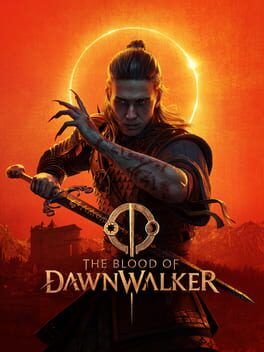

A reported $40 million development budget puts The Blood of Dawnwalker in a rare position: a major-feeling vampire RPG built with tighter scope, strong systems focus, and early GOTY buzz.
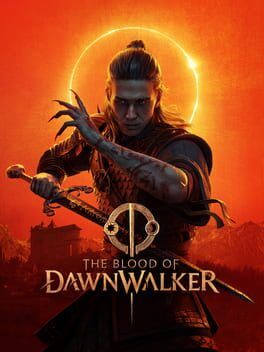
Image: IGDB
Store links: The Blood of Dawnwalker on Steam
A $40 million vampire RPG is now the industry’s interesting outlier
The Blood of Dawnwalker reportedly cost $40 million to develop, a figure that immediately changes the way Rebel Wolves’ debut RPG should be read. According to Bloomberg reporting cited by IGN, Kotaku, GamingBolt, Insider Gaming, and other outlets, NetEase supplied that development budget after acquiring a 26 percent stake in the Warsaw-based studio. Bandai Namco published the game, which means the reported $40 million figure does not necessarily include marketing and publishing costs.
That caveat matters. A development budget is not the same thing as a total cost to bring a game to market, and none of the provided reporting gives a full profit picture for Rebel Wolves, NetEase, or Bandai Namco. Still, the reported number stands out because The Blood of Dawnwalker has already passed 1 million copies sold, according to multiple reports citing the studio’s post-launch performance, while critics and players have responded warmly enough for Kotaku to frame it as a dark-horse Game of the Year contender.
The tension is obvious: this is a large-scale vampire RPG from a new studio with CD Projekt Red veterans, including Konrad Tomaszkiewicz, associated in the reporting with The Witcher 3: Wild Hunt and Cyberpunk 2077. It launched into a market where major open-world and prestige action games are often discussed in nine-figure budget terms. Yet The Blood of Dawnwalker’s reported production cost places it closer to an ambitious AA project than the modern AAA arms race.
The budget looks modest only because the comparison set has become enormous
IGN described the $40 million figure as landing The Blood of Dawnwalker “comfortably” in AA territory rather than the AAA category, where reported budgets can climb far higher. IGN’s own comparison points include IO Interactive’s 007 First Light reportedly carrying a budget above $200 million, Bungie’s Marathon reportedly sitting in a similar range, and Sony titles such as The Last of Us Part 2 and Horizon Forbidden West being reported in that neighborhood through earlier documentation.
That does not mean $40 million is small in any normal sense. It is a large production budget, especially for a first-time studio. What makes The Blood of Dawnwalker unusual is the relationship between the money, the genre, and the expectations attached to the team. A dark open-world action RPG with branching quests, day-night systems, cinematic writing, and third-person combat is the kind of project that can devour resources through content volume alone. Every quest state, dialogue branch, combat encounter, creature animation, and world-space edge case adds cost.
Wolf’s Gaming Blog noted another useful comparison: The Witcher 3 reportedly cost about $32 million to develop in 2015, while The Blood of Dawnwalker’s reported $40 million sits in a similar broad band once inflation is considered. That comparison should be handled carefully, since development pipelines, salaries, engine costs, outsourcing, localization, QA, platform requirements, and marketing expectations have all changed. But it does underline the central point: Rebel Wolves appears to have delivered a major-feeling RPG on a budget that looks restrained beside the biggest current productions.
Rebel Wolves kept the pitch pillars instead of chasing endless expansion
The most revealing detail in the reports is not the dollar amount by itself. It is how Rebel Wolves reportedly kept the game’s core pillars intact. Kotaku’s summary of Bloomberg’s reporting quotes Tomaszkiewicz as saying the studio did “everything to not change the foundations of the game,” and that the foundations remained the same as in the pitch deck. Insider Gaming similarly reports that sticking to those foundations helped Rebel Wolves meet its timeline.
For an RPG, that is a systems decision as much as a production decision. The Blood of Dawnwalker is built around a 30 in-game day structure, with the protagonist Coen shifting between human limitations during the day and vampire powers at night, according to IXBT’s summary of the game premise. That kind of design can be a scope limiter if the studio commits to it early. The timer creates pressure. The day-night split creates rules. The inability to see and do everything in one playthrough turns incompletion from a production weakness into a design philosophy.
That is where tighter scope can become a strength. A studio trying to match every modern open-world expectation might add endless errands, collectible layers, and map-clearing busywork. Rebel Wolves’ reported discipline suggests a different bargain: fewer systems with sharper consequences, quests constrained by time, and character progression shaped by when and how the player chooses to act. For players who value RPGs as decision engines rather than content warehouses, that design direction explains much of the current enthusiasm.
The team grew, but the reporting shows a studio watching its limits
The Blood of Dawnwalker development was not a tiny-team miracle. GamingBolt and Insider Gaming both report that Tomaszkiewicz self-funded the studio’s first year in 2022 while the team built a pitch document, hired staff, and created a prototype. Production began at the end of 2023, according to GamingBolt, after NetEase’s investment and budget commitment.
The team then expanded significantly. GamingBolt reports that Rebel Wolves had 90 employees in 2024 and has since grown to 160. Tomaszkiewicz told Bloomberg, as quoted by GamingBolt and Insider Gaming, that the current size is “the most fitting for our needs,” adding that he can still know and speak with people every day and feel like “a creator and not a manager.”
That quote is important because it identifies the ceiling Rebel Wolves seems to be trying to preserve. In big RPG development, studio size can solve problems and create new ones at the same time. More quest designers, combat designers, animators, writers, programmers, QA staff, and production support can improve coverage across a large game. But headcount also increases communication costs, documentation overhead, review layers, and the temptation to widen scope simply because more people are available.
GamingBolt also cites writer Jakub Szamalek as sounding a note of caution, saying the studio is tracking growth and does not want to overdo it. That caution is healthy. If The Blood of Dawnwalker becomes a franchise, the hardest sequel challenge may be resisting the assumption that every successful first game needs to become vastly bigger.
The GOTY conversation is really a design conversation
Calling The Blood of Dawnwalker a GOTY contender is still partly critical framing, not a formal result. Kotaku described it as a dark-horse Game of the Year contender, while IGN awarded the game a 9/10 and called it one of the year’s best open-world RPGs. IGN also reports that Metacritic recorded “Generally Favorable” critic and user reviews. Those are reception signals, not proof of awards outcomes.
What is notable is the kind of praise the game is attracting. The Blood of Dawnwalker’s reported strengths are tied to identity: a vampire RPG whose time structure and day-night transformation rules affect how players approach quests, builds, and exploration. That gives it a cleaner pitch than many larger RPGs. You are not simply optimizing a character sheet in isolation. You are making progression choices inside a calendar, deciding which opportunities are worth spending limited time on, and living with the fact that some content may fall away.
As an RPG player, that is the part of the design that makes the budget discussion meaningful. A $200 million RPG can still feel thin if its choices are decorative. A $40 million RPG can feel substantial if its systems repeatedly ask the player to prioritize. The Blood of Dawnwalker development story, as reported, suggests Rebel Wolves spent its budget around a small number of strong RPG promises rather than trying to win every feature comparison on the store page.
Sales are strong, but the profit picture is still incomplete
Several reports state that The Blood of Dawnwalker passed 1 million copies sold shortly after launch. IGN reports that Rebel Wolves told Bloomberg it is “extremely” happy with performance so far, and SteamDB figures cited by IGN showed a 24-hour peak of 24,495 concurrent players after an earlier peak of 78,188. Those are strong indicators for a single-player RPG, especially from a new studio.
Still, readers should be careful with revenue math. Wolf’s Gaming Blog estimated possible gross revenue based on a $70 copy price and discussed platform cuts, regional pricing, taxes, retail factors, and an Eclipse version costing $10 more. That outlet concluded the first million copies likely put revenue somewhere in a broad $35 million to $50 million range after certain assumed deductions. Useful as a back-of-the-envelope exercise, it is not the same as a confirmed financial statement.
The bigger confirmed point is simpler: a reported $40 million development budget reduces the break-even burden compared with games carrying reported budgets above $200 million. It gives The Blood of Dawnwalker more room to be a strong success without needing the sales profile of a platform-holder blockbuster. For a first entry in a new IP, that flexibility can be more valuable than spectacle.
For players, the safest read is to buy for the current game, not the sequel promise
The Blood of Dawnwalker is already being positioned for a future, but the confirmed details remain limited. GamingBolt reports that Rebel Wolves is looking for a lead writer on the next game, that save data from The Blood of Dawnwalker will carry over in some form, and that the exact shape of that carryover remains unknown. GamingBolt also reports that it is undecided whether future games will use the same time mechanic.
For the current game, New Game Plus is coming, according to GamingBolt’s reporting on Tomaszkiewicz’s comments, but it does not have an announced release window. That is the key practical note for players deciding whether to jump in now or wait. If you want to experience the first run as designed, with the 30-day pressure and imperfect completion baked into the structure, the existing release is the relevant product. If you prefer to replay RPGs with a built-out second-run mode, waiting for New Game Plus is reasonable, because Rebel Wolves has acknowledged it but has not dated it.
The Blood of Dawnwalker budget story is ultimately less about thrift than focus. Rebel Wolves reportedly had enough money to build a serious RPG, but not so much that the project could absorb years of uncontrolled sprawl. The early reception, million-seller milestone, and GOTY chatter suggest that constraint may have sharpened the game’s identity. For a vampire RPG built around time running out, that is fitting in the most practical sense: the clock seems to have helped define the work.