
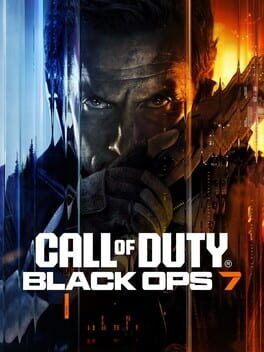

Call of Duty: Black Ops 7 was the best‑selling game in the US in November 2025 despite a lukewarm reception. Here’s how its commercial performance, fan backlash, and Activision’s decision to end back‑to‑back Modern Warfare/Black Ops releases could reshape Call of Duty’s annual cadence and appetite for experimentation.
Call of Duty: Black Ops 7 has pulled off a strange double act. Commercially, it did exactly what Activision needed: Circana’s November 2025 report has it as the best‑selling game in the United States across physical and digital, extending Call of Duty’s streak to 18 consecutive years where a new entry led its launch month. Critically and socially, it landed with a thud, posting one of the lowest Metacritic averages in the franchise’s history and igniting enough backlash that Activision felt compelled to address “the future of Call of Duty” in a public statement.
That statement quietly confirms one of the biggest structural pivots the series has seen in over a decade. After seven of the last eight mainline entries being either Modern Warfare or Black Ops, Activision says it will no longer release those sub‑series in back‑to‑back years. The next CoD after Black Ops 7 will not be Modern Warfare 4 or Black Ops 8. For a series built on annual routine, that is a big break from habit.
The result is a rare inflection point where sales data, design direction and brand fatigue are colliding in real time.
A win on paper, a wobble in context
On the surface, Black Ops 7 did what any Call of Duty is expected to do: sell. Circana’s US charts, echoed by outlets like Eurogamer, GamingBolt and a raft of platform‑specific sites, all point to the same headline. In November 2025, nothing sold better than Black Ops 7.
Yet zoom out and the story is less triumphant. Battlefield 6, which launched earlier in the year, remains 2025’s best‑selling game in the US year‑to‑date. Black Ops 7 only debuts around the middle of the top 10 for the full‑year rankings instead of instantly claiming first or second as previous CoDs often have. Other reporting notes a steep drop in physical sales compared to Black Ops 6, and the Metacritic average sits in the mid‑60s, above only Modern Warfare 3 in the mainline catalog.
This is what an underperforming Call of Duty looks like in 2025. It still dominates its launch month and generates enough revenue to anchor platform promotions and free‑weekend pushes, but it no longer automatically rules the annual charts. For a brand that once treated “biggest game of the year” as an entitlement, being beaten to that title by Battlefield is more than a cosmetic blow.
How Black Ops 7 became a pressure point
Some of this was inevitable. The last decade of CoD has leaned heavily on two names. From 2018’s Black Ops 4 through to 2025’s Black Ops 7, seven of eight mainline releases have been either Modern Warfare or Black Ops, with 2021’s Vanguard the lone outlier. What used to feel like distinct sub‑series gradually blurred into a single shared aesthetic of modern paramilitary gear, familiar weapons and live‑service systems that bled across games.
Black Ops 7 tries to split the difference between fan nostalgia and current trends. Marketing framed it as a spiritual successor to Black Ops 2, promising a return to near‑future tech, morally murky espionage and more playful loadout freedom. In practice, a lot of the launch criticism targeted the same pain points that have dogged recent entries: a campaign that feels safe and structurally conservative, multiplayer maps and modes that lean on remixes of old favorites, and progression systems tuned around long‑tail engagement rather than sharp seasonal ideas.
None of that stops millions of players from buying in at launch, especially with Warzone integration, pre‑order bundles and platform ecosystem deals doing their usual heavy lifting. But it does accelerate a perception problem. A franchise can only sell “one more season of the same” so many times before players start looking for something truly new, or at least different.
Black Ops 7 landed right on that fault line. The result is a title that succeeds enough to keep the machine running while also convincing Activision that the machine itself needs work.
Ending back‑to‑back Modern Warfare / Black Ops runs
That work starts with cadence. In an open letter to fans, the “Call of Duty team” wasn’t just doing PR clean‑up. Buried in the reassurances was a clear structural promise: no more back‑to‑back Modern Warfare or Black Ops releases.
For players, that line reads as a direct answer to a common complaint. When the mainline cycle is essentially Modern Warfare this year, Black Ops the next, Modern Warfare again after that, it becomes hard to feel like each game has its own identity. Mechanics drift across sub‑series. Weapon balance and movement speed converge on a shared Warzone‑friendly median. Campaign tones flatten into variations of the same globe‑trotting high‑stakes thriller.
Breaking that alternation is an admission that even the internal teams felt boxed in by the pattern. When you know the next three years are spoken for by two sub‑brands, it is harder to justify big swings in theme or mechanics. Dropping that rule opens the door for:
New or dormant sub‑series to return, whether that is a genuine Ghosts or Advanced Warfare follow‑up, a fresh historical focus, or something that leans harder into speculative science fiction.
Longer gestation periods for the marquee brands. If Black Ops is not due again for four or five years, Treyarch has more breathing room to rethink what Black Ops even means instead of shipping another iteration on the current template.
Structural experiments that would have felt too risky while the pipeline was MW → BO → MW → BO. That could be single‑player campaigns that ditch the cinematic corridor model, multiplayer built around smaller curated updates instead of full annual resets, or even a mainline CoD that cedes the competitive spotlight to a co‑op or extraction‑style focus for a year.
The message from Activision is that annual CoD is not going away, but the branding and creative focus of those annual games will no longer be locked to two pillars. In other words, the cadence stays, the pattern changes.
What annual CoD looks like without the MW/BO metronome
That raises the obvious question: what replaces the Modern Warfare / Black Ops handoff as the rhythm of yearly releases?
The safest prediction is a looser rotation across three or four “lanes” instead of two. One year might be a new or revived sub‑series built around a clear hook, the next a return to a fan‑favorite era, with Modern Warfare and Black Ops slotted in when they can arrive with something more than incremental updates.
From a design perspective, this potentially frees teams from chasing each other’s tails. When the expectation is that each November release must carry forward the same movement tech, weapon pool and Warzone updates, there is limited room for a studio to, for example, slow the game down, lean into asymmetrical modes or emphasize destructible environments. A more varied cadence gives Activision space to say “this is the slower, grittier year” or “this is the experimental sci‑fi year” without worrying as much about how that dovetails with the next MW or BO entry twelve months later.
It also dovetails with a broader industry trend. As service games mature, publishers are increasingly comfortable with flagships that ebb and flow rather than simply outdoing last year’s content drop. Call of Duty, attached to platform deals and holiday hardware pushes, has been slower to adjust. Black Ops 7’s performance, where the launch month is a win but the wider momentum is shaky, gives Activision a data point that suggests now is the time.
Experimentation vs stability in a live‑service ecosystem
The catch is that Call of Duty is not just a boxed game any more. Warzone, cross‑progression, seasonal battle passes and synchronized meta updates all tie the franchise’s moving parts together. That complexity is one reason the series gravitated to repeating sub‑series in the first place. It is easier to plug a new Modern Warfare into Warzone than it is to integrate a radical tonal or mechanical shift.
If Activision follows through on making each yearly release “absolutely unique,” it will have to solve some hard questions about compatibility and continuity. What happens to shared weapon pools when one year’s game leans into historical arsenals and the next jumps forward in time? How flexible can Warzone be without becoming a tonal soup that alienates everyone? Can progression and monetization be decoupled enough that a more experimental off‑year does not feel like a dead end for players invested in the ecosystem?
Black Ops 7’s free trial push, including multiplayer and Zombies access plus double XP weekends, hints at how Activision is trying to square the circle in the short term. Where older entries might quietly fade once sales softened, BO7 is being kept in the conversation through platform promotions and “try it yourself” messaging. That keeps the player pool healthy enough to support live updates while buying time to adjust the bigger strategic picture.
What this means for players and the next Black Ops
For players on the ground, the most immediate consequence of Black Ops 7’s awkward success is expectation recalibration.
First, the streak is intact. If you care about population size, match availability and social gravity, Black Ops 7 still functions as the de facto shooter of record for much of the console audience, at least through its launch window. The sales charts guarantee that.
Second, the mixed reception has been heard loudly enough that Activision is willing to say, in plain language, that the current pattern is not working. The “no more back‑to‑back MW/BO” promise is not just marketing spin. It is a structural commitment that will push the next Black Ops further into the future and, by necessity, make it carry more weight as a reinvention.
The upside is clear. When Black Ops eventually returns, it should not have to arrive as a slightly altered continuation of what Black Ops 7 did. Treyarch can treat this gap as a full reset: rethinking campaign structure, doubling down on the mind‑bending conspiracy tone that originally defined the sub‑series, or even stepping away from the familiar near‑future military fantasy in favor of something stranger.
The risk is equally obvious. In a market where Battlefield 6 can top the yearly US charts and where extraction shooters, co‑op horde modes and smaller competitive FPS titles compete for attention, the next CoD that chooses to be truly different has to land. Black Ops 7’s sales prove the brand can absorb one wobble. Two or three in a row would be harder to write off.
For now, Black Ops 7 stands as a pivot point rather than a disaster. It sold like a Call of Duty, reviewed like an also‑ran, and triggered a strategic change that could finally break the series out of its loop. Whether that change leads to a more experimental, varied Call of Duty or simply a new set of familiar patterns under different names will depend on what Activision ships in the years after this awkward victory.