
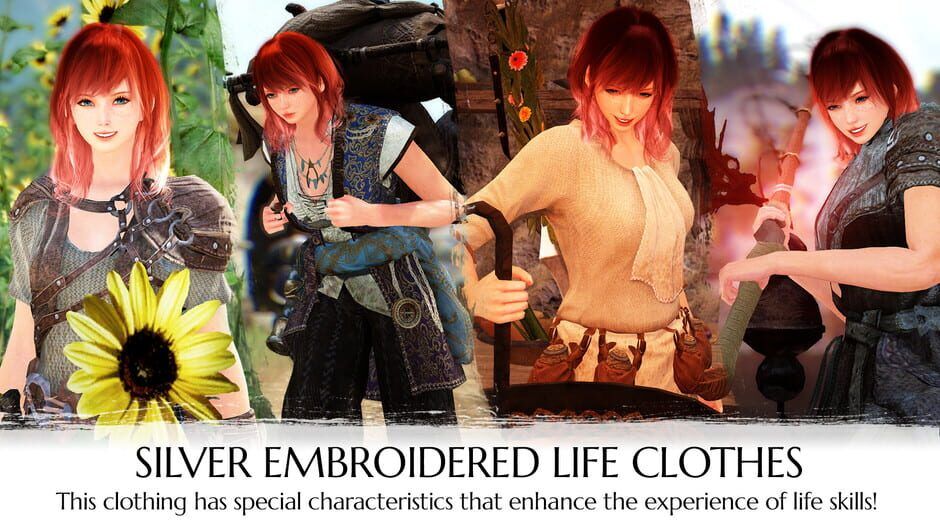
Using Black Desert Mobile’s class meta and a real-world wedding born from a guild war, we look at how Pearl Abyss’ design of classes, guild systems, and events quietly nurtures long-term communities across both Black Desert Online and Black Desert Mobile.
Black Desert’s reputation is built on two things: a relentless grind and some of the flashiest combat in the genre. What it is not usually known for is romance.
Yet one of the most widely shared community stories in recent years is exactly that: a guild war in Black Desert Online that eventually led to a real-world wedding, as chronicled in MMORPG.com’s “The Rarest Drop” feature. Paired with the hyper-meta world of Black Desert Mobile class tier lists, it paints an unexpected picture of how Pearl Abyss’ systems quietly turn a gear treadmill into a space where real relationships form.
This is not about tabloid drama. It is about how design choices around classes, guild structures, and events allow players to carry identities across games, survive the grind, and build communities that last long enough for friendships to turn into something more.
A game that “isn’t that social” that keeps creating couples
One of the striking details in the MMORPG.com wedding story is that both players involved, Rilma and Kemphler, describe Black Desert Online as not really a social MMO at its core. The prevailing fantasy is solo grinding: hours in a rotation, min-maxing loot per hour, AFK training horses or fishing.
Despite that, their relationship began in one of the most structured social systems Pearl Abyss offers: guilds and guild wars. They were officers in the same guild when a messy conflict and leadership drama led to a split and the creation of a new guild called Opaque. Being pushed into leadership in a fresh organization forced them to talk more often and about more than just DPS checks.
The game did not script their story, but it made sure the stage existed. Guild systems, Node and Siege wars, and the pressures of organizing people create the kind of repeated contact that rarely happens in a purely solo grind. Over time, what began as strategy calls and guild management chats became late-night voice conversations, roleplay, and eventually honest talks about life outside the game. The grind stayed the same, but the meaning of logging in changed.
Pearl Abyss’ own PR representative in the piece admitted surprise at how many couples have met through Black Desert, given its reputation. That surprise is telling. The game does not loudly market itself as a “social MMO,” but its mechanics quietly cultivate long-term interaction.
Cross-game class identity: from Black Desert Mobile tier lists to PC guild roles
On the mobile side, Black Desert looks very different. Class tier lists dominate community coverage, like PocketGamer’s breakdown of the best Black Desert Mobile classes by PvE, small-scale PvP, mass PvP, and World Boss performance. It is a hyper-practical piece meant to answer a simple question: what should I play to be strong right now?
The article treats classes as tools. Wizard, Igneous, Maegu, Phantasma and Archmage are praised for farming efficiency. Berserker, Gladiator, Raven and Yacha stand out in small-scale PvP. Legatus, Invoker, Shai and others shine in mass PvP and node-style content. The language is about power, mobility, burst damage, and debuffs.
Yet underneath the spreadsheets is something softer: identity. Players who main Maegu or Woosa on mobile often gravitate toward the same sisters on PC to keep a consistent feel and aesthetic. Someone who has fallen in love with the bruiser fantasy of Berserker or Gladiator in Black Desert Mobile will find similar roles in Black Desert Online’s roster. Even when exact kits differ, the visual language, lore framing, and combat archetype carry over.
That continuity matters for social play. When a guild is recruiting for Node Wars in Black Desert Online, labels like “frontline bruiser,” “flanker,” or “ranged DPS” mirror the thinking you see in mobile tier lists. A player who has learned on mobile that they are happiest as a tanky initiator or a slippery assassin brings that understanding to PC guild composition.
Over time, that preference becomes part of how friends perceive each other. You are not just “John from Discord,” you are “our Wizard,” “the guild’s Shai,” or “that Maegu who always dives too deep.” The class choices that tier lists reduce to rankings become shorthand for personality, reliability, and sometimes even humor.
Grind needs glue: how guild systems turn repetition into routine
Pearl Abyss built Black Desert as a sandbox with almost uncomfortable friction. Progress is slow, gear upgrades can fail, and optimal farming means repeating the same actions thousands of times. That is fertile ground for burnout unless players have reasons beyond numbers to log in.
Guild systems provide that glue. In Black Desert Online, guilds are not just chat channels. They come with salaries, guild missions, shared funds, guild buffs, and access to Node and Siege wars. Participating in wars requires coordination: someone has to build and place the fort, others prepare annexes, elephants, and cannons, and raid leads draw up strategies based on stat caps and attendance.
From a design perspective, this is deliberate friction that demands cooperation. The wedding story illustrates how that friction produces social ties. The crisis of a guild split, the logistics of founding a new one, and the weekly cycle of war prep are exactly the kinds of shared challenges that bond people. The game’s economic and PvP systems are tuned so that no single player can meaningfully engage with endgame structure alone.
Black Desert Mobile mirrors this in a more streamlined way. The same tier list that tells you which classes excel in mass PvP implicitly assumes that you will be participating in Node War-style content as part of a group. Power is contextual. Wizard and Shai are valuable not just because of their skills, but because of how those skills interact with dozens of allies on-screen.
When a game asks you to show up at the same time every week, with the same group, for content you cannot reasonably do alone, it starts to resemble a hobby club more than a product. That is why guild drama hurts, and why guild loyalty in Black Desert often outlasts interest in specific patches or metas. The grind continues, but it is braided together with social routines.
Events and shared calendars: the MMO equivalent of holidays
The MMORPG.com piece touches on how seasonal events and community initiatives reframe Black Desert from a solo pursuit into something closer to a shared living room. Valentine’s events, community-run celebrations, and official guild competitions turn individual progression into a backdrop for collective rituals.
Pearl Abyss has leaned into this over the years with recurring events that revolve less around raw power and more around participation. Log-in rewards, life skill events, and festival-style gatherings ask you to show up and exist in the same place as other players, often with cosmetics or social items as rewards. Even something as simple as town gatherings during world events creates a sense of presence that pure grinding zones cannot.
For couples and close friends, these periods function like in-game holidays. The wedding story highlights how the game became a shared space for the couple after they met in person. Taking part in events together, decorating, or just idling in the same city shifts Black Desert from a means to an end into a place where spending time together is the point.
From a design angle, this is subtle but powerful. Instead of only rewarding optimal play, events reward attendance and togetherness. The systems are still transactional, but the context encourages players to treat the game as somewhere you go to be with people, not just a machine that spits out silver.
Life skills, AFK systems, and the comfort of low-pressure presence
Black Desert’s life skills often get framed as economic systems: fishing, trading, cooking, alchemy, horse training, and more. Mechanically, they are about making money or crafting goods. Socially, they do something more important: they give players ways to be online together without being “on.”
In many guilds, some of the most important conversations happen when people are AFK fishing at Velia or idly doing cooking rotations. The intensity of Black Desert’s combat is balanced by these low-stakes activities where voice chat or guild text carries the experience more than the mechanics.
The couple in the wedding story did not fall for each other mid-combo during a Node War. It happened between wars, across long conversations that gradually shifted from tactics to personal life. The game’s AFK systems made it easy to stay logged in, share a space, and talk for hours while still technically “playing.”
For Pearl Abyss, building systems that allow for presence without constant performance is crucial. It keeps the servers populated and gives relationships time to breathe. It is not romantic content in any explicit way, but it makes romance possible.
Designing for strangers, rewarding regulars
Black Desert Mobile’s tier list perspective and the Black Desert Online wedding story bracket the two ends of Pearl Abyss’ design spectrum.
On one end, systems are designed for strangers: classes are tuned, nerfed, and buffed to keep combat engaging. Tier lists exist because the game’s PvE and PvP are deep enough that some options will always rise to the top. A new player picking up Black Desert Mobile wants to know which class will farm fastest or perform best in arena fights.
On the other end, the game’s long-term structures reward regulars. Guild systems, Node Wars, life skills, and seasonal events only pay off if you build and maintain relationships. A player who only engages for a few weeks will bounce between classes and metas. Someone who sticks around for months or years starts to care more about guild stability than personal DPS.
Pearl Abyss does not script human-interest stories, but it consistently provides:
- Persistent identities through its class fantasy and cross-game archetypes.
- Repeated, scheduled contact through guild mechanics and wars.
- Low-pressure time together through AFK and life skill systems.
- Shared rituals and breaks in the grind through events.
Individually, none of these features scream “this is a dating app.” Together, they create the conditions where a couple can meet during a chaotic guild split, spend hundreds of hours planning wars and chatting while life-skilling, and eventually decide to close the distance between them.
What Black Desert tells us about social MMO design
The Black Desert Mobile tier list and the real-world wedding might seem like two unrelated artifacts: one is min-max theorycrafting, the other a sentimental community story. Taken together, they show how an MMO that looks like a solitary grind can become a social ecosystem.
Players enter Pearl Abyss’ world looking for power and progression. They pick classes off charts that rank farming efficiency and PvP potential. Over time, those picks harden into identity within guilds and friendship circles. Scheduled wars and cooperative systems keep people logging in long after the gear treadmill has started to blur together. Life skills and AFK play offer a quiet background for conversations that have nothing to do with loot.
The rarest drop in Black Desert is not a PEN accessory or a perfect tier list class. It is the moment you look at the game and see, not just a character to optimize, but a person on the other end of the guild Discord who has shared enough nights of chaos and downtime that they feel like part of your real life.
Pearl Abyss did not design that outcome directly. What they did design is a world where it can happen, again and again, across PC and mobile, across guild wars and casual events, across strangers who log in for the grind and stay for each other.