
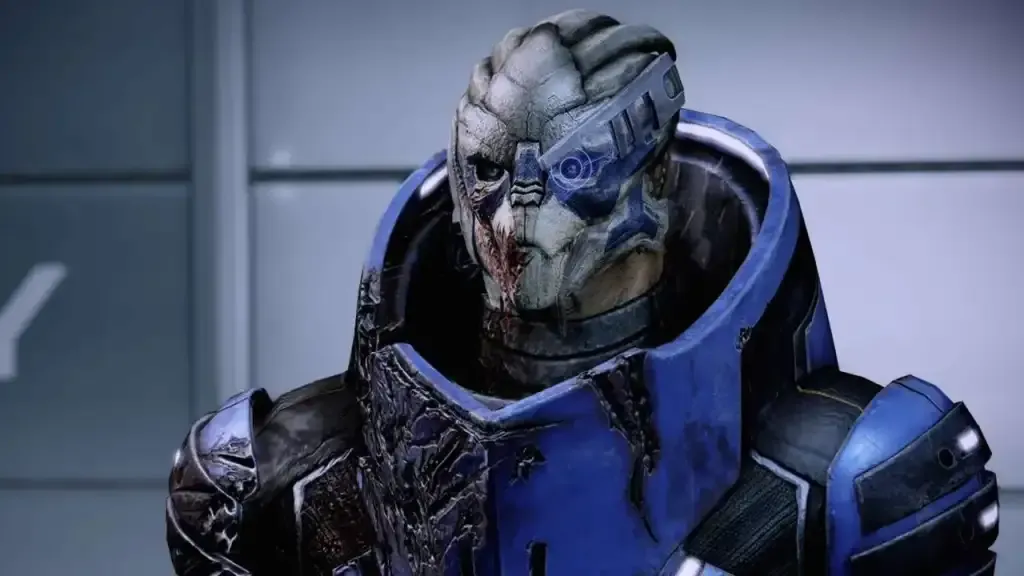

BioWare co-founder Greg Zeschuk says EA’s new ownership was the “final nail in the coffin” for the RPG studio, framing its closure as a business-model clash between long-form RPG development and post-buyout priorities.
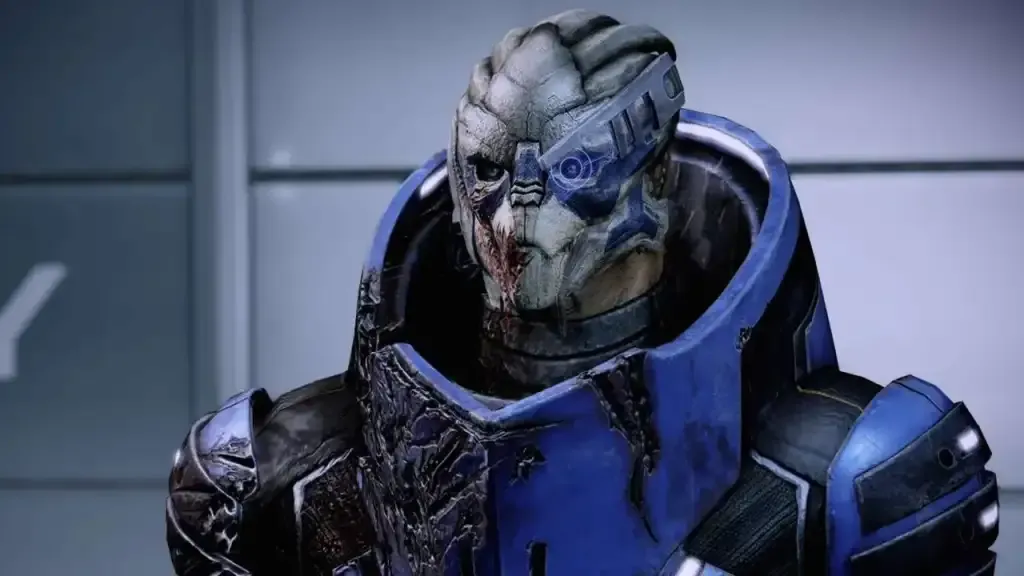
Image: mezha.net
Zeschuk’s first reaction frames the BioWare closure as a business break point
Greg Zeschuk, one of BioWare’s three original co-founders, has spoken publicly about the BioWare closure, telling 80 Level that EA’s recent private acquisition was “the final nail in the coffin” for the studio he helped start in Edmonton in 1995.
That is the concrete development at the center of this story: Zeschuk is not presenting BioWare’s shutdown as a single creative failure, or as a simple consequence of any one game. In the 80 Level interview, later covered by Eurogamer, IGN, Kotaku and others, he ties the timing and logic of the decision to EA’s change in ownership and to the economics of making large, slow, complex role-playing games inside a company newly pressured to favor clearer annualized returns.
According to 80 Level, EA announced on Oct. 21 that it was closing BioWare, ending early development on the next Mass Effect game, and cutting about 50 jobs at the studio as part of roughly 400 layoffs across EA. IGN also reported those figures and said the canceled Mass Effect project had been referred to as Mass Effect: Universe through a leaked internal trailer. The title and trailer detail should be treated as reporting around a leak, not as an official product announcement from EA in the supplied material.
Zeschuk told 80 Level he was away fishing on the Babine River in northern British Columbia when the news reached him through a burst of condolence messages. “I got like ten texts,” he said, describing the moment he returned to a lodge and checked his phone. By the time he had flown home, he said, he had already begun to process the news privately rather than through the immediate public reaction.
The tension is that Zeschuk had been gone from BioWare for well over a decade. He and fellow co-founder Ray Muzyka left in 2012, several months after Mass Effect 3 launched, according to IGN and Eurogamer. Yet his comments are resonating because they come from someone who built BioWare at the point where its design identity, Edmonton roots and business future were still inseparable.
“The final nail in the coffin” is Zeschuk’s reading, not an EA explanation
The strongest quote from the Greg Zeschuk BioWare interview is also the one that needs the clearest attribution. Speaking to 80 Level, Zeschuk said of EA’s private acquisition: “I think it was the final nail in the coffin.” He continued, according to Eurogamer and IGN, that BioWare made “unusual games” that took a long time and were complicated, while annual sports games were easier to produce and a better business model “in some ways.”
That is Zeschuk’s interpretation of the business environment around BioWare shutdown news. The supplied material does not include a fresh EA statement explaining the closure in those terms, nor does it include a public comment from the new owners specifically naming BioWare’s RPG model as a problem. The confirmed elements in the supplied sources are the reported closure, the layoffs, the end of early development on the next Mass Effect, and Zeschuk’s belief that the ownership change made BioWare more vulnerable.
The acquisition he was referring to is described across the sources as a $55 billion private buyout of Electronic Arts by a consortium involving Saudi Arabia’s Public Investment Fund, Silver Lake Partners and Affinity Partners. Kotaku identifies the group as including the Saudi Arabia Public Investment Fund, Silver Lake Partners and Affinity Partners. IGN similarly refers to the Saudi Public Investment Fund’s $55 billion private buyout of EA. Eurogamer calls it a leveraged buyout by a Saudi-involved consortium.
For readers tracking the EA acquisition BioWare angle, the exact wording matters. “Saudi-led” appears in some coverage and in the assignment framing, while other supplied sources use “Saudi-involved” or list the investment partners. What is firmly supported here is that Zeschuk connected EA’s new private ownership, including the Saudi Public Investment Fund, to his expectation that BioWare’s kind of development would be harder to justify.
His argument is essentially about portfolio efficiency. A studio that builds expensive narrative RPGs can create cultural value, brand loyalty and long-tail prestige, but those strengths are harder to model than yearly sports revenue or a major shooter franchise. Zeschuk told 80 Level that, in his view, anything outside sports or Battlefield could look “extraneous” to the new owners, as Kotaku summarized from the interview. That remains a founder’s business reading from outside the company, not a disclosed EA strategy document.
The old EA deal is being re-litigated, but Zeschuk rejects a simple blame line
The BioWare co-founder interview also complicates the familiar fan argument that the studio’s fate was sealed the moment it sold to Electronic Arts. Zeschuk did not accept that version as cleanly as many forum histories do.
Kotaku reported that Zeschuk disputed the idea that BioWare was in danger of collapse without EA. He said the company was “in good shape” at the time and that BioWare had options. The studio was seeking funding for Star Wars: The Old Republic, the ambitious online RPG being developed by BioWare Austin, and leadership believed becoming part of a larger company might be the best available path.
“We had options actually,” Zeschuk said, according to Kotaku’s account of the 80 Level interview. “We thought we chose the best option that was available to us at the time.” That is a meaningful distinction. It does not absolve every decision that followed, but it pushes back against the idea that BioWare’s sale was an obvious emergency exit or an instantly fatal mistake.
There is a small date wrinkle in the supplied coverage. Kotaku, 80 Level and ixbt.games describe BioWare’s original sale to EA as a 2007 acquisition, while Eurogamer refers to BioWare selling to EA in 2008. Without additional source material, the cleanest reading is that outlets are using the transaction timeline differently, likely distinguishing announcement and completion or corporate integration points. The broader supported fact is that BioWare joined EA long before Zeschuk and Muzyka departed in 2012.
Zeschuk also resisted the founder-myth version of BioWare’s decline. Eurogamer quotes him saying he would not claim that he and Muzyka were “the lynchpin in the chain” whose departure ruined everything. He described the change as slower and rooted in people leaving and others arriving. “The people are the key,” he said. For fans who want one villain or one patch-note explanation for a 30-year studio’s end, that is a less satisfying answer, but a more plausible business one.
The development critique: executives, AI assumptions and the cost of making RPGs
Zeschuk’s sharpest criticism in the 80 Level interview is aimed at the distance between business leadership and development practice. IGN quotes him saying there is a “weird belief” that great games can be recreated with random people and AI, and that “it doesn’t work.” He also argued that business-track leaders at large companies often have never made a game “from start to finish,” even a small one, and therefore do not understand the production reality.
That claim is broad, but it lands with particular force in BioWare’s case because the studio’s best-known work depended on unusually dense production pipelines. Choice-driven RPGs require writing, cinematic implementation, quest logic, combat systems, companion arcs, localization, tools, testing and a tolerance for iteration that can look inefficient on a spreadsheet before it becomes valuable to players.
Zeschuk’s point, as reported by IGN and ixbt.games, is not simply that executives are bad and developers are good. It is that a company can misprice creative risk if the people setting targets do not understand how fragile game production is. A late rewrite, a toolchain bottleneck, a combat-system reboot or a narrative branching issue can alter years of work. In a live sports product, annual cadence and recurring monetization may create a more predictable operating model. In a BioWare-style RPG, the value proposition arrives late and depends heavily on trust.
That distinction explains why the BioWare closure is hitting RPG fans differently than an ordinary restructuring notice. Players are reacting to the loss of a studio associated with a specific design promise: party-driven storytelling, authored companions, moral and political choice, and science-fiction or fantasy worlds that asked for repeat play. Whether every later BioWare project met that promise is a separate debate. The closure signals that EA no longer has a standalone BioWare organization to carry that model forward, at least based on the supplied reports.
Edmonton is central to why the shutdown feels larger than one canceled game
Zeschuk’s most personal comments were about Edmonton, not Mass Effect. He told 80 Level, as quoted by Eurogamer and IGN, that the closure was “saddest for the city of Edmonton,” because BioWare had been “a beacon of hope and excitement and possibility.” The studio showed, in his words, that “you could do something really special in a place that was not known for doing things like that.”
That local framing is important. BioWare was not only a logo on RPG boxes. In the supplied sources, 80 Level notes that Zeschuk founded the studio with Ray Muzyka and Augustine Yip in 1995. It also notes that BioWare’s legacy helped Zeschuk and Muzyka earn the Order of Canada. The company’s story was tied to the idea that a major global game studio could grow out of Edmonton rather than from the industry’s more obvious hubs.
The human cost is also concrete. 80 Level and IGN report that the closure cost about 50 jobs at BioWare and came amid roughly 400 layoffs across EA. Zeschuk told 80 Level that anyone being forced into a job hunt in the current games market faced a “terrifying” and sad situation. That comment is less quotable than the “final nail” line, but it may be the more immediate consequence.
For players, the canceled next Mass Effect is the visible loss. For developers, the practical damage is employment instability, lost institutional knowledge and the scattering of teams that knew how to build inside BioWare’s specific tools, culture and expectations. Zeschuk said he had emotionally detached from BioWare years earlier, but his concern in the interview repeatedly returned to people rather than brand nostalgia.
Mass Effect fans have answers on cancellation, but little guidance on the IP’s future
The supplied sources support one clear practical answer: the next Mass Effect game that had been in early development at BioWare is no longer moving forward under that studio. 80 Level says EA ended early development on the next Mass Effect when it announced the BioWare closure. IGN reports the same and adds that a leaked internal trailer indicated the project was called Mass Effect: Universe. Since that name comes via a leak in IGN’s reporting, it should not be treated as an official retail title.
There is no supported release window, platform list, price, preorder path or upgrade information for the canceled project in the provided material. There is also no source here confirming whether EA will eventually reassign the Mass Effect intellectual property to another studio, license it externally, shelve it, or revive it in a different form. Any claim beyond cancellation of this BioWare-developed project would be speculation.
That uncertainty is part of why the BioWare shutdown is resonating. RPG communities can tolerate long waits when they believe a team, leadership group or studio identity is still accumulating progress. Closure breaks that mental model. It turns patience into ambiguity. The question changes from “when is the next Mass Effect?” to “who, if anyone, is now responsible for making a game that feels like Mass Effect?”
Zeschuk’s own gaming tastes have shifted, according to Eurogamer, which notes that he discussed moving away from story-driven games toward action-focused titles such as Nioh and Elden Ring. That detail does not weaken his critique. If anything, it separates his comments from pure nostalgia. He is not arguing that every player still wants BioWare’s old formula. He is arguing that the type of game BioWare specialized in became a poor fit for the business incentives he sees around EA’s new ownership.
A studio ending that fans are reading as an industry signal
The BioWare closure is resonating because it compresses several anxieties into one event: the end of an Edmonton institution, the cancellation of a beloved RPG franchise’s next entry, layoffs during a difficult games job market, and a founder’s warning that private-equity-era incentives may favor safer, more repeatable products over expensive authored RPGs.
Zeschuk’s comments should not be mistaken for inside knowledge of EA’s current boardroom deliberations. He left BioWare in 2012 and said he had already processed his personal break with the company long ago. His authority comes from having built the original studio and from understanding the production model that made BioWare famous, not from claiming to speak for EA in 2026.
Still, the business logic he describes is easy for RPG fans to recognize. The strongest BioWare games depended on long development cycles, high writing and implementation costs, and trust that the payoff would be worth the wait. Those conditions are harder to defend when a parent company is under new private ownership and when predictable annualized franchises appear easier to justify.
That does not prove that every ambitious RPG is doomed under large publishers. It does explain why this closure feels like a warning flare. A studio can have history, prestige and a loyal audience, yet still lose an internal capital-allocation fight if its games are seen as too slow, too complex or too uncertain. Zeschuk’s interview gives fans a blunt founder-level interpretation of that tradeoff. The unanswered question is whether another major publisher will look at the reaction to BioWare’s shutdown and decide that there is still strategic value in funding the kind of RPG work BioWare made famous.