
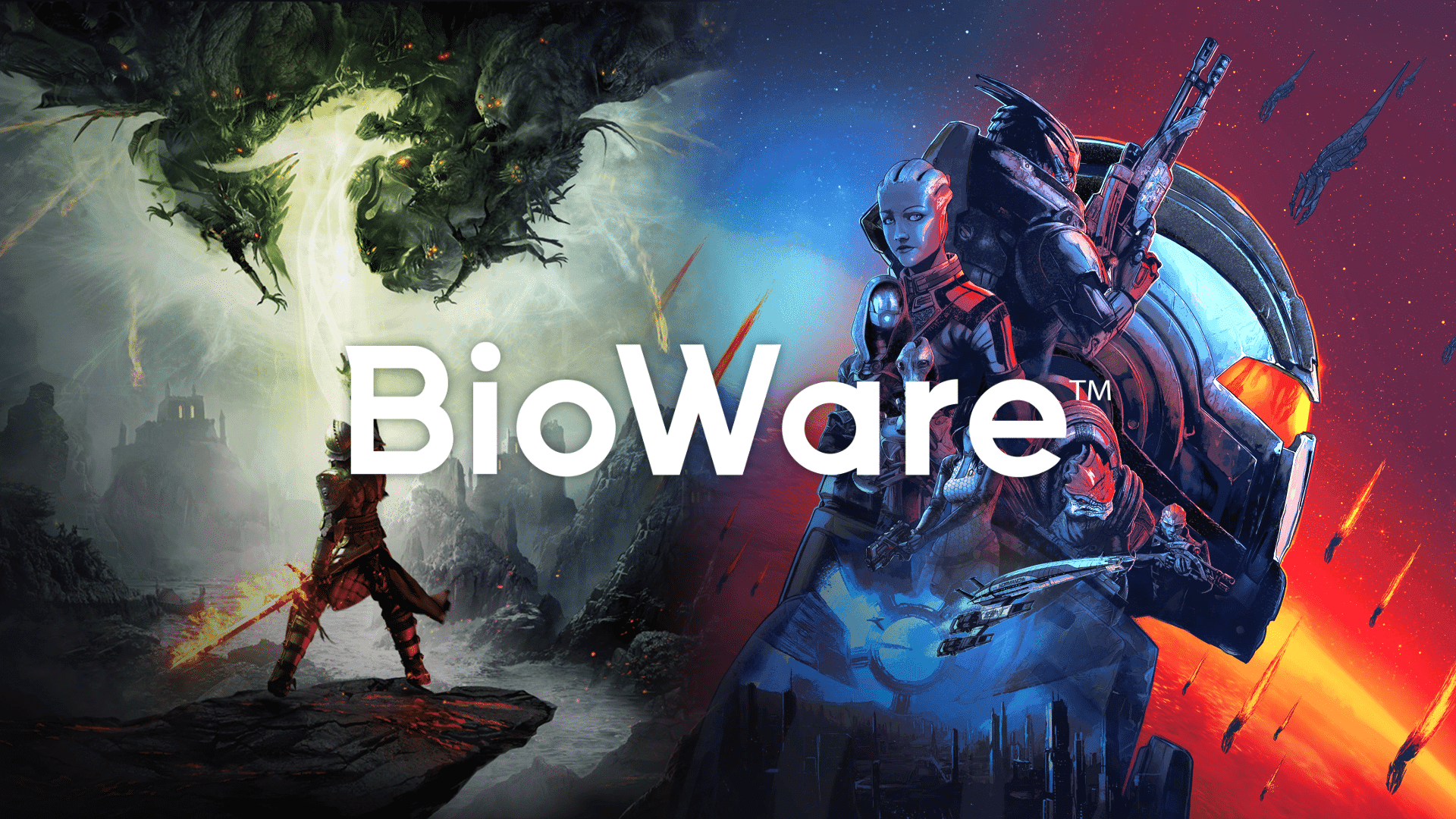

BioWare says it is closing and ending early development on the next Mass Effect. Here is what is confirmed, what Bloomberg reported about EA layoffs, and what remains unknown for workers and fans.
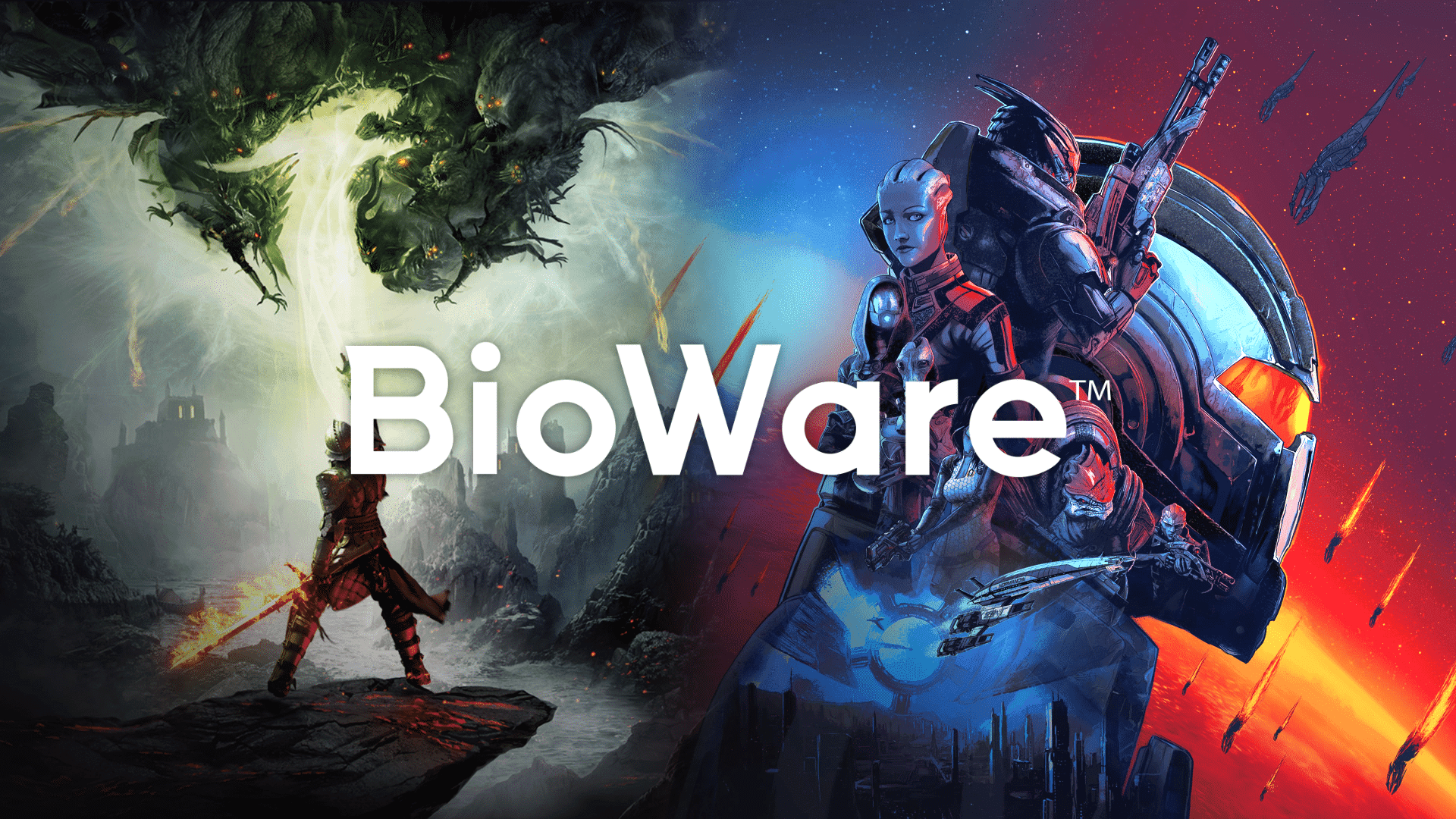
Image: mp1st.com
BioWare confirms its closure and the end of the next Mass Effect
BioWare has publicly confirmed that the studio is closing and that early development on the next Mass Effect project is ending, bringing one of role-playing games’ most recognizable names to a halt after more than 30 years. In a social media statement cited by Video Games Chronicle, Eurogamer, GamesIndustry.biz, IGN, and Polygon, the studio said its focus is now on “our incredibly talented team who put their hearts into these games, and supporting one another through this transition.”
The studio’s statement named Baldur’s Gate, Neverwinter Nights, Star Wars: Knights of the Old Republic, Dragon Age, Mass Effect, and Anthem as part of its history, then confirmed the key point directly: BioWare is closing, and the next Mass Effect is no longer moving forward from early development. That makes the BioWare shutdown confirmed by the studio itself, while several surrounding details, including the scale of EA layoffs BioWare workers are caught in, come from Bloomberg reporting cited across multiple outlets.
The immediate tension is sharp. Mass Effect has spent years in a state of anticipation, with teasers, franchise-day updates, and public discussion keeping the next game alive as a future destination for fans. BioWare’s announcement closes that loop before the project reached full public form. There is no release date to delay, no platform list to revise, and no feature set to walk back. The game has ended at the stage where a BioWare RPG is usually still defining its foundations: party structure, world state, protagonist scope, combat identity, and the kind of choice architecture that determines whether players feel they are authoring a path or moving through one.
What is confirmed, and what is reported through Bloomberg
The confirmed facts are narrow but consequential. BioWare’s own statement says the studio is closing and early development on the next Mass Effect project is ending. The statement also frames the moment around workers and community, thanking players who “debated your choices, fell in love with the characters, and made these worlds your own.” That language matters because it comes from the studio, but it does not provide operational details such as severance, transfer options, final employment dates, or what will happen to BioWare’s public channels and archives.
The broader corporate picture comes through Bloomberg reporting cited by GamesIndustry.biz, Eurogamer, IGN, Polygon, and VGC. According to Bloomberg, EA is cutting about 400 jobs, roughly 3% of its total workforce, with around 50 of those roles at BioWare. Bloomberg also reported, per GamesIndustry.biz, that a staff letter from EA chief operating officer David Tinson and chief studios officer Cam Weber said the company had “taken a hard look at our business” over the past several months and would cut some projects, including the next Mass Effect.
Polygon’s account of the staff memo adds a more specific reported explanation from EA leadership. Tinson and Weber reportedly told employees that BioWare had a small team working on early development for Mass Effect, and that EA had decided not to move forward with that development, which meant closing the studio and its Edmonton workspace. That memo is reported by Bloomberg and quoted by Polygon; it is distinct from BioWare’s public farewell statement.
That distinction is important for readers tracking the story through phrases like BioWare closing, Mass Effect 5 cancelled, and EA layoffs BioWare. The closure and cancellation are confirmed by BioWare’s public statement. The headcount figures, internal rationale, and portfolio priorities are sourced to Bloomberg’s reporting on EA’s staff letter and people familiar with the plans.
The next Mass Effect ended before it became a public game
The project commonly called Mass Effect 5 had been announced years earlier, with Polygon noting that the next Mass Effect was confirmed in 2020. IGN reports that BioWare had spent the past half decade teasing the game’s setting and story, and that it had been confirmed the project would be set hundreds of years after Mass Effect 3, reconnecting the series to the Milky Way after the defeat of the Reapers. Those details made the game feel less abstract to long-time players, even though it remained in early development.
That early-development status is the key practical fact. None of the supplied sources point to a public release date, price, preorder campaign, final platform list, or system requirements for the next Mass Effect. The cancellation therefore does not create the usual consumer questions around refunds, editions, upgrades, or launch access. It instead ends a project that existed publicly as a promise of direction: a return to the Milky Way, a future beyond the original trilogy’s ending, and a chance to define Mass Effect again after Andromeda’s divisive reception.
For players, the most useful reading is blunt. Based on BioWare’s own statement, there is no next Mass Effect game currently proceeding at BioWare. If a future Mass Effect ever returns under EA, the provided sources do not announce such a plan, name another studio, or describe a handoff. The phrase next Mass Effect cancelled is supported by BioWare’s statement, but any speculation about a reboot, outsourcing, or later revival sits outside the sourced record.
IGN also notes uncertainty around Amazon’s live-action Mass Effect series, which was intended to tell a fresh story after Mass Effect 3. The sources provided do not say that the show is cancelled, changed, or unaffected. The accurate position is that BioWare’s game project has ended, while the implications for the TV adaptation remain unannounced in the cited material.
A 30-year RPG legacy built around choices, companions, and continuity
BioWare was founded in 1995 by Ray Muzyka and Greg Zeschuk, according to VGC, and was acquired by EA in 2007. Its reputation was built across licensed and original RPGs that each carried a different version of the same studio promise: a player could build a character, gather a party, make choices, and feel those decisions echo through a world. The sources name the landmarks plainly: Baldur’s Gate, Neverwinter Nights, Star Wars: Knights of the Old Republic, Dragon Age, and Mass Effect.
From a systems perspective, BioWare’s legacy is not reducible to any single mechanic. Baldur’s Gate and Neverwinter Nights tied the studio to party-based computer RPG design and rules-driven character progression. Knights of the Old Republic gave Star Wars players moral alignment, companion drama, and a central identity twist that became part of RPG canon. Dragon Age carried class builds, party composition, romance, and political choice across fantasy settings. Mass Effect fused third-person combat with squad relationships and long-form save continuity, asking players to think about dialogue decisions with the same seriousness as weapon loadouts.
That is why the closure lands differently from the cancellation of an isolated project. BioWare’s statement says the games became meaningful because players debated choices, fell in love with characters, and made the worlds their own. That is also a fair description of the studio’s strongest design identity. Its best-known work asked players to invest in builds and bonds at the same time, then carry those investments into quests where a companion’s loyalty, a council decision, or a saved colony could become part of the player’s personal canon.
The final years complicate that legacy rather than erase it. VGC describes Anthem as a high-profile miss and says it was shut down. Eurogamer notes that BioWare’s live-service experiment fell quickly, while Dragon Age: The Veilguard failed to meet EA’s internal sales expectations. IGN adds that Dragon Age: Inquisition had franchise-best sales before BioWare pursued Anthem, and that The Veilguard spent much of the following decade in troubled development. The closure follows both the studio’s historic achievements and its recent inability, under EA, to consistently turn those strengths into hits at the scale the publisher wanted.
EA’s post-buyout cost pressure frames the shutdown
The BioWare closure also arrives inside a larger EA restructuring. GamesIndustry.biz reports that the shutdown comes less than three months after EA completed its acquisition by Saudi Arabia’s Public Investment Fund, Silver Lake, and Affinity Partners on August 4. Eurogamer describes the deal as a $55 billion buyout by those investment groups. VGC adds that EA went private in a $55 billion leveraged buyout, leaving the company with around $18 billion in debt and around $1.8 billion per year in interest payments.
VGC also reports that earlier in the year EA told debt investors it would cut $700 million in annual costs after completion of the deal, including $170 million in “organizational efficiencies.” That does not, by itself, prove that BioWare was closed solely because of the buyout. The sourced record supports a more careful connection: the closure happened shortly after EA went private, during a reported company-wide reduction of around 400 jobs, and after EA had identified major cost-cutting targets for investors.
Bloomberg’s reported staff-letter language reinforces the strategic shift. According to Eurogamer, Tinson and Weber told staff that EA was making deliberate choices to align talent and investments where it saw the greatest opportunities for players and long-term growth. GamesIndustry.biz reports that the letter says EA will continue work on Apex Legends, Battlefield, the next Star Wars Jedi game, a new Iron Man game, and skate, though skate’s team will be downsized. Polygon reports that EA is focusing on proven hits such as Apex Legends, Battlefield, and sports games like Madden, while also pausing a Sims project codenamed Project Lotus and refocusing elsewhere in that franchise.
Seen through that lens, BioWare appears to have lost the internal portfolio argument. A small early-development Mass Effect team represented long-term creative potential, but not a near-term product with a public date or established live revenue. That is interpretation based on the reported memo and project status, not a disclosed EA formula. Still, the direction of travel is clear in the reporting: EA is concentrating investment around franchises and models it views as stronger growth opportunities.
The unanswered questions now center on workers and preservation
The workers affected are the least abstract part of the story. Bloomberg reports, as cited by multiple outlets, that roughly 400 EA employees are losing jobs, including about 50 at BioWare. BioWare’s public statement says the studio’s focus is supporting its team through the transition, but the provided sources do not include details on severance packages, internal placements, benefits timelines, immigration support, or whether any staff will move to other EA projects.
That absence should not be filled with assumptions. BioWare’s closure means the end of the studio as a workplace and the cancellation of its active Mass Effect effort, but the sources do not say what happens to individual developers, writers, designers, artists, engineers, producers, QA workers, or support staff beyond the reported cuts. In an RPG studio, institutional memory matters. Quest pipelines, companion writing, cinematic tools, branching narrative editors, combat tuning knowledge, and franchise lore stewardship often live in people as much as documents. When a studio closes, that expertise disperses.
There are also practical unknowns for players. The supplied reports do not mention delistings, server shutdowns for existing games, changes to Legendary Edition availability, or new plans for Dragon Age. They do not say whether EA will maintain BioWare-branded community channels or how it will preserve decades of development history. For now, the only safe guidance is to separate today’s confirmed outcome from possible future IP movement: BioWare is closing, early development on the next Mass Effect is ending, and EA has not announced a replacement path in the provided material.
For a studio whose best quests were often about consequences arriving years after a choice, the final consequence is unusually corporate and immediate. BioWare’s catalogue remains a major part of RPG history, but the team that carried that name through three decades of party banter, moral arguments, buildcraft, romances, and galaxy-scale decisions is being broken up. The next Mass Effect cancelled search result tells only part of the story. The harder story is the end of the workplace that made so many players believe their choices could matter.