
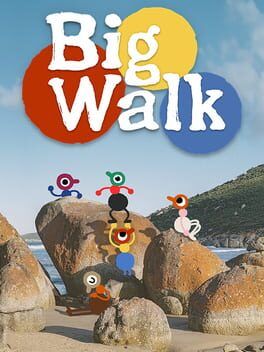

Big Walk has arrived on PS Plus Essential with unusually strong reviews, but House House's co-op puzzle adventure comes with a real question: do you have the right group for it?
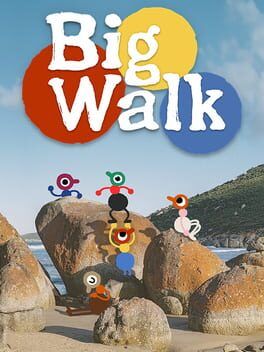
Image: IGDB
Store links: Big Walk on Steam
Big Walk’s PS Plus launch has become a group-chat test
Big Walk is out now, and the loudest concrete development around House House’s new game is not only that it launched into PlayStation Plus Essential. As reported by GameSpot, citing its sister site Metacritic, Big Walk has reached a 94 critic score, which GameSpot says makes it the most critically acclaimed game ever released on PS Plus Essential on day one. GameSpot contrasted that with Blue Prince, which reached a 92 last year but launched through PS Plus Extra rather than Essential.
That milestone has turned Big Walk PS Plus interest into a practical question for a lot of players: should this be the game your friend group schedules next, or is it too dependent on coordination, patience, and voice chat to work as a casual download? The answer from the available reviews and listings is unusually clear in one respect. Big Walk is built around playing with other people, and the best impressions so far describe a game whose puzzles, comedy, and sense of place all lean on the messiness of communication.
The availability piece is confirmed. GameSpot reports that Big Walk is available now on PC, PlayStation 5, Switch 2, and Mac. Push Square’s PS5 listing says the PlayStation Plus Essential availability runs from August 4, 2026 until September 1, 2026, with a PlayStation Store release also listed for August 4. Game Informer lists Panic Inc. as publisher, House House as developer, and August 4, 2026 as the release date, with PC, PS5, Switch 2, and Mac as platforms.
House House did not make Untitled Goose Game 2, and that is the point
The search phrase “Untitled Goose Game developer” is doing a lot of work here because House House’s last major hit created a very specific expectation: small-team cleverness, social comedy, readable spaces, and systems that encourage mischief. Big Walk carries some of that spirit, but the sources agree that it is a major genre shift.
PCGamesN describes Big Walk as an open-world co-op adventure where players solve puzzles to unlock more of an island, more equipment, and more ways to interfere with each other. Eurogamer says it shares the “gleeful devilment” and playful touches of Untitled Goose Game, while stressing that it is otherwise a different kind of project. Game Informer frames the new game as an experience built around walking with friends, with puzzles, physics, basketball, music, lights, secrets, and ominous hints around the edges.
That shift matters for expectations because Untitled Goose Game could be enjoyed as a solo slapstick box of toys. Big Walk, by contrast, is being presented by reviewers as a social design problem. The joke is no longer only what you do to the world. It is how badly, beautifully, and eventually successfully you and your friends explain the world to one another.
The co-op details players are searching for are the real buying advice
The clearest Big Walk co-op guidance from the sources is that this is not a solo-first adventure with multiplayer bolted on. Game Informer says Big Walk requires co-op, that puzzles adjust to lobby size from two to three to four or more, and that up to 12 players can be in a lobby. It also reports that puzzles are still sized for four players even when the lobby goes higher. PC Gamer goes further in plain terms, saying the island’s puzzles cannot be completed by a single player and calling Big Walk co-op “in the truest sense of the word.”
There is one listing wrinkle worth flagging. Push Square’s database line lists “1 (Single Player) (12 Player Online),” but the same Push Square page description says Big Walk can be played with as few as 2 players or as many as 12. Game Informer says you cannot play alone, and PC Gamer says the puzzles cannot be completed by a single player. Based on the stronger descriptive reporting and the store-style text quoted by Push Square, readers should treat Big Walk as a game that needs at least two players unless an official storefront or developer note says otherwise.
The communication system is the hook. Push Square’s listing describes proximity voice chat where voices fade over distance, echo down corridors, muffle through walls, and crackle through walkie-talkies. Eurogamer reports that the proximity chat is tuned aggressively, so players can fall out of earshot without going especially far. Polygon’s review similarly notes that the voice range is fairly small and feels intentional, encouraging gestures, jumping, waving, and other physical signals when players are separated.
Game Informer adds that House House strongly encourages players to use the in-game proximity chat rather than a Discord call or local split-screen. That is a meaningful caveat. Big Walk appears to be designed around losing contact, regaining it, and using the tools inside the world to patch the gap. If your group’s instinct is to flatten every co-op game into a constant party chat, you may be sanding off the very system critics are praising.
Big Walk puzzles sound simple to touch and tricky to explain
The most useful Big Walk puzzles impressions are not about elaborate control schemes. They are about how ordinary actions become difficult when four people see different parts of the same problem. PCGamesN says the basic controls include sprinting, jumping, moving arms in different directions, picking up objects, and turning things on or off. The outlet argues that those fundamentals are enough to support the island’s puzzle structure.
Examples from reviews make the design clearer. PCGamesN describes players standing on each other’s shoulders to dunk a basketball, miming instructions through soundproof glass, and using a one-way telecom system while struggling to describe what a letter looks like. Polygon recounts an early puzzle where players stack on each other to reach a switch holding a red object, with the success depending on awkward positioning and shouted instructions. Eurogamer describes rewards from collaborative puzzles as red curved objects used as the main form of progression, unlocking “genuinely transformative features.” PCGamesN says its group called similar progression objects “jelly babies,” which unlock towers and new ways to travel around the island.
The reported pattern is elegant: Big Walk puzzles are often physically legible, then socially slippery. A button may be obvious. A route may be visible. The hard part is getting the person with the right view, tool, or body position to understand what everyone else needs. That helps explain why searches for Big Walk puzzles are rising alongside PS Plus interest. Players are not only looking for solutions. They are trying to understand whether the game will make their friends feel clever or make them mute each other.
The strongest reviews praise friction, not convenience
This is not a GameLoop.gg review. We have not scored Big Walk here. But the current review picture is unusually strong, and the praise is consistent enough to give readers a useful signal.
GameSpot’s review, quoted in its own news story, calls Big Walk a game of the year contender and one of the best co-op games ever made. The quoted review says Big Walk takes “fundamental and timeless video game concepts” such as obstacles and incentives, then shapes them through focused co-op into something rewarding, mysterious, and unforgettable. PCGamesN calls Big Walk “a triumph” in its verdict and praises it as a game that supports conversation, slapstick, problem-solving, and pauses between challenges. Eurogamer calls it a funny, exciting, and deeply rewarding multiplayer adventure about the joys and frustrations of communication. Polygon’s review frames it as a chill hangout in a world of gentle puzzles that demand close communication between friends. Game Informer says its stringent co-op requirements can make arranging a session feel like setting up a board game night, but says the exchange is worth it.
The throughline is important. These reviews are not selling Big Walk as a frictionless matchmaking activity. They are praising the designed inconvenience: the limited voice range, the need to gesture, the requirement to assemble a group, the space between jokes and objectives. That makes the “Big Walk review” search intent slightly different from a normal launch-week check. The question is less “is it polished?” based on the provided sources, critics seem impressed. The sharper question is “will my group enjoy being temporarily lost, misunderstood, and gently inconvenienced?”
PS Plus gives Big Walk a rare advantage, but only if players arrive prepared
Launching through PS Plus Essential gives Big Walk a distribution boost that many co-op indie games never get. A social puzzle game lives or dies by whether people can persuade friends to install it at the same time, and a subscription launch lowers that barrier on PS5 for eligible members during the listed window. Push Square says the Essential availability runs until September 1, 2026, which makes August the cleanest moment for PlayStation groups to try it together.
There are still practical limits. Cross-platform play is not confirmed in the supplied sources, so players should not assume that PS5, PC, Switch 2, and Mac users can all join the same session unless an official listing confirms it. The sources also do not provide a price for non-PS Plus players. Performance details are not meaningfully covered in the supplied material, so buyers outside the subscription window should wait for platform-specific technical reporting if that is a concern.
For now, the safest recommendation is social rather than technical. Big Walk appears best suited to groups willing to use in-game voice, split up without panicking, and let puzzles breathe instead of instantly guide-checking every obstruction. Two players can play according to the Push Square description and Game Informer’s lobby scaling report, while three or four sounds closer to the puzzle scale reviewers frequently describe. Larger lobbies up to 12 are supported, according to Game Informer and Push Square, but Game Informer says puzzles remain sized for four, so a crowd may turn Big Walk into more of a roaming hangout than a tightly coordinated puzzle night.
That may be exactly the appeal. House House Big Walk is arriving with the kind of critical momentum that makes a subscription launch feel like an event, but its design asks for something PS Plus cannot automatically provide: friends who are happy to get lost, shout through a walkie-talkie, point at the wrong landmark, and laugh long enough to solve the thing anyway.