
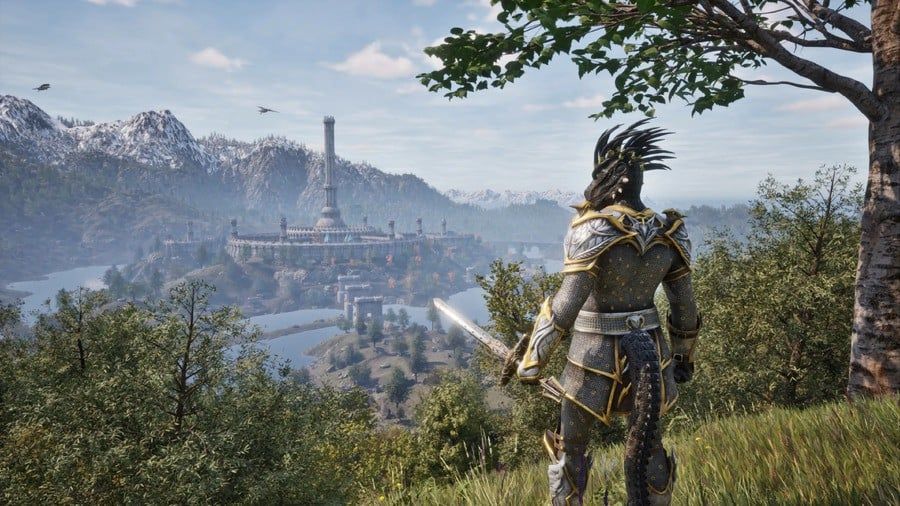

Bethesda leadership reportedly told staff the company will reorganize around its strongest franchises after major Xbox cuts. Here is what is confirmed, what is reported, and what remains speculation for Elder Scrolls, Fallout, Starfield, ESO, Doom, Quake, and Wolfenstein.
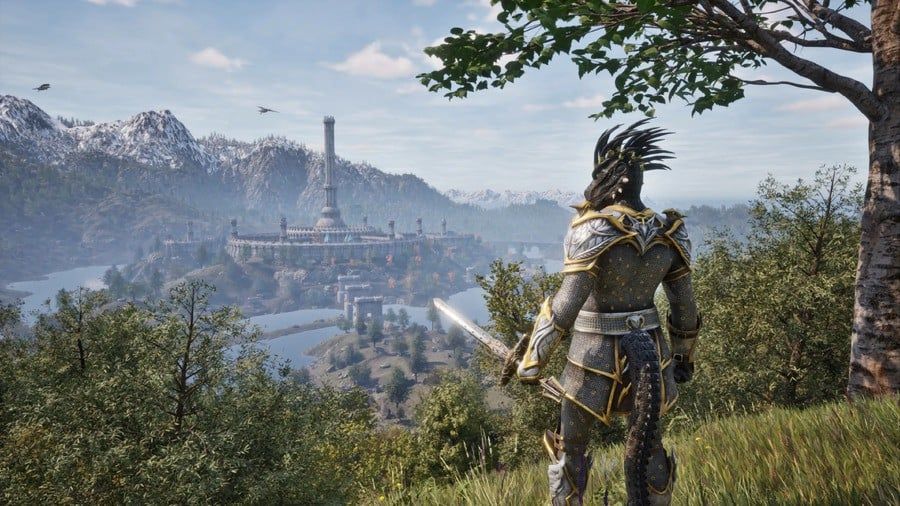
Image: purexbox.com
Bethesda is being reorganized around franchise priorities after Xbox cuts
Bethesda boss Jill Braff reportedly told employees that the company is shifting from a studio-by-studio planning model to one built around “our strongest franchises,” according to an internal email cited by IGN and Video Games Chronicle. That is the firmest development in a messy week for Xbox: Microsoft’s gaming division is cutting 3,200 jobs across the current financial year, IGN reports, with 1,600 of those layoffs taking effect on July 6.
The immediate tension is that Bethesda’s historical identity has been tied to semi-independent studios with distinct rhythms. Bethesda Game Studios works on long-cycle RPGs. ZeniMax Online Studios runs The Elder Scrolls Online as a live service. id Software has its own shooter technology and cadence. MachineGames has handled Wolfenstein and Indiana Jones. Arkane’s future is now in question. Braff’s memo, as reported, says that model helped create “some of the industry’s most beloved franchises,” but that rising expectations, increasing development complexity, and a more competitive market have changed the economics around it.
That makes the phrase “Bethesda strongest franchises” important, but also easy to overread. Bethesda has not publicly announced a slate reshuffle with named cancellations. The confirmed piece, based on the reported memo, is organizational: leadership wants to determine a content roadmap around the franchises it considers strongest, then “align the right talent, technology, and resources” around those priorities. The unconfirmed part is the exact impact on each game, each team, and each long-term roadmap.
What Bethesda leadership reportedly told staff, and what remains unnamed
IGN quotes Braff as telling staff that Bethesda needs “to change course” and “return to sustainable growth” so it can keep investing in its franchises and players. Video Games Chronicle cites the same email and reports that Braff framed the layoffs and strategy change as reflecting “the realities of our industry and business” and Bethesda’s responsibility to operate from “a more stable foundation.”
The crucial wording is that Bethesda is moving away from planning “primarily centered on what’s next for each independent studio” and toward a model focused on “our strongest franchises.” That does not say Bethesda is abandoning individual studio identities. It does say the roadmap comes first, and the internal arrangement follows. For RPG players, that is a major philosophical shift. A questline built around a studio’s own tools, writers, combat assumptions, and modding culture is different from a portfolio plan that asks which franchise needs content next and then assigns resources toward that goal.
Bethesda’s email, as reported by IGN and VGC, did not name The Elder Scrolls, Fallout, Starfield, Doom, Quake, Wolfenstein, The Elder Scrolls Online, or any other specific series in that quoted section. The named-franchise reporting comes from Bloomberg’s Jason Schreier, cited by VGC, Vice, Push Square, and Polygon, which says ZeniMax teams are being realigned around major brands including Fallout, The Elder Scrolls, Doom, Quake, and Wolfenstein. That distinction matters. The internal memo establishes the restructuring principle. The franchise list is a report about how that principle may be applied.
Elder Scrolls and Fallout are the clearest fits for the new model
If Bethesda is truly organizing around its biggest audience anchors, The Elder Scrolls and Fallout are the least surprising names in the reported list. Push Square notes that The Elder Scrolls 6 was announced in 2018 and that Fallout’s last mainline game, Fallout 4, released in 2015. The same report says The Elder Scrolls continues through The Elder Scrolls Online and last year’s Oblivion remaster, while Fallout continues through Fallout 76. That context explains why Xbox leadership would see both series as underused relative to their cultural weight.
The practical question is whether “focus” means faster mainline sequels, more remasters, heavier live-service support, or all of those. The provided reporting does not confirm a release date, platform plan, price, or upgrade path for any new Elder Scrolls or Fallout project. Push Square cites prior reporting from The Information that Xbox boss Asha Sharma wanted faster Elder Scrolls and Fallout games to bolster the business, but that is still reporting about internal intent, not a public roadmap.
From a systems perspective, acceleration has limits. Bethesda Game Studios RPGs are built on scale: open-world quest logic, faction state, companion interactions, itemization, character progression, and, increasingly, post-launch support. The risk in a portfolio-driven model is that the calendar starts asking for content faster than the RPG systems can safely absorb. The opportunity is that a franchise-first plan could put more shared resources behind the worlds players keep asking for. For Elder Scrolls and Fallout fans, the honest reading is this: the business incentive for new content is now louder, but no source here confirms that The Elder Scrolls 6 or Fallout 5 has moved closer on the calendar.
ESO shows the human cost behind any roadmap change
The Elder Scrolls Online is the place where Bethesda restructure talk becomes immediately visible to players. Polygon reports that ZeniMax Online Studios has been heavily affected by the layoffs, citing Bloomberg’s Jason Schreier for “a significant number of staff” and Kotaku for the claim that the ESO team was “seemingly gutted,” potentially with up to half the team let go. Those are reports, not a detailed public headcount from Microsoft or Bethesda.
There is, however, an official player-facing signal. Polygon cites an update from The Elder Scrolls Online’s community manager on the game’s forums saying ESO’s future will be “shifting” after Season One launches on July 8. The post said the team wants time to evaluate the work ahead and lock down an updated schedule, adding that it could not share concrete details that day and wanted to return with a clear timeline.
For ESO players, that is the most practical information available from the source material. Season One is still presented as launching July 8 in Polygon’s report, but the schedule beyond that is under review. Anyone weighing a return to Tamriel should separate the live game’s immediate availability from the uncertain cadence after Season One. A reduced team can still maintain a strong MMO, but content frequency, scope, QA capacity, event cadence, and communication rhythm are the systems most likely to feel pressure when staffing changes.
Starfield’s omission is a signal, not a confirmed cancellation
Starfield is the awkward name in this story because the reported franchise list highlighted by Bloomberg, and repeated by VGC, Vice, and Push Square, includes Fallout, The Elder Scrolls, Doom, Quake, and Wolfenstein, but not Starfield. IGN has separately framed the changes as potentially leaving Starfield “out in the cold.” VGTimes also describes Starfield as a notable omission and says its long-term future is uncertain as Bethesda pivots to established series.
That is not the same as Bethesda canceling Starfield support. None of the supplied sources cite a public Bethesda statement saying Starfield development has ended, that a sequel has been canceled, or that planned DLC has been removed from the schedule. VGTimes says Starfield continues to receive patches and DLC, while characterizing its ability to attract a new audience as a struggle. Because that claim is coming from VGTimes’ report rather than a platform metric or Bethesda disclosure in the provided material, it should be treated as commentary based on that outlet’s framing.
The important distinction for Starfield players is between portfolio priority and product survival. A franchise can be deprioritized without being abandoned. It can receive patches and expansions without being treated as one of the corporate pillars. Starfield’s challenge is that it is a new universe competing internally with franchises that have decades of audience memory, transmedia momentum, and clearer nostalgia value. If Bethesda is choosing where to place scarce resources after layoffs, a new IP with divided reception faces a harder argument than Elder Scrolls Fallout Starfield fans might want to hear. But the only responsible conclusion from the current reporting is uncertainty, not a verdict.
Doom, Quake, Wolfenstein, and Arkane complicate the Bethesda picture
The reported strongest-franchise pivot is not limited to RPGs. Bloomberg’s reporting, as cited by multiple outlets, also names Doom, Quake, and Wolfenstein. That suggests Bethesda’s new structure is not simply about Bethesda Game Studios making Elder Scrolls and Fallout faster. It is a wider ZeniMax portfolio question: which brands can carry future investment, which teams are needed to build them, and which technologies make sense across the group.
Polygon reports that id Software has a Doom release arriving with The Dark Ages expansion Revelations, but says what comes after is unclear following the layoffs. Push Square reports, citing Schreier, that id Software and ZeniMax Online Studios are among the teams expected to lose a significant number of staff. Vice adds that Bethesda Game Studios, ZeniMax Online, id Software, and MachineGames are expected to shift toward the biggest Bethesda franchises. None of that confirms a new Quake, a new Wolfenstein, or the shape of id’s next project.
Arkane is the clearest example of source conflict and procedural uncertainty. VGC states that Microsoft confirmed Arkane will be divested. Polygon says Xbox is divesting four studios, with the future of a fifth, Arkane, still unknown. Push Square says Arkane has entered a consultation process to determine whether it is sold, made independent, or otherwise handled under French labor laws. IGN reports that Marvel’s Blade may fall by the wayside or be published elsewhere, citing the uncertainty around Microsoft trying to sell or close Arkane Lyon. The safest reading is that Arkane’s future is unresolved in the public record supplied here, and that any claim about Blade’s final fate is premature.
How to read Bethesda layoffs 2026 without turning signals into promises
For players, the next useful milestones are not rumors about dream sequels. They are public roadmap updates. ESO has already said it will reassess its schedule after Season One on July 8, according to the forum update cited by Polygon. Bethesda has not announced new release dates, prices, platforms, editions, or upgrade paths tied to the restructure. Microsoft’s job-cut plan, as reported by IGN and Polygon, is a 2026 business event with 3,200 Xbox roles affected across the fiscal year, not a consumer product announcement.
For Elder Scrolls and Fallout players, the restructure makes those franchises look even more central to Bethesda’s future, but it does not answer the buildcraft questions that matter: engine iteration, mod support, quest density, faction reactivity, combat progression, save compatibility, or whether live-service lessons from Fallout 76 and ESO will feed into future single-player RPGs. For Starfield players, the absence of the game from the reported priority list should be watched closely, but it should not be mistaken for a cancellation notice. For ESO subscribers, the official schedule reset is the clearest reason to wait for the team’s next communication before making long-term assumptions.
Bethesda’s strongest-franchises strategy is best understood as a resource allocation story under pressure. The company is trying to stabilize after severe Xbox layoffs while preserving the brands most likely to justify large-scale investment. That may eventually mean more Elder Scrolls, more Fallout, and renewed attention on Doom, Quake, and Wolfenstein. Today, it means staff cuts, changed planning assumptions, unanswered project questions, and a need to read every future announcement by separating what Bethesda confirms from what the industry is inferring.