
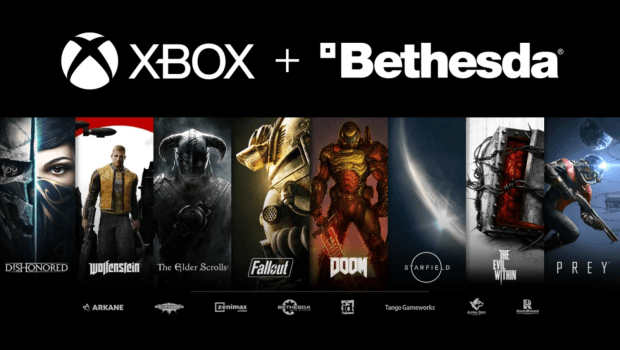

Bethesda developer Alex Nguyen says layoffs were rare under ZeniMax but now feel yearly under Microsoft, sharpening questions around Xbox labor unrest, CWA action, and first-party game strategy.
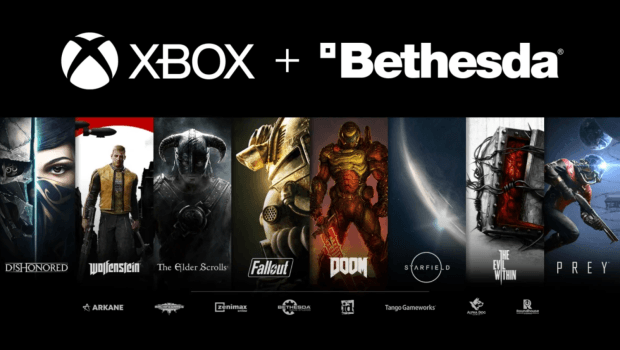
Image: tweaktown.com
Bethesda veteran says the studio’s old safety net has changed
Bethesda lead character artist Alex Nguyen told Kotaku that layoffs were once rare at Bethesda and ZeniMax studios before Microsoft’s acquisition, a claim now landing in the middle of a much larger Xbox labor fight. According to Kotaku’s interview, Nguyen said that under ZeniMax, layoffs did happen but were “few and far between,” and that stability was one of the reasons employees built long careers at the company.
“That was one of the benefits,” Nguyen told Kotaku. “That’s why a lot of people had such long tenure here, and they were like, ‘Yeah, this is the place I’m gonna retire at,’ or ‘this is the place where I’m gonna finish out,’ or ‘I love being here because I want to stay in the industry for a long time.’”
The tension is direct: Bethesda’s reputation, at least as described by Nguyen, was built partly on giving teams time to recover from difficult launches rather than cutting staff after turbulence. Now, according to Kotaku, One Bethesda Game Studio union members and the Communications Workers of America are rallying against what they describe as a layoff culture inside Microsoft’s gaming division. GamingBolt, Wccftech, and Tech4Gamers all picked up Nguyen’s comments because they cut against the older image of Bethesda as a long-tenure studio where developers could reasonably expect to finish out major portions of their careers.
For players following Bethesda layoffs Microsoft acquisition searches, the important confirmed fact is narrow but significant: a named Bethesda developer has publicly contrasted the studio’s pre-Microsoft labor culture with the current Xbox period, saying, “We didn’t have layoffs before, and now we all of a sudden we have yearly layoffs.” That is Nguyen’s account, reported by Kotaku. Microsoft’s broader position, as reported in the source material, has framed cuts around restructuring and operational necessity.
The comments arrive during coordinated Xbox labor action
Kotaku reported that Xbox game developers planned Save Our Devs rallies across nine cities in the U.S. and Canada, with online participation through the United Video Game Workers CWA Twitch channel. The rallies were supported by OneBGS and the Communications Workers of America, and were aimed at supporting laid-off workers, criticizing Microsoft’s layoff pattern, and demanding better treatment for remaining employees.
The reported scale is large, though the sources use slightly different timing language. Kotaku said the rallies focused on layoffs that had already put 1,600 people out of work, with that many cuts again planned before the middle of next year. GamingBolt described the same initial figure as “around 1,600 employees,” with 1,600 more planned for the rest of the fiscal year. Wccftech summarized the planned Xbox cuts as roughly 3,200 positions total. These accounts align on the rough total, but not perfectly on the calendar framing, so the safest reading is that outlets are reporting a major multi-phase Xbox workforce reduction with another large round expected after the first 1,600.
Engadget added further labor context from July. It reported that on July 15, Xbox employees protested layoffs at six studio locations in the U.S. and Canada. Ten days after what Engadget called the Xbox reset memo, CWA in the U.S. and Canada filed lawsuits accusing Microsoft of bad faith bargaining, coercive actions, contract repudiation, and failing to provide notice to employees. Engadget also cited former Bethesda employee Simon Préfontaine as saying lawyers in the U.S. and Canada considered the layoffs illegal and were filing unfair labor practice actions on both sides of the border.
That legal and organizing backdrop makes the Bethesda developer interview part of a larger labor escalation, rather than a single personal grievance. The CWA Bethesda labor angle is now tied to rallies, lawsuits, unionized Xbox workers, and public disputes over how Microsoft explains its cuts.
Bethesda’s old recovery model is the real strategic contrast
Nguyen’s most pointed comparison is not simply “before Microsoft” versus “after Microsoft.” It is how a studio absorbs failure. Kotaku reported that Nguyen cited Fallout 76 and The Elder Scrolls Online as examples of rocky launches where developers were given a chance to fix problems under ZeniMax rather than seeing layoffs become the answer.
That distinction matters for how players evaluate Bethesda’s current and future games. Fallout 76 and The Elder Scrolls Online both had turbulent launches, according to the source material, but Nguyen’s point is that ZeniMax allowed teams time to improve them. Whether a player loved or disliked those games at launch, that model depends on institutional memory: people who know why a system shipped in a certain state, what broke in production, and how to rebuild trust over years.
Nathan Hahn, a technical producer at Bethesda Game Studios, made that production risk explicit in Kotaku’s interview. “Every coworker contributes to the success of our company,” Hahn said. “Without us, Bethesda games aren’t Bethesda games.” GamingBolt also quoted Hahn warning that if only five people know how something works and all five are let go, the remaining team has to learn it again, which damages morale and development.
From a strategy lens, this is the key player-facing risk. Bethesda’s games often rely on long production cycles, large internal toolchains, deep quest and content pipelines, and years of post-launch support. The sources do not prove that any specific future Bethesda game will ship worse because of the cuts. They do, however, document employees arguing that layoffs remove practical knowledge from the teams that make and maintain those games. That is a concrete concern for anyone watching Xbox layoffs Bethesda coverage through the lens of game quality rather than corporate headcount.
Developers dispute Microsoft’s management-layer framing
Microsoft’s public restructuring rationale, as summarized by GamingBolt, has included streamlining game development and approval processes. GamingBolt linked that to Xbox appointing Helen Chiang as COO and studios having a maximum of five management layers. Nguyen pushed back on how the layoffs have been described.
“We’ve seen statements that it’s like a whole bunch of middle management was let go,” Nguyen said, according to GamingBolt. “It’s not middle management. It’s people on the ground making sure that this game works and putting it in the hands of players.”
That is a central conflict in the story. Microsoft’s stated restructuring logic, as reported by GamingBolt, emphasizes management layers and process. Bethesda workers quoted by Kotaku and GamingBolt describe losses among the people directly building, testing, maintaining, and shipping games. Those claims can both exist in the same restructuring program, but they point to different consequences. A trimmed approval chain can theoretically speed decisions. Losing experienced hands can slow delivery, break knowledge continuity, and increase rework.
Wccftech reported additional details around earlier cuts, saying a July action followed layoffs affecting 440 union-represented positions across Bethesda Game Studios, ZeniMax Online Studios, id Software, ZeniMax Workers United QA, and ZeniMax corporate teams. Wccftech also reported that more than 200 developers were laid off from ZeniMax Online Studios and cited reporting that id Software had lost well over half its staff, while also linking to a separate piece where id downplayed claims that the team had been gutted. Because that portion comes through Wccftech’s aggregation and includes disputed characterization around id, it should be treated as reported context rather than a settled headcount map.
Still, the throughline is clear: employees and union representatives are challenging the idea that these are clean efficiency cuts with limited impact on game-making capacity.
The Elder Scrolls 6 sits at the center of the optics problem
GamingBolt reported that Bethesda employees and CWA members previously protested layoffs outside the studio’s Maryland office with a large inflatable rat named Scabby and 800 red flags, each representing one affected worker. GamingBolt said the protest took place the same day Xbox CEO Asha Sharma visited the Maryland office to try an early build of The Elder Scrolls 6.
According to GamingBolt, Sharma praised that build publicly, writing, “Live playthrough of The Elder Scrolls 6: ******** this morning. The scale and grandeur are incredible. The story is even greater.” The source material does not confirm the game’s subtitle, release window, platforms, price, or technical details. It only reports that an early build was played and praised by an Xbox executive.
The optics are difficult for Microsoft. The Elder Scrolls 6 is exactly the kind of long-horizon, platform-defining first-party project that Xbox acquired Bethesda to control. At the same time, the workers closest to Bethesda’s production culture are publicly arguing that repeated layoffs undermine the people and knowledge needed to make Bethesda games feel like Bethesda games.
Players should separate two things here. There is no confirmed evidence in the provided sources that The Elder Scrolls 6 has been delayed, rescoped, or technically harmed by layoffs. There is confirmed reporting that Bethesda employees are warning about knowledge loss, morale damage, and a changed labor environment while Xbox leadership is also presenting Bethesda’s future work as ambitious. That contrast is the story’s pressure point.
Microsoft’s first-party strategy now has a trust problem to solve
Microsoft’s gaming strategy has leaned on large-scale ownership: Bethesda and ZeniMax, Activision Blizzard franchises, live-service operations, subscription value, and a broad first-party slate. Labor stability is part of that equation whether executives discuss it that way or not. A first-party publisher does not only need IP. It needs teams capable of sustaining tools, sequels, expansions, fixes, ports, QA, accessibility work, and long-tail community support.
The Bethesda developer interview creates a useful test for how players should read future Xbox messaging. If Microsoft says cuts are about streamlining, players can reasonably look for evidence that games ship more smoothly, receive better support, and benefit from clearer accountability. If developers say the cuts are hitting people on the ground, players can watch for the opposite signals: delayed updates, support gaps, institutional knowledge loss, unstable live-game cadence, or teams having to relearn systems after experienced colleagues leave.
The sources do not provide practical buying details such as new release dates, platform availability, pricing, performance targets, or upgrade paths for upcoming Bethesda games. For now, there is nothing here that should make a player change a preorder, because no specific preorder information is attached to these reports. The practical guidance is different: treat Microsoft’s first-party promises as something to evaluate over time, especially around production consistency and post-launch support.
Nguyen’s remarks matter because they come from inside the Bethesda ecosystem and challenge a key assumption behind consolidation: that a bigger corporate owner can preserve the creative and technical strengths of acquired studios while making them more efficient. Bethesda employees quoted by Kotaku and GamingBolt are saying the old stability was part of the studio’s value. If Xbox wants players to believe its first-party strategy is strengthening Bethesda, it now has to prove that through shipped games, retained expertise, and a labor relationship that does not keep turning studio culture into a public fight.