
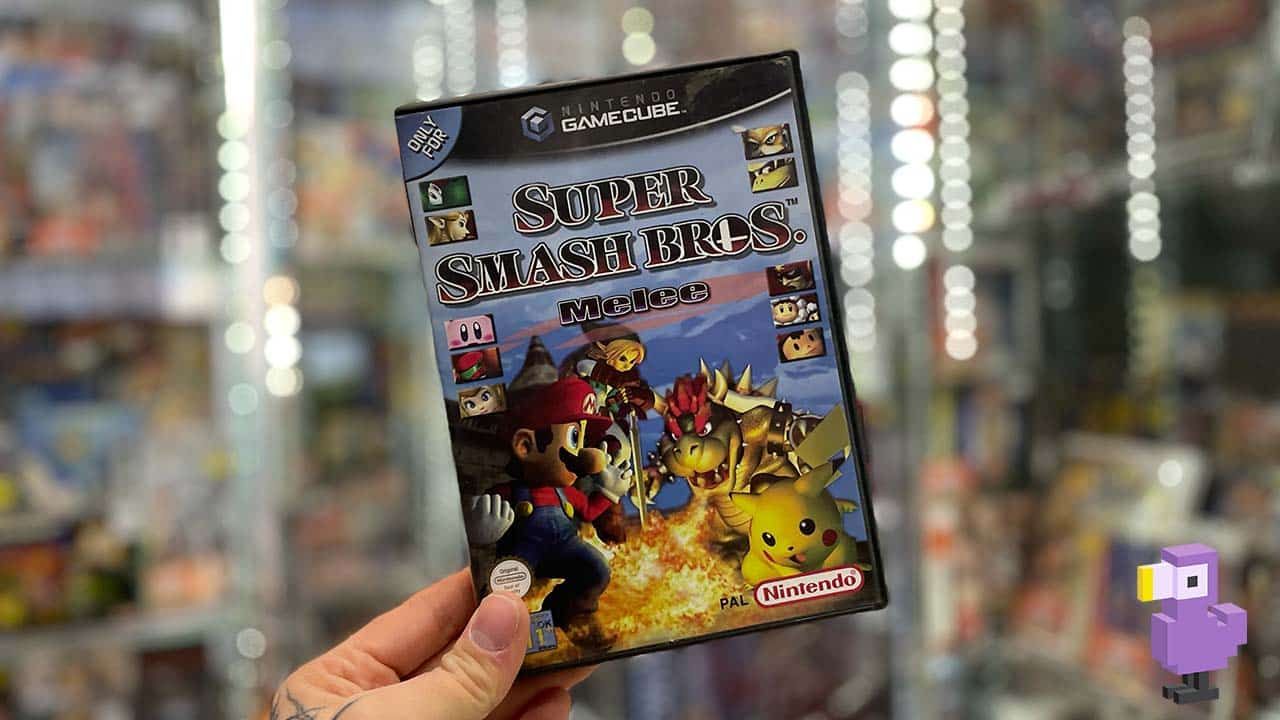

Circana’s newly shared U.S. GameCube sales ranking puts Super Smash Bros. Melee at No. 1 and shows how strongly Nintendo’s own games shaped the console’s legacy.
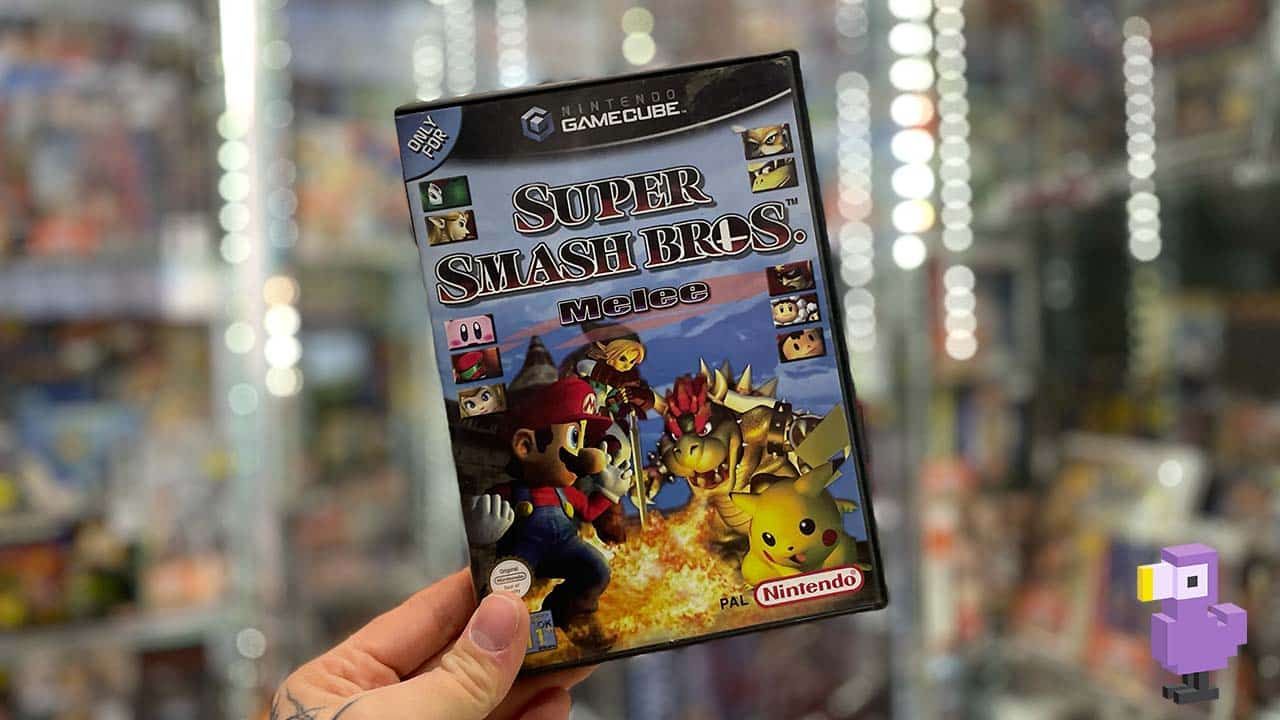
Image: retrododo.com
Circana’s U.S. ranking puts Melee at the top of the cube
The newly shared U.S. GameCube sales ranking has a clear champion: Super Smash Bros. Melee is the best-selling GameCube game of all time in the United States, according to Circana data shared by analyst Mat Piscatella and reported by Nintendo Everything.
The ranking, published around the GameCube’s 25th anniversary, is based on unit sales in the United States. That distinction matters. This is not a global chart, a revenue chart, or a critic-ranked GameCube games list. It is a snapshot of what American players actually bought across the console’s life.
Nintendo Everything reports that Melee is followed by Super Mario Sunshine at No. 2 and Mario Kart: Double Dash at No. 3. The immediate tension is familiar to anyone who has followed Nintendo hardware across generations: the GameCube had beloved third-party releases, cult favorites, and later critical darlings, but the U.S. sales story was led from the top by Nintendo’s own franchises.
Nintendo’s games controlled the top of the U.S. chart
The first seven entries in Circana’s U.S. ranking are all Nintendo games, as presented by Nintendo Everything: Super Smash Bros. Melee, Super Mario Sunshine, Mario Kart: Double Dash, The Legend of Zelda: The Wind Waker, Luigi’s Mansion, Animal Crossing, and Metroid Prime.
That run says a lot about the GameCube as a machine and as a memory. Melee was the living-room gravity well, a fighting game that doubled as a party fixture and a competitive obsession. Sunshine carried the weight of being the console’s main 3D Mario. Double Dash gave the system its kart-racing anchor, with its two-rider mechanic still making it feel distinct inside the Mario Kart series. Wind Waker, Luigi’s Mansion, Animal Crossing, and Metroid Prime each pulled on a different Nintendo muscle: adventure, character-driven haunted-house design, daily-life simulation, and first-person exploration.
GamesRadar framed the same data around the old “Nintendo curse” problem, noting that only two of the GameCube’s U.S. top 10 sellers were third-party games. That reading is blunt but useful. The chart shows a console where Nintendo software was not simply part of the sales mix. It defined the front half of the market.
Sonic was the third-party standout, with Star Wars and Namco close behind
The first third-party title does not appear until No. 8, where Sonic Adventure 2: Battle lands in Circana’s ranking. Nintendo Everything notes that Sonic also appears at No. 15 with Sonic Heroes, while Sonic Mega Collection takes No. 10. In other words, Sonic accounts for three of the seven non-Nintendo entries in the U.S. top 20.
The rest of the third-party presence is scattered but telling. LEGO Star Wars appears at No. 14, Star Wars: Rogue Squadron 2: Rogue Leader at No. 16, Super Monkey Ball at No. 18, and Soulcalibur 2 at No. 19. That group is a curious little map of GameCube appeal: arcade precision, licensed spectacle, family-friendly co-op energy, and a weapons fighter that many players still associate with its Nintendo platform connection.
The ranking does not explain why these specific games broke through, so it would be a mistake to turn the list into a clean theory of the market. What it does confirm is that third-party success on GameCube existed, but it had to fight for space under a very heavy Nintendo canopy.
The full U.S. top 20, including one major near-miss
According to the Circana list shared by Mat Piscatella and reported by Nintendo Everything, the top GameCube games U.S. ranking is: No. 1 Super Smash Bros. Melee, No. 2 Super Mario Sunshine, No. 3 Mario Kart: Double Dash, No. 4 The Legend of Zelda: The Wind Waker, No. 5 Luigi’s Mansion, No. 6 Animal Crossing, No. 7 Metroid Prime, No. 8 Sonic Adventure 2: Battle, No. 9 Paper Mario: The Thousand-Year Door, No. 10 Sonic Mega Collection, No. 11 Pokémon Colosseum, No. 12 Mario Party 4, No. 13 The Legend of Zelda: Twilight Princess, No. 14 LEGO Star Wars, No. 15 Sonic Heroes, No. 16 Star Wars: Rogue Squadron 2: Rogue Leader, No. 17 Mario Golf: Toadstool Tour, No. 18 Super Monkey Ball, No. 19 Soulcalibur 2, and No. 20 Kirby Air Ride.
The big absence is Resident Evil 4. Nintendo Everything specifically notes that Circana’s data places Capcom’s survival-horror landmark at No. 21, just outside the top 20.
That is the sharpest reminder that best-selling GameCube games and the modern canon of best GameCube games do not always line up. Resident Evil 4 has had an unusually long afterlife across platforms and discussions of action-horror design, yet in this U.S. unit-sales ranking it trails Kirby Air Ride by one spot. Sales history preserves one kind of truth. Critical memory and collector conversation preserve another.
The GameCube was smaller than its reputation now feels
The anniversary timing gives the ranking extra weight. VGChartz lists the GameCube’s Japanese launch as September 14, 2001, with North America following on November 18, 2001 and Europe in May 2002. VGChartz also lists lifetime GameCube hardware sales at 21.74 million units worldwide, with 208.58 million games sold, and says North America was the system’s strongest region at 12.55 million hardware units.
Those figures help explain why the GameCube can feel oddly larger in memory than it was in the market. It was not Nintendo’s biggest console. It did not have the PlayStation 2’s scale. NewGameNetwork’s retrospective bluntly frames the GameCube as a console that lived in the shadow of Sony and Microsoft during that generation, while also arguing that history has treated its software library kindly.
Nintendo Life’s 25th anniversary guide takes a similar retro-library angle, describing the GameCube as a console focused on playing games and noting that it was the last time Nintendo put itself in direct spec competition with Sony and Microsoft before the Wii changed course. Put beside Circana’s ranking, that context makes the U.S. chart feel less like trivia and more like a record of a transitional Nintendo: still competing conventionally, still leaning on mascots and craft, and still building games that would outlast the hardware’s sales ceiling.
How collectors and returning players should read the ranking
For collectors, the new GameCube sales ranking is useful, but it should not be mistaken for a price guide. None of the provided sales sources give current market prices, print-run details, or complete availability information. A high position on the chart confirms that a game sold strongly in the United States, not that it is cheap, expensive, rare, or easy to find today.
What the list does offer is a nostalgia map. If someone grew up with a GameCube in the U.S., Circana’s top 20 identifies the games most likely to have shaped that shared memory: Melee sleepovers, Sunshine’s tricky movement, Double Dash rivalries, Wind Waker arguments, Animal Crossing routines, and Metroid Prime’s lonely scan-filled corridors.
It also gives returning players a better way to separate sales history from personal discovery. The safest revisits are obvious at the top, but the lower half is where the console’s texture comes through: Paper Mario: The Thousand-Year Door at No. 9, Mario Golf: Toadstool Tour at No. 17, Super Monkey Ball at No. 18, Soulcalibur 2 at No. 19, and Kirby Air Ride hanging on at No. 20. Those placements show a library remembered for big Nintendo pillars, but sustained in affection by sharper, stranger, more mechanical pleasures.
As a retro data story, the U.S. top 20 does not settle the debate over the greatest GameCube games. It gives that debate a firmer floor. The Nintendo GameCube best sellers were overwhelmingly Nintendo-led, Sonic made the strongest third-party charge, and one of the console’s most celebrated action games missed the cutoff. Twenty-five years later, that is exactly the kind of messy, revealing list retro players love to argue over.