

A practical, source-grounded guide to the best Pokemon games on Switch in 2026, separating mainline RPGs, remakes, and spinoffs for returning fans and Switch 2 owners.
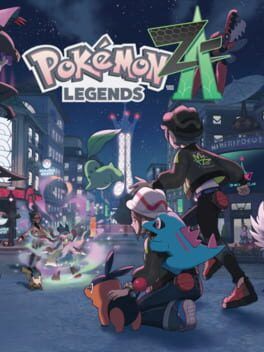
Image: IGDB
A bigger Switch library, and a messier buying decision
The strongest concrete fact for returning fans in 2026 is that the Switch era now has enough Pokemon games to require triage. Eneba’s 2026 guide describes a chronological lineup of 14 major Pokemon games on Nintendo Switch, covering main series RPGs and spinoffs from 2017 through 2026. Nintendo Everything, in its July 4, 2026 feature, frames the same era as unusually polarizing, saying that “pretty much every game” has carried a notable controversy around release while the franchise has continued to grow stronger.
That tension is the real buying problem. The best Pokemon games on Switch are not arranged neatly from oldest to newest, and returning fans from the Nintendo DS or 3DS years should not assume that a remake is automatically the safest route. The Switch catalog includes faithful remakes, modern open-region ambitions, direct-control fighting-game spinoffs, and at least one Switch 2-era Pokemon release noted in Polygon’s first-year Switch 2 coverage. Those categories serve different players.
This guide is built as a practical purchase map rather than a universal scoreboard. Where the sources support a firm claim, such as the design tradeoffs in Brilliant Diamond and Shining Pearl or the format of Pokken Tournament DX, I treat it as confirmed. Where the supplied material only signals a category, trend, or public listing, I mark the limits clearly. For Pokemon games for Switch 2 owners, that distinction matters because the provided sources do not give upgrade pricing, performance targets, save-transfer details, or full storefront requirements for the back catalog.
1. Best starting point for current RPG players: the ambitious mainline track
For returning fans who want the closest thing to the current Pokemon center of gravity, the mainline RPG track is still the first place to look. Nintendo Everything specifically identifies Pokemon Scarlet and Violet as one of the two Switch entries that stand out when looking at “the objective response from fans,” pairing them with Brilliant Diamond and Shining Pearl as examples of the era’s controversy. The same Nintendo Everything piece also stresses that the franchise is stronger than ever, which captures the contradiction around Scarlet and Violet particularly well: these are the games many lapsed players will be most curious about, but they are also part of the Switch generation’s most debated reputation.
The supplied source text does not provide enough detail to make a performance claim, recommend a specific version, or describe DLC value. It does, however, support a buyer-facing judgment: Scarlet and Violet are best treated as the mainline choice for players who want to engage with the modern Pokemon conversation and are willing to accept that community response has been divided. If you are returning after years away and want to see where the core RPGs have been heading, this is the category to investigate first. If your priority is polish, preservation, or a clean remake of an older favorite, it should not be an automatic purchase without checking current user impressions and platform details.
Eneba’s broader 2026 overview says the Switch era includes games built around open worlds, turn-based battles, Poke Balls, faithful remakes, and creative spinoffs. That supports the larger progression point: modern Pokemon on Switch is no longer one RPG template repeated with a new region. For systems-minded players, that means your best buy depends less on whether a game carries the Pokemon name and more on which progression loop you want to inhabit: exploration-first collecting, traditional badge-style RPG structure, nostalgic remake pacing, or genre experimentation.
2. Best remake for nostalgia, with a major caveat: Brilliant Diamond and Shining Pearl
Pokemon Brilliant Diamond and Shining Pearl are the clearest example of why returning fans need a buying guide rather than a release list. Nintendo Everything’s writer, discussing the games from the perspective of someone who loves Generation 4 and especially Pokemon Platinum, calls Brilliant Diamond and Shining Pearl “some of the biggest disappointments ever” for them. The stated reason is not that Diamond and Pearl lack affection as source material. It is that the remakes are faithful to base Diamond and Pearl in ways that leave out many of Platinum’s improvements.
The most concrete comparison in the source is the regional Pokedex. Nintendo Everything says Platinum added almost 60 Pokemon to the regional Pokedex compared with Diamond and Pearl. The feature also cites Platinum’s quality-of-life changes, including a back button on the Poketch, a more developed story with the Distortion World, and the Battle Frontier with multiple facilities. Because Brilliant Diamond and Shining Pearl remake Diamond and Pearl rather than Platinum, Nintendo Everything argues that many of those Platinum changes were left behind.
That makes the recommendation narrow. Brilliant Diamond and Shining Pearl suit players who specifically want a Switch-accessible version of Diamond and Pearl’s structure, aesthetic, and nostalgia. They are a poor first pick for completionists who remember Sinnoh through Platinum’s fuller regional design, postgame facilities, and story expansion. As a buyer’s guide entry, they rank below the mainline modern track for most returning adults, not because remakes are inherently lesser, but because this remake choice preserves some old limitations that Platinum had already addressed.
There is also a source tension worth noting. Eneba’s overview describes the Switch library as including faithful remakes that can hit nostalgia, while Nintendo Everything sharply criticizes how faithfulness was applied in Brilliant Diamond and Shining Pearl. Both can be true for different buyers. Nostalgia can make these games comforting, but nostalgia is also the reason Platinum fans may notice the omissions immediately.
3. Best spinoff for mechanics-first players: Pokken Tournament DX
Pokken Tournament DX is the easiest spinoff to recommend when the buyer is not looking for a traditional Pokemon RPG at all. Eneba identifies it as the first Pokemon game in the Switch lineup, released in 2017, and lists Bandai Namco Studios with Nintendo and The Pokemon Company as creators. The same source describes it as an enhanced Switch edition of a game that previously appeared in arcades and on Wii U, with all DLC, new fighters, and polished visuals. Eneba also lists a Metacritic score of 79 and an approximate main playtime of eight and a half hours.
The design distinction is crucial. Eneba says Pokken Tournament DX puts you in direct control of the Pokemon in real-time arena battles instead of casting you as a trainer issuing commands through a turn-based RPG interface. It compares the setup to Tekken, while noting Legendary Pokemon and anime-style ultimate moves. The source also says fighters feel unique, giving examples such as Gengar’s ranged options and Machamp’s close-range identity.
For returning RPG fans, that makes Pokken Tournament DX a side purchase rather than a replacement for a mainline entry. Its progression appeal comes from learning matchups, movement, range, and character identity, not from building a party across a region. If your favorite part of Pokemon is team construction, route pacing, Pokedex completion, and gradual adventure structure, this should not be your first buy. If you love Pokemon designs but want a cleaner skill-based game for short sessions, local competition, or a genre change between RPGs, it remains one of the most distinct Pokemon Switch games ranked here.
4. Where Pokemon Legends: Z-A fits for Switch 2 owners
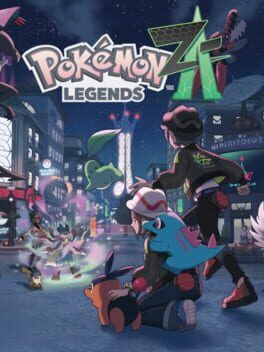
Pokemon Legends: Z-A is the image attached to this guide via IGDB cover art, and it is the obvious title many Switch 2 owners will be searching around in 2026. The supplied reporting, however, does not provide enough confirmed gameplay, pricing, upgrade, or performance information to rank it above established Switch entries on design evidence alone. That is an important limitation rather than a dodge. A cover listing supports identity and visibility, not a buyer’s verdict.
Polygon’s Switch 2 first-year ranking provides useful platform context. Polygon states that the Nintendo Switch 2 is one year old, that Nintendo supported it with an average of one first-party game per month across its first 12 months, and that key franchises including Pokemon received solid new games on Switch 2. Polygon also says its list includes games released on both Switch and Switch 2. The excerpt supplied here does not name the Pokemon game in that passage or give technical details.
For Pokemon games for Switch 2 owners, the practical advice is to separate platform confidence from RPG preference. If a current Pokemon release has native Switch 2 support, a Switch 2 edition, or cross-generation availability on the live storefront, that may make it the most convenient modern choice. But this source packet does not confirm frame rate, resolution, paid upgrade paths, save compatibility, or whether older Switch Pokemon games receive any meaningful Switch 2 benefit. Before buying digitally, check the current Nintendo eShop listing for platform labels and edition language. Before buying physically, check whether the cartridge, box, or product page distinguishes Switch from Switch 2 features.
In short, Pokemon Legends: Z-A belongs on the 2026 watchlist for returning fans, but it should be treated as a current-era purchase check rather than a retroactive winner unless you have verified the live store details that matter to your hardware.
5. Pokemon Switch games ranked by the player they actually suit
A single numbered ranking flattens what makes the Switch catalog difficult. A returning fan who wants a modern mainline RPG should start with Scarlet and Violet, while accepting Nintendo Everything’s point that fan response has been notably contentious. That recommendation is about relevance and ambition, not a claim that every technical or design question is settled by the sources provided here.
For players who want nostalgia and are specifically attached to Diamond and Pearl, Brilliant Diamond and Shining Pearl are the remake pick. For players who remember Platinum as the definitive Sinnoh experience, they should rank much lower. Nintendo Everything’s comparison to Platinum’s expanded regional Pokedex, Distortion World, quality-of-life improvements, and Battle Frontier is the key evidence. If those features are part of what you loved, the remakes are unlikely to satisfy the completionist itch.
For mechanics-first players, Pokken Tournament DX ranks highest among the named spinoffs in the supplied material because its appeal is clearly documented. Eneba describes its direct-control real-time battles, enhanced Switch package, and roster feel. That gives it a defined use case: a Pokemon game for players who want matchup learning and action-game readability rather than a campaign built around routes and party growth.
For Switch 2 owners, the ranking is conditional. Polygon confirms Pokemon has a presence in the first Switch 2 year and that some games in its list span Switch and Switch 2, but the supplied excerpt stops short of the details a buyer needs. The best Pokemon Nintendo Switch 2026 purchase may be the newest Switch 2-compatible entry if you want to play where the platform is heading. It may also be an older Switch game if you care more about a specific structure, such as a remake or a fighting-game spinoff, than the newest hardware badge.
6. How to buy without stepping into the wrong Pokemon loop
Returning fans should begin by identifying the loop they miss. If you miss route-by-route RPG progression, party planning, gyms, and the social feeling of a current mainline release, investigate Scarlet and Violet first, then verify current edition details and recent player feedback. If you miss Sinnoh but remember Platinum’s additions as essential, approach Brilliant Diamond and Shining Pearl cautiously. Nintendo Everything’s critique is especially relevant for completionists because it centers on missing regional, story, quality-of-life, and postgame content from Platinum.
If you want a low-commitment Pokemon purchase with a clear mechanical identity, Pokken Tournament DX is easier to evaluate. Eneba’s listed main playtime of roughly eight and a half hours suggests a shorter core path than a traditional RPG, while its real-time fighter design makes replay value depend on whether you enjoy learning characters and matchups. That is a cleaner fit for players who want Pokemon as an action game rather than as a long-form collection RPG.
If you own a Switch 2, do not assume every Pokemon Switch game has a meaningful upgrade. The provided sources do not confirm catalog-wide enhancements, prices, or requirements. Treat “Pokemon games for Switch 2 owners” as a store-check category: confirm whether the game is listed for Switch, Switch 2, or both; whether any upgrade is free or paid; and whether the listing mentions performance or feature differences.
The short version of this Pokemon Switch games ranked guide is practical: choose modern mainline Pokemon for relevance, Brilliant Diamond and Shining Pearl only for Diamond and Pearl nostalgia, Pokken Tournament DX for direct-control fighting, and Pokemon Legends: Z-A or other Switch 2-era entries only after verifying current storefront details. In a polarized Switch generation, the safest purchase is the one that matches the progression system you actually want to spend dozens of hours inside.