
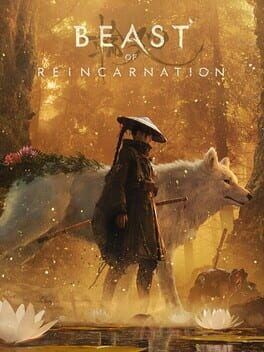

Game Freak’s Unreal Engine 5 action RPG Beast of Reincarnation is being led by a relatively small internal team that is orchestrating a large network of external partners. Here’s how that hybrid production, new tech stack, and multiplatform focus could reshape the studio’s future beyond Pokémon.
Game Freak has shipped hit after hit for nearly three decades, but almost all of them have worn the same mascot on the box. Beast of Reincarnation is different. It is a fully new IP, a dark, post apocalyptic action RPG built in Unreal Engine 5, heading to PlayStation 5, Xbox Series X|S, and PC with day one Xbox Game Pass support. Under the hood it is also one of the most experimental productions in the studio’s history.
According to director Kota Furushima and follow up clarifications from Game Freak PR, the internal team on Beast of Reincarnation is “relatively small” and sits in core direction and management roles. The broader headcount comes from “a lot of partner companies,” external specialists who are handling significant chunks of production. Put simply, Game Freak is acting less like a traditional, monolithic Pokémon factory and more like a modern lead studio orchestrating a distributed, almost AA to AAA scale project.
This shift, combined with the jump to Unreal Engine 5 and a multiplatform launch, says a lot about where Game Freak may be headed once Pokémon is no longer its only defining pillar.
A small internal core directing a wide outsourcing web
If you only watched Beast of Reincarnation’s reveal trailer at the Xbox Games Showcase or its extended gameplay spotlight at Xbox Developer Direct, you would be forgiven for assuming Game Freak has quietly spun up a huge next gen division. Dense foliage ripples across an overgrown, ruined Japan. Emma’s cloak whips in the wind. Koo’s fur bristles with detail. Heavy particle effects fill the screen with every strike of Emma’s katana.
Behind that visual leap sits a surprisingly lean internal staff.
Furushima has said in multiple interviews that Beast of Reincarnation’s “overall team size is quite large,” but the proportion of actual Game Freak employees is small compared to the total. The studio is instead leaning on a wide network of partner companies, each contributing to specific slices of the production. PR clarified that Game Freak’s own developers are concentrated in “core direction and management roles,” steering design, narrative, combat systems, and overall quality while partners take on production heavy tasks.
That structure is a clear departure from how players tend to imagine Pokémon development. Flagship Pokémon RPGs are notoriously built on fast turnaround schedules, with Game Freak carrying a large in house load across design, programming, art, and content creation, then cycling through generations on a relatively short cadence. Beast of Reincarnation, by contrast, has reportedly been in the works for around six years, gestating first as the in house incubation project Project Bloom before being unveiled publicly.
The end result looks closer to a “hub and spoke” model. Game Freak acts as the creative hub, defining combat tempo, Emma and Koo’s narrative arc, and the structure of the blighted forests. Around that hub sit art outsourcing houses, technical co developers, animation and VFX partners, and possibly entire external teams dedicated to environment building or cinematics. For a studio that cut its teeth on tightly scoped, mostly self contained handheld RPGs, that is a fundamental change in how games get made.
Unreal Engine 5 as a production equalizer
The most obvious symbol of that change is the engine logo on Beast of Reincarnation’s trailers. Game Freak’s Pokémon titles still rely on internal, legacy tech that has struggled to keep pace with the expectations placed on an evergreen, annualized series. Beast of Reincarnation leaves that behind for Unreal Engine 5.
Unreal has two advantages for a project in this position.
First, it is a mature, well documented technical base that external teams can plug into without months of bespoke onboarding. When you are coordinating work across many partner studios, a shared toolset is crucial. Environment art built in one region, shader work tuned somewhere else, and combat animation authored by a third group can all feed back into the same content pipeline. That is a level of interoperability that would be far harder to achieve with purely proprietary tools.
Second, Unreal Engine 5 gives Game Freak the headroom to chase the “stepped up” production values that outlets like Push Square have highlighted. Rich global illumination, detailed character materials, and dense, reactive foliage are not coming from scratch; they are leaning on UE5’s rendering stack and off the shelf systems. Rather than inventing new graphics tech, the internal team can focus on the aspects Furushima keeps pointing to as central: combat feel, command based pacing, and the emotional contrast between Emma’s apparent lack of feeling and Koo’s animalistic loyalty.
The director has been clear that Game Freak’s priority is “gameplay experience” more than raw graphical fidelity, yet Beast of Reincarnation’s footage still looks like a generational leap compared to the studio’s Switch era Pokémon work. That is less a contradiction and more a reflection of what an off the shelf engine and external specialists can deliver when the home team is not bogged down in low level tech.
Building an action RPG on top of RPG instincts
Beast of Reincarnation’s structure reflects Game Freak’s comfort zone as much as its experiments. At a basic level this is still a character driven RPG. Emma and Koo move westward through a distant future Japan, confronting giant Nushi that seed the land with blighted forests, absorbing their power, and climbing a difficulty curve that culminates in a showdown with the titular Beast of Reincarnation.
The twist is that this arc is delivered through a “one person, one dog” action combat system. Emma fights in real time with a katana. Koo acts as both companion and resource, a malefact wolf whose skills are deployed through a menu based command system.
On paper it is a clean division of labor, and it maps well to Game Freak’s hybrid internal external setup. Core designers inside the studio can tune Emma’s parries, aggressiveness, and stamina while trusting specialists at partner studios to iterate on animation and hit reaction detail. The command menu that slows time when you direct Koo feels like an extension of the studio’s turn based roots, bringing a layer of tactical consideration back into a modern action framework.
Critically, this structure is what makes Furushima’s “tempo” talk more than marketing speak. Action RPGs built entirely around reflex can be difficult to balance when multiple vendors are contributing pieces of combat content. By anchoring the system in a cadence of parry, earn points, trigger Koo’s abilities through timed commands, Game Freak sets a clear mechanical spine that external teams can build around. Enemy designers know that players will have periodic windows of slowed time when Koo’s menu is open. VFX teams know they are decorating big, discrete moments of payoff when Koo’s skills land.
In other words, the combat design is not only a creative choice but also a production tool that makes the outsourced nature of the project more manageable.
Outsourcing as a path to higher production values
Outlets that went hands on or dug into the Developer Direct breakdown have all circled the same point. Beast of Reincarnation simply looks more expensive than anything Game Freak has shipped before outside of collaborative mobile work. Character models hold up in close ups. Cinematics benefit from modern camera work and facial animation. The blighted forests are more than just green tinted fields; they are layered, vertical spaces with thick vegetation and twisting roots.
Those production values come with a cost profile that would be hard to justify inside the usual Pokémon cadence. By pushing Beast of Reincarnation into a longer development cycle and spreading the workload across many vendors, Game Freak appears to be buying itself two things it rarely gets: time and elasticity.
Time, because an incubation project like this can iterate quietly without the pressure of a hard media cycle reset every November. Elasticity, because external partners can be spun up or down as content needs shift, rather than permanently expanding the in house team.
It is telling that Game Freak and publisher Fictions are positioning Beast of Reincarnation as a true multiplatform title from day one. Pokémon is deeply bound to Nintendo hardware, and that partnership has shaped everything from technical targets to audience expectations. Here, the studio is committing to PlayStation 5, Xbox Series, and PC simultaneously. To make that work, they are deploying tactics that have become standard among larger multiplatform developers: Unreal as a base, outsourcing heavy world building to shops with next gen experience, and centralizing direction around a small, senior internal crew.
What this means for Pokémon
Whenever Game Freak shows something that is not Pokémon, the same question follows. Will this make future Pokémon games look and run better
Beast of Reincarnation does not directly answer that, but its production offers a few hints.
First, the existence of a dedicated, UE5 fluent team inside Game Freak shows that the studio is willing to maintain multiple tech stacks. That opens the door, at least in theory, to future Pokémon projects that lean on more modern engines or co development partnerships, especially as hardware expectations climb.
Second, the success or failure of this outsourcing model will likely influence how The Pokémon Company and Nintendo view external help on core titles. If Beast of Reincarnation ships in good technical shape and lands with players, it becomes a proof of concept that Game Freak can act as a creative director while a wider network of studios supports production. That would make it easier to scale Pokémon’s visuals and world density without ballooning the permanent headcount in Tokyo.
Finally, working on a darker, more mature IP is almost certainly broadening the skill set of key leads inside Game Freak. Writing for a stoic, amnesiac Emma and her morally complicated bond with Koo is a very different exercise from building a cheery region tour full of gyms and friendly rivals. Combat designers forced to think through hit stop, invincibility frames, and boss pattern telegraphs in Beast of Reincarnation will carry those lessons back to any future action leaning Pokémon spin offs.
Whether or not Pokémon itself ever adopts Unreal, the mindset shift of treating external partners as core collaborators rather than supplemental contractors is likely to stick.
A blueprint for Game Freak’s post Pokémon identity
Beast of Reincarnation is not the first time Game Freak has stepped outside its main series. HarmoKnight, Pocket Card Jockey, Little Town Hero and others have all explored smaller ideas on the side. What makes Beast feel different is the scale of its ambition and the maturity of its production approach.
This is a studio best known for handheld RPGs committing to a high end, third person action RPG that invites comparison to Souls likes and modern character action games. It is a studio that historically built most things itself now placing a “relatively small” internal group atop a wide outsourcing pyramid. It is a developer long associated with Nintendo platforms choosing to debut a new IP on an Xbox stage and ship on rival consoles, while leveraging Xbox Game Pass to find an audience.
If Beast of Reincarnation resonates, it will do more than add a new franchise to Game Freak’s catalogue. It will validate a development model that can support large, multiplatform projects without breaking the studio’s Pokémon obligations. It will give Game Freak leverage to negotiate future partnerships, armed with a successful non Pokémon IP and a proven outsourcing playbook.
And for players, it offers something simple but rare. A chance to see what Game Freak’s designers and artists can do when they are not constrained by the rhythms and expectations of catching them all, but are instead free to build a harsh, beautiful world for one girl, one wolf, and a creeping blight that threatens to swallow them both.