
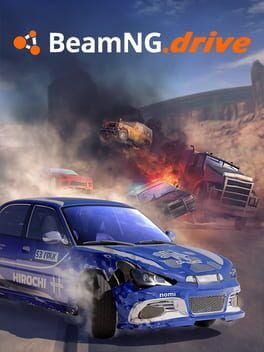
BeamNG.drive version 0.39 is billed by its developers as the game’s biggest update yet, adding a major graphics overhaul, Utah rally stages, a new Cherrier Ardente coupe, UI changes, and aerodynamic physics.
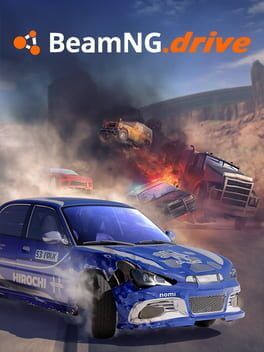
Image: IGDB
Store links: BeamNG.drive on Steam
BeamNG.drive’s biggest update arrives with a hardware question attached
BeamNG GmbH says BeamNG.drive version 0.39 is “the biggest update we’ve ever delivered,” and for once that phrase is not being carried by a single headline feature. The official update post lists massive graphics changes, a full UI overhaul, a new vehicle, quality-of-life work, and underlying simulation additions, while Rock Paper Shotgun highlights the same update as a broad expansion that adds overhauled lighting, fresh rally content, and the Cherrier Ardente coupe.
The tension for sim driving fans is obvious. BeamNG.drive built its reputation on deformation, suspension movement, crashes, and a physics model that can make a small mistake look expensive. Version 0.39 tries to pull the presentation closer to that physics reputation. Better shadows, HDR output, volumetric clouds, dynamic ambient lighting, a physically based night sky, and new gravel rally stages all make the sandbox more legible and more dramatic, but the developer also warns that some players may want to revisit their graphics settings to protect framerate.
That is the practical headline for anyone returning after months away: this is the BeamNG.drive biggest update according to its creators, but it is also an update that may change how your current settings behave. The developers say all default graphics presets should look better than before, and that players already using the lowest preset should see minimal impact “hopefully.” That wording leaves room for the usual PC reality: the update is available, but your best configuration may need a fresh pass.
The graphics overhaul is aimed at stability as much as spectacle
The BeamNG.drive graphics overhaul begins with shadows, which the developer says received a “massive overhaul.” In practical driving terms, this targets one of the most distracting forms of visual noise in a sim: shadows that detach from the wheels, bodywork, or scenery as the car and camera move. BeamNG says shadows should no longer float away from objects such as wheels and car bodies, and VR shadows should now align properly for both eyes.
That matters because BeamNG.drive is often watched as closely as it is driven. Players inspect suspension compression, body roll, broken axles, bent frames, and the exact moment a wheel stops pointing in the direction the driver intended. A shadow that slides or flickers across a crumpled fender can break the read of what the physics engine is doing. The official post also mentions improved GTAO quality, auto exposure, reduced flickering when the sun moves, and smoother blending between shadow cascades.
The lighting changes go deeper than a new contrast pass. BeamNG says version 0.39 adds HDR output support on Vulkan and Direct3D 12 for HDR-capable monitors, with brighter highlights, wider color ranges, and improved display accuracy. It has also replaced older light falloff models with physically correct light attenuation using an inverse-square model. For a driving sandbox, that is a useful kind of realism: headlights, streetlights, garage lighting, and environmental illumination should behave more consistently across distance.
PC Gamer’s framing of the update focused on the joy of watching ordinary cars do absurd things under dynamic ambient lighting, and that captures the odd appeal of BeamNG.drive without overstating what changed. Version 0.39 does not make the game a different discipline. It makes the same discipline clearer, especially when lighting conditions are changing and the player is trying to read speed, surface, pitch, and damage in motion.
The sky system gives long drives and replays a stronger sense of place
BeamNG’s official post spends unusual detail on the sky, and that is a clue to the scale of the rendering pass. Version 0.39 adds volumetric clouds and a physically based night sky. The developer says the night sky is based on real astronomical values, including Milky Way rendering and a constellation database synchronized with latitude, longitude, date, and time of day.
That can sound ornamental until you think about how BeamNG.drive is used. This is a game where players run scripted scenarios, test vehicles, record slow-motion crashes, tune cars, and build elaborate modded situations. A believable skybox and lighting model give replays and photo mode more credibility, but they also help time-of-day driving feel less flat. BeamNG says daytime rendering now uses a multiple scattering sky model with new dynamic ambient lighting based on spherical harmonics, which should produce a more natural sky across different times of day.
Rock Paper Shotgun also notes that photo mode has received its own UI revamp. Taken together, the graphics and photo changes suggest the developers understand the game’s second audience: people who discover BeamNG.drive through clips, screenshots, and improbable crash tests before they ever touch a wheel or controller. Visual fidelity is part of the loop that keeps the game resurfacing on Steam. A physics sandbox creates the event; improved lighting makes the event easier to share.
Utah rally content gives the physics sandbox a cleaner driving test
The BeamNG.drive rally stages are the most interesting addition for players who treat the game as a driving sim rather than a crash machine. Rock Paper Shotgun reports that version 0.39 adds new gravel rally stages in Utah for BeamNG’s rally mode, while OverTake describes the update as adding a full 30-kilometer rally loop. Those descriptions point in the same direction: the new content gives players a longer, more structured gravel environment in which to measure car control.
That is a good fit for BeamNG’s strengths. Gravel rallying exposes weight transfer, suspension compliance, tire load, and driveline behavior in a way that circuit driving often masks. On loose surfaces, a soft landing, an early lift, or a late rotation can be the difference between carrying momentum and arriving at the scenery sideways. BeamNG.drive’s soft-body physics already make impacts unusually readable, but rally stages add a purer handling question before the crash ever happens: can the car settle, rotate, and put power down over broken terrain?
The Utah setting also gives the new visual tech a sensible showcase. Gravel dust, low sun, long shadows, clouds, and changing ambient light all have a direct effect on readability. The update’s lighting work is not only for beauty shots if it helps drivers better judge crests, cambers, and roadside objects at speed. The sources do not give stage notes, surface composition details, or timing format specifics, so it is too early to treat this as a dedicated rally sim expansion. Confirmed facts support a narrower claim: version 0.39 adds new Utah gravel rally content, and at least one sim racing outlet reports a 30-kilometer loop.
The Cherrier Ardente fills the fun slot without abandoning simulation detail
As Rock Paper Shotgun notes, BeamNG updates often arrive with a new car, and version 0.39 adds the Cherrier Ardente. The outlet describes it as a sporty coupe suited to rallying or drifting, and the developers call it “a solid contender for the best-looking vehicle we’ve ever done.” That is the kind of car BeamNG.drive benefits from: light enough to move around, expressive enough to oversteer, and useful across multiple surfaces.
For rally and drift players, a sporty coupe is a flexible test bed. A car that can be placed on throttle, rotated on entry, and punished over rough ground gives the physics engine room to speak. BeamNG’s value is rarely in a perfect racing line. It is in the way the vehicle reacts when that line is lost, when the suspension bottoms out, when the rear steps beyond recovery, or when a glancing hit becomes structural damage.
Version 0.39 also adds movable sun visors across the BeamNG fleet, according to Rock Paper Shotgun. That sounds small beside HDR and new rally stages, but cockpit usability is a real issue in driving games, especially for players who prefer in-car views. A visor that can improve forward visibility under harsh light is a practical detail, and it lines up with the update’s wider focus on readability rather than pure gloss.
The update also introduces a new aerodynamic physics system, according to Rock Paper Shotgun, where airflow from one car can affect nearby vehicles. The outlet specifically mentions bump drafting or side drafting during races. For BeamNG.drive, that is a potentially spicy addition because the cars are already physically fragile compared with conventional racers. A side draft that destabilizes a car in a normal racing sim might cost a tenth. In BeamNG, the follow-up contact can cost a wheel, a door, or the entire run.
UI, gamepad control, and the PS5 caveat shape the return trip
The update is not limited to cars and rendering. BeamNG says the pause menu has been redesigned to give players, modders, and the developers more flexible tools. The studio says part of the reason was gamepad functionality, because the old menu system could range from annoying to nearly impossible to navigate with a controller. Version 0.39 is intended to make menus and systems significantly easier to use from a gamepad.
That matters for the game’s next step. In the same official post, BeamNG says the PS5 version announced some months ago is still planned for release later this year, but the studio is not giving a firm time estimate because console development is a new process for the team. That is confirmed as a plan, not a dated release window. For now, the concrete update is version 0.39 on the existing PC side, with HDR support specifically cited for Vulkan and Direct3D 12.
For Steam players, the reason BeamNG.drive keeps coming back into conversation is partly that it sits across categories. Rock Paper Shotgun describes it as a long-running, moddable sandbox centered on vehicular destruction physics, where bumps, crumples, slams, bending metal, and broken glass are core to the appeal. Racing fans arrive for handling experiments, crash fans arrive for spectacle, modders arrive for systems, and returning players arrive when an update gives the sandbox a new toy or a new reason to test old ones.
Version 0.39 appears to hit all of those groups at once. The BeamNG.drive new coupe gives drivers a fresh platform for rallying and drifting. The rally stages give the physics model a longer gravel exam. The graphics overhaul makes the familiar damage and driving behavior easier to read. The UI work reduces friction for controller users, and the performance note tells sensible players to check presets before assuming their old setup is still optimal. If you have been waiting for a reason to reinstall, this is the strongest official prompt in a while. If you already run the game close to your hardware limit, make your first session a settings shakedown before you head for the Utah gravel.