
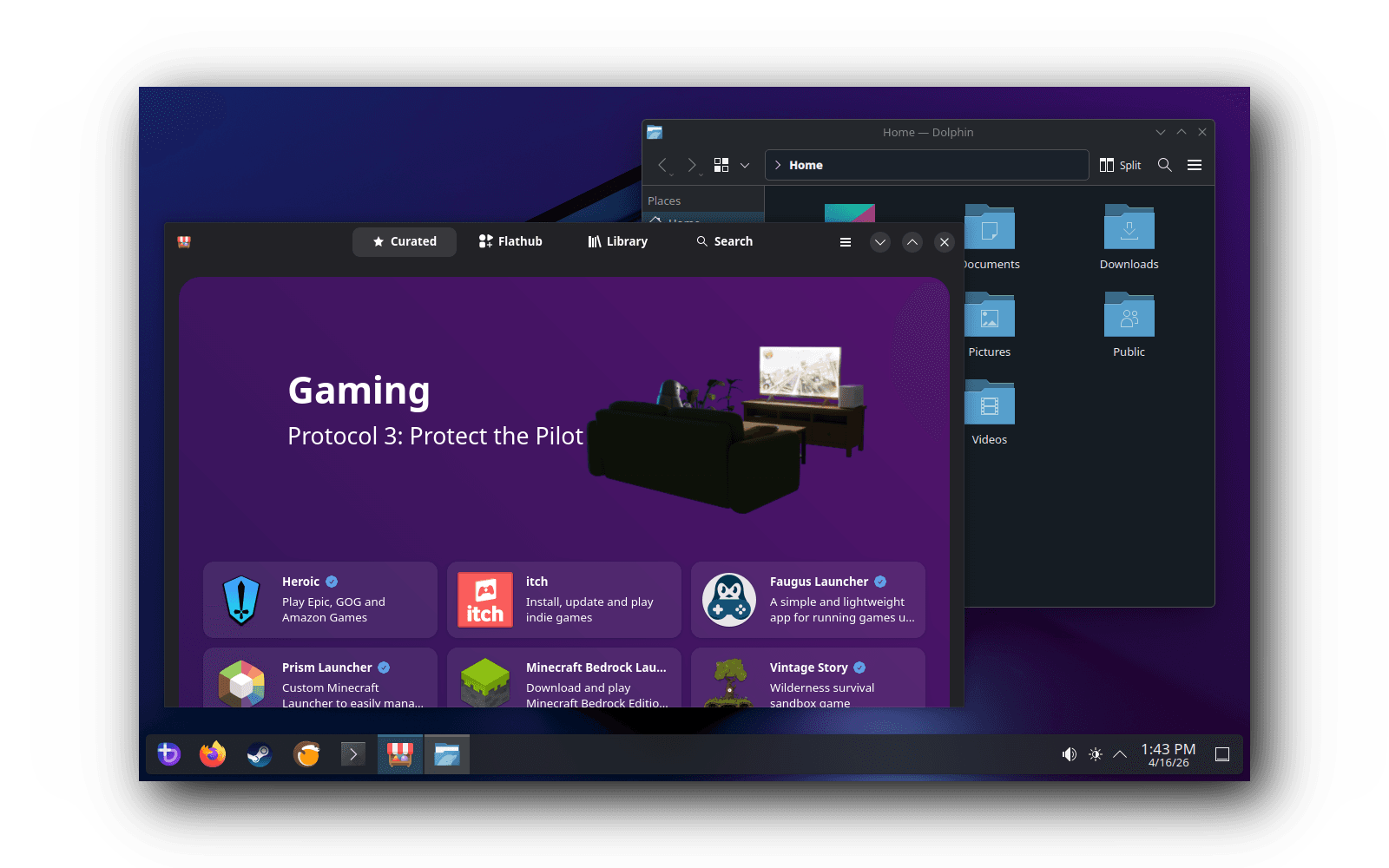

Bazzite 45 is out with a Fedora Linux 45 base, updated desktop and graphics stacks, handheld support, smaller updates, and early tools for Epic's next Linux anti-cheat requirements.
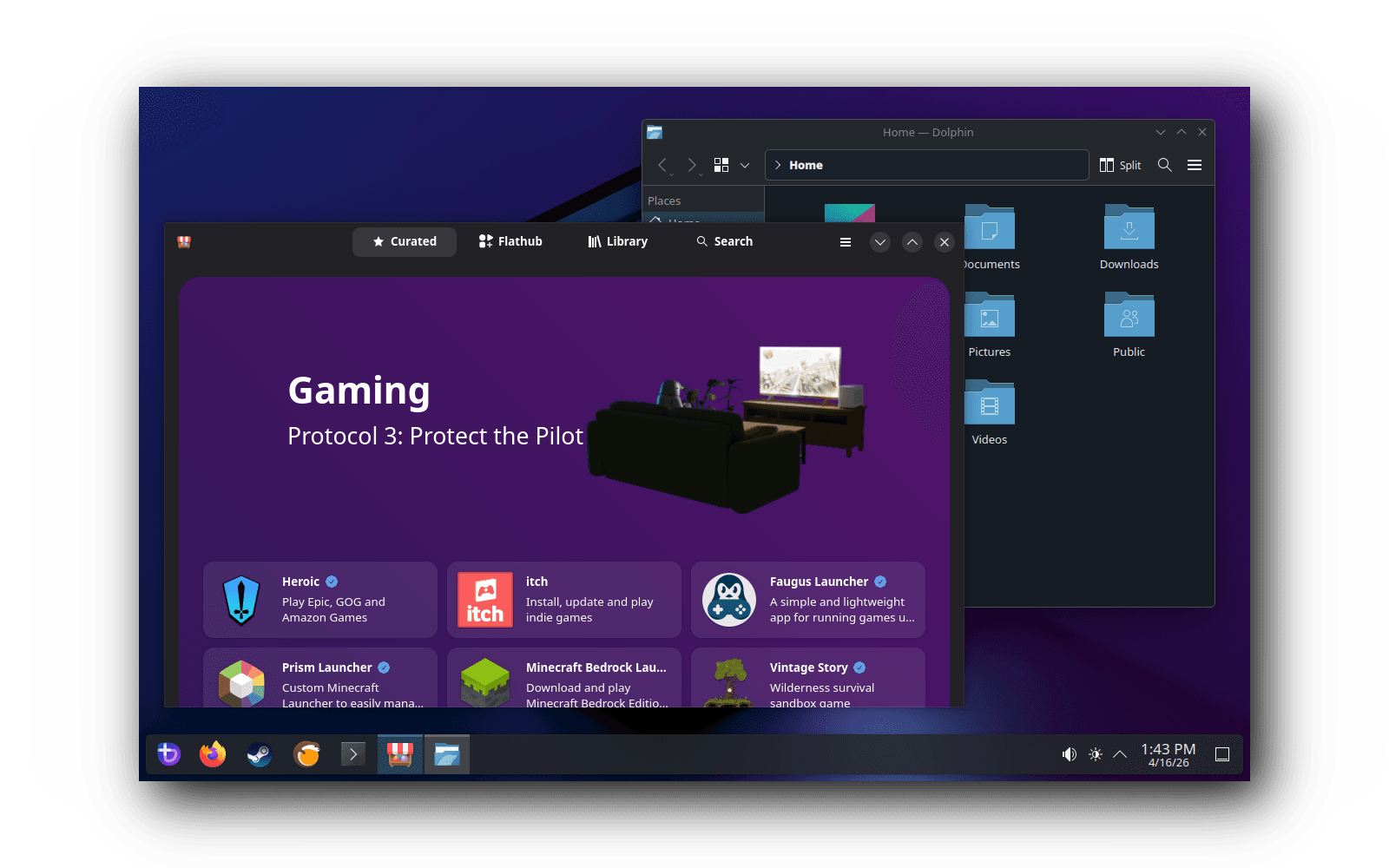
Image: bazzite.gg
Bazzite 45 lands where handheld Linux is most fragile
Bazzite 45 is now available with Fedora Linux 45 as its foundation, and that base change matters most for the exact audience Bazzite has been courting hardest: handheld PC owners, Steam Deck tinkerers, and players who want a console-like gaming OS outside Valve’s SteamOS lane.
The Bazzite team announced the release through its Universal Blue forum, listing Fedora 45, GNOME 51.1, KDE Plasma 6.8.2, updated OGC kernels, Mesa 26.2.6, and a newer InputPlumber as headline changes. GamingOnLinux framed the release as a cleaner step forward after “roughness” in previous Bazzite releases, especially on handhelds. That tension is the real story here. Bazzite 45 is not simply chasing a newer distro number. It is trying to make a fast-moving Linux gaming stack feel safer on devices where input layers, power profiles, sleep behavior, and anti-cheat compatibility can decide whether an OS feels like a handheld or like a project.
For anyone searching for a Steam Deck alternative OS, Bazzite 45’s Fedora Linux 45 gaming base brings a fresh desktop stack and newer graphics plumbing, but the release also comes with warnings. Reports from Linuxiac and XDA note that the new anti-cheat readiness tooling checks for security features tied to Epic’s upcoming Easy Anti-Cheat Linux v2 requirements, while the developers advise handheld users not to enable kernel lockdown for now. Steam Deck owners are also warned not to enable Secure Boot until compatibility issues are resolved. The headline is progress, but the practical advice is patience around the riskiest toggles.
The Fedora 45 base is a platform refresh, not a magic performance switch
The confirmed Bazzite 45 platform upgrades are concrete. According to the Universal Blue announcement, Bazzite is now based on Fedora 45 and ships GNOME 51.1 and KDE Plasma 6.8.2. GamingOnLinux and Linuxiac both report updated OGC kernels, with Bazzite 45 using kernel 7.2.15 and NVIDIA LTS images using 6.18.60. Mesa moves to 26.2.6, and ROCm OpenCL is now used instead of Mesa OpenCL on non-NVIDIA images.
For players, that stack update is less about one dramatic before-and-after benchmark and more about the floor beneath every game session. Mesa is the open-source graphics layer that Linux gaming leans on heavily, especially for AMD-powered handhelds. KDE is central to many Bazzite setups, including the SteamOS-like desktop experience many users expect when they dock a device or tinker outside game mode. Kernel updates can influence hardware enablement, device quirks, and driver behavior, though the provided release notes do not claim specific frame-rate gains.
That distinction matters. A Fedora Linux 45 gaming base gives Bazzite a newer upstream platform to build on, but the sources do not provide performance numbers, battery-life measurements, or game compatibility totals for Bazzite 45. If you are considering switching a daily-use handheld, treat the new base as a stronger foundation rather than a guaranteed upgrade to every game. The release looks aimed at reducing friction across the OS, graphics, input, and update layers, not selling one miracle fix.
Handheld support improves, with one important power-control caveat
Bazzite 45’s most relevant device changes are aimed squarely at the Linux gaming handheld scene. The official announcement lists initial Acer Predator Atlas 8 support, including InputPlumber support, a Quick Access Menu tap action, and M1/M2 rear-button mappings. It also says Ally X20 support has landed on stable after testing and issue reports from users.
That is meaningful because handheld Linux is a game of small edges. A rear button that maps correctly, a quick menu that appears when expected, or an input service that recognizes a device cleanly can change the whole feel of the machine. It is the same kind of design sensitivity that makes a tight platformer feel fair rather than fussy. The game may be running, but the craft is in whether every press and menu call lands cleanly.
There is still a caveat for Ally X20 users. The Bazzite announcement says a fix for a reported custom TDP issue is still pending on the testing branch and will reach stable in the near future. That means stable support is here, but one power-tuning issue remains unresolved in the stable channel at launch. For handheld PC owners who regularly adjust TDP to balance battery life, fan noise, and frame pacing, that is the kind of detail worth waiting on before replacing a working setup.
Logitech TrueForce wheel support has also expanded, according to the announcement and Linuxiac’s report, giving racing players more out-of-the-box hardware coverage. That sits outside the handheld headline, but it strengthens Bazzite’s pitch for living-room PCs and docked setups, where a gaming OS has to handle more than a controller.
Epic anti-cheat readiness is promising, but it is still readiness
The loudest future-facing addition in Bazzite 45 is its anti-cheat compatibility work. Linuxiac reports that the release adds a new anti-cheat compatibility checker ahead of Epic Games’ upcoming Easy Anti-Cheat Linux v2 implementation. XDA reports that Bazzite 45 includes Epic’s signing key and a new command, ujust check-anticheat, for checking whether a system is prepared for the announced requirements.
According to Linuxiac, the checker evaluates requirements including signed kernels and modules, Secure Boot, TPM 2.0, measured boot, IOMMU, kernel lockdown, and BPF LSM. It reports pass or fail results and offers suggestions, but does not automatically change system settings. That last part is important. Bazzite is giving users a diagnostic tool, not quietly flipping sensitive security switches on a handheld.
XDA quotes the Bazzite announcement as saying Epic’s Easy Anti-Cheat v2 Linux launch will bring support for Fortnite and other games, and that Bazzite has been made one of the accepted well-known signing keys while discussions continue. GamingOnLinux also reports that Bazzite is working toward full support for the new Easy Anti-Cheat v2 for Linux.
The confirmed part is the checker and Bazzite’s preparation. The unconfirmed part is how smoothly individual EAC-protected games will behave once the new system arrives, and when every relevant title will actually become playable on Linux. For Steam Deck users in particular, the immediate guidance is conservative: Linuxiac and XDA both report that Steam Deck owners should not enable Secure Boot yet, and handheld users should avoid kernel lockdown for now. If your main blocker is an EAC game, Bazzite 45 gives you a way to inspect your readiness, not a guarantee that your library problem is solved today.
Smaller system updates could matter more than flashy release notes
One of the more practical Bazzite update changes is buried below the hardware headlines. Linuxiac reports that Bazzite now uses ZSTD compression for image chunks, the Chunkah tool, and expanded rechunking optimizations. According to the developers as reported by Linuxiac, these changes can reduce incremental system updates to as little as 100 MB, depending on the differences between images.
That is a meaningful quality-of-life improvement for a gaming OS built around an atomic update model. Linuxiac describes Bazzite as a Fedora-based, gaming-focused Linux distribution for desktop PCs, handheld gaming devices, and home theater systems that uses atomic updates. In that model, the OS is delivered in image-like chunks rather than treated like a traditional package-by-package desktop. The benefit is that updates can be more controlled. The tradeoff is that system image updates can feel heavy if the infrastructure is not tuned well.
For handheld users, smaller incremental updates can be the difference between casually accepting an update before a trip and putting it off because the download feels too large. The source material does not give a universal update size for every user, so “as little as 100 MB” should be read as a best-case or conditional figure rather than a promise. Still, the direction is clear: Bazzite 45 is trying to make its maintenance rhythm less intrusive.
KDE, Steam Input, and desktop fixes target everyday rough edges
Bazzite 45 also cleans up several pieces that affect day-to-day usability. The official notes say XWaylandVideoBridge has been removed, fixing a class of bugs on KDE images. Linuxiac also reports that Btrfs maintenance is now available through the Btrfs Assistant graphical interface, and that the CoolerControl helper has moved to the official Docker container rather than installing layered packages.
The Steam Input detail may be especially relevant for players who use Wayland. The release notes say extest, the library Bazzite relies on for Steam Input support under Wayland, now supports the 64-bit Beta Steam Client. That is a narrow line item, but it touches a central expectation for a Steam-adjacent OS: controllers and Steam’s input layer need to behave predictably.
There are also language and interface fixes. The announcement lists fixes for GNOME Logo Menu translation compilation, restored welcome-screen accent colors, corrected occasionally concatenated tips, a new Ukrainian translation, an updated Swedish translation, and synchronized translations. FCITX5 input now uses official Flatpaks rather than older packages previously shipped by Bazzite.
None of these changes alone defines Bazzite 45, but together they support the release’s broader shape. The Fedora 45 base brings the big version jump. The quieter fixes try to make the OS feel less like a stack of clever parts and more like something you can hand to a player who mainly wants to launch a game.
Who should update now, and who should wait
If you already run Bazzite on a desktop PC, home theater PC, or supported handheld, Bazzite 45 looks like a substantive update: Fedora 45, newer KDE and GNOME releases, Mesa 26.2.6, updated kernels, InputPlumber improvements, optional gaming network optimizations through bpftune and bpfrag, expanded hardware support, and improved update infrastructure are all confirmed by the announcement and reporting around it.
If you are on a Steam Deck and considering Bazzite as a Steam Deck alternative OS, the answer is more cautious. The release is clearly relevant to Steam Deck-style use, but the current anti-cheat guidance matters. Do not enable Secure Boot on Steam Deck until Bazzite says the compatibility issues are resolved, according to Linuxiac and XDA. Do not enable kernel lockdown on handhelds for now. If your main goal is early EAC Linux v2 readiness, use the checker as an information tool rather than a reason to force settings the developers are warning against.
If you own an Ally X20, stable support is a strong signal, but the pending custom TDP fix may be reason to wait if manual power tuning is central to how you play. If you own or are eyeing an Acer Predator Atlas 8, Bazzite 45 provides initial support rather than a fully stress-tested long-term verdict. The word “initial” should carry weight.
Bazzite 45’s appeal is in the direction of travel: a newer Fedora base, active handheld enablement, anti-cheat preparation, and maintenance work that should make updates less of a chore. The best upgrade path depends on your tolerance for Linux tinkering. Curious desktop users and Bazzite regulars have plenty to explore now. Steam Deck and handheld owners who need everything stable for travel, online multiplayer, or strict power profiles should read the release notes closely and wait for the specific warnings around Secure Boot, kernel lockdown, and custom TDP to clear.