
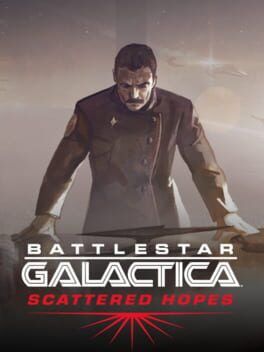
How Battlestar Galactica: Scattered Hopes turns the classic TV series into a story‑driven tactical roguelite, with a fleet‑management core loop that sits somewhere between FTL and Battlestar Galactica: Deadlock.
Battlestar Galactica has always been about running. Alt Shift and Dotemu’s Battlestar Galactica: Scattered Hopes takes that core anxiety and rebuilds it as a tactical roguelite, where every jump is both a victory and another roll of the dice.
Due on PC in early 2026, Scattered Hopes adapts the 2004 TV series through a structure that will look instantly familiar to fans of FTL and Crying Suns, but filters it through the stark metal plating and political tension that defined the show. Instead of commanding the Galactica itself, you slip into the role of a Gunstar captain trying to shepherd a battered caravan of civilian ships away from the Cylon onslaught and back toward the Battlestar that should be protecting them.
How the tactical roguelite loop works
Every run in Scattered Hopes starts with a handful of vulnerable ships and an FTL plot line stretching away into the unknown. Your job is to keep that line moving without letting the fleet fall apart, which means juggling three interlocking layers: fleet management on the starmap, narrative‑driven crises, and real‑time tactical battles.
On the strategic layer you move your fleet from node to node across sector maps, staying just ahead of the Cylon pursuit. Each jump costs fuel and time, and every destination offers a different mix of risk and reward. One node might promise a tylium cache but hide a Cylon ambush. Another might be a colonial outpost where you can recruit a new escort or repair your Gunstar’s hull, at the cost of exposing more civilians to danger.
At nearly every stop something goes wrong. Alt Shift is leaning into the TV series’ taste for messy, human problems rather than clean tactical puzzles. Mutinous officers, food riots, religious disputes, black‑market smuggling and the ever‑present question of who might secretly be a Cylon all bubble up as event cards and branching dialogue scenes. You make calls on what to sacrifice and who to placate, gambling on short‑term stability versus long‑term survival.
When the Cylons finally catch up, the game shifts into combat. Here Scattered Hopes borrows more from the developer’s own Crying Suns than from pure RTS. Battles play out in pausable real time, with a grid‑based staging that lets you position squadrons, angle your Gunstar’s armor facings, and time ability cooldowns while constantly hitting a tactical pause to catch your breath.
The goal is not glamorous victory so much as survival. Your FTL drive has to spin up before you can escape, and every second the timer runs is another barrage of nukes, missile salvos, and raider swarms you have to weather. Sometimes it is smarter to screen with disposable fighters and take a glancing hit on a civilian freighter if that keeps the flagship alive long enough to punch out.
If the fleet dies, the run ends, but like any roguelite the loss is not total. Between attempts you unlock new squadrons, weapon systems, and persistent traits that widen your tactical toolbox. Maybe your next commander specializes in missile warfare and can field heavy Vipers. Maybe your Gunstar’s reactors run a little hotter, shortening FTL charge times at the cost of higher risk if your engineering deck takes a hit. The meta‑progression is aimed at reshaping the tough calls you have to make on future runs instead of simply smoothing the difficulty curve.
Where it sits between FTL and Battlestar Galactica: Deadlock
On paper Scattered Hopes sounds like it is just Battlestar Galactica meets FTL, and there is genuine truth there. The broad loop of plotting routes across a hostile galaxy, dealing with random events, and fighting to survive until the FTL bar fills will be immediately comfortable to FTL veterans. You still weigh low‑risk, low‑reward safe paths against scarier routes that might pay out in vital fuel or new ships.
The differences lie in scope and focus. FTL is the story of a single fragile vessel and its crew, while Scattered Hopes is built around the fate of a civilian fleet. Ships are not just health bars to protect, they are political blocs and moral obligations. Losing a refinery vessel might mean losing access to certain events or long‑term bonuses. Abandoning a ship to save fuel might keep you alive for another sector but hammer your morale and trigger unrest later.
Where FTL’s story is mostly emergent, Scattered Hopes is explicitly pitched as story‑rich. Narrative arcs can span multiple sectors, and previews hint at plotlines that intertwine like the TV show’s season‑long threads. A religious leader rescued early in the run might become a crucial voice in later political crises, or a suspected Cylon infiltrator whose presence colors every decision you make.
Deadlock is the other obvious touchstone, but Scattered Hopes almost flips that game’s priorities. Deadlock was a deterministic, turn‑based tactics title about set‑piece battles and fleet composition. Its campaign structure was closer to a war game, with persistent ship rosters and meticulously modeled salvos. Scattered Hopes folds some of that metallic authenticity into a framework that is much more about improvisation under pressure.
The two games do share a love of capital‑ship choreography. Deadlock fans will recognize the satisfaction of swinging a hull around to bring fresh armor panels to bear, timing flak bursts to swat incoming missiles, and watching kinetic rounds rake across an enemy’s superstructure. But the roguelite format means Scattered Hopes is less about perfecting a build and more about making do with whatever unlucky combination of escorts, damaged modules, and half‑trained pilots you have this time.
If you come to Scattered Hopes from Deadlock expecting a slow, fully deterministic tactics sandbox, it is better to think of it as that game’s twitchier cousin. You are still playing with Vipers, Gunstars, and Cylon basestars, but you are doing it in runs that can implode in thirty minutes because you overreached for a fuel depot or blew all your munitions saving a political rival you probably should have left behind.
Story, canon and what long‑time BSG fans should expect
Scattered Hopes is set in a universe inspired by the 2004 reimagined series rather than trying to directly retell any one season. You are not reenacting specific episodes or replaying famous battles. Instead, the game explores a parallel corner of the same catastrophe, focusing on another fragment of humanity that survived the Cylon attack on the Twelve Colonies.
That framing frees Alt Shift to write new characters and moral dilemmas that still feel steeped in BSG’s DNA. Previews emphasize familiar themes: battered institutions attempting to govern from inside rust‑streaked hulls, civilian resentment toward military authority, and the constant suspicion that some of your most trusted allies may be something other than human.
Decisions frequently place humanitarian ideals in direct conflict with cold survival math. You might have to decide whether to divert medical supplies from your crew to a plague‑stricken civilian ship, or whether to silence a demagogue whose rhetoric is tearing the fleet apart even as they boost morale. Outcomes can echo across multiple sectors, producing cascading crises that mimic the show’s snowballing political disasters.
Visually, Scattered Hopes is not chasing photorealism. Instead, it is leaning into a clean, almost diorama‑like presentation similar to Crying Suns but dressed in BSG’s industrial aesthetic. Battle scenes are framed in a quasi‑isometric perspective that makes capital ships look like toys in a model box, only to snap into more dramatic angles when nukes fly or squadrons clash.
What sells the fantasy is the attention to texture: metal that looks scuffed and re‑welded, hangar decks crowded with silhouettes of maintenance crews, the soft glow of DRADIS displays on the bridge. Camera shake and lighting cues echo the TV series’ “documentary in space” look during battle sequences, while the UI borrows its typography and color palette from Colonial computers and military readouts.
Audio is aiming for a similar balance between homage and originality. Trailers already lean on mournful vocals and taiko‑like percussion reminiscent of Bear McCreary’s score without quoting specific themes outright. Radio chatter during battles hints at both the fatalism and gallows humor fans will remember, underlining the sense that every sortie might be your last one.
Alt Shift’s previous work on Crying Suns has shown they know how to weave written vignettes into a larger mystery. Here, the promise is that repeated runs will not just unlock gameplay upgrades, but gradually reveal more about your commander’s past, the political factions within the fleet, and the wider state of the war. BSG fans looking for new lore rather than a greatest‑hits tour have reason to be optimistic.
Should you keep this on your DRADIS?
As a pitch, Battlestar Galactica: Scattered Hopes is surprisingly sharp. It takes the panic and moral queasiness that powered the TV series and rebuilds them into a loop that feels like a natural fit for modern roguelite design. The comparison points are flattering, but accurate: FTL’s tension, Deadlock’s battles, and Crying Suns’ taste for bleak, branching stories.
The big open questions now are balance and variety. The best roguelites stay fresh because losses teach you something new instead of just reminding you how punishing the rules are. Scattered Hopes will have to keep its events, political systems, and tactical encounters flexible enough that your tenth doomed fleet feels as narratively surprising as your first.
If Alt Shift can hit that mark, long‑time BSG fans may finally get a game that captures what made the show special without being shackled to its exact plot. Humanity’s odds do not look great, but as every Colonial officer knows, sometimes all you can do is line up the jump, trust your crew, and hope the Cylons miss their shot this time.