
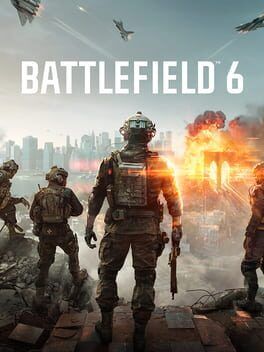

Battlefield 6 is winning multiplayer awards while quietly walking back controversial cosmetics like the Wicked Grin skin. Here’s what that tug-of-war between realism and monetization tells us about DICE’s long-term vision for the series.
Battlefield has always lived or died on its identity. When it leans into large‑scale combined arms combat, grounded fiction and gritty audiovisual design, the series feels singular. When it drifts toward arcade excess, the fanbase pushes back hard.
With Battlefield 6, DICE is discovering just how narrow that line really is.
The strange case of Wicked Grin
Shortly after launch, Battlefield 6 picked up a wave of positive attention as one of 2025’s standout multiplayer titles, praised for its large maps, destructive environments and a return to more cohesive, squad‑driven combat. But in parallel with that goodwill, a much smaller element of the game unexpectedly became a flashpoint: the Wicked Grin skin.
Wicked Grin was a cosmetic that went for a more exaggerated, almost comic‑book flair. On paper it fits the modern live‑service playbook, where cosmetics are expected to be eye‑catching, meme‑able and instantly readable from across the map. In practice, it clashed with how many players want Battlefield to feel.
Community threads quickly coalesced around a familiar complaint. Players argued that cosmetics like Wicked Grin made firefights look and feel less like tense, near‑future warfare and more like a theme park shooter. Comparisons to Call of Duty’s more toy‑box approach to operators and skins were common, and often used in a pejorative sense. Battlefield, they argued, is supposed to be the more immersive, grounded alternative.
DICE’s response was quiet but decisive. The studio removed the Wicked Grin skin from Battlefield 6, and the decision was soon followed by a similar rollback on the Season One System Override skin, which was reworked after drawing the same criticism.
A studio course‑corrects in public
From the outside, pulling a single cosmetic might look trivial. Taken in context with System Override and community messaging, it reads more like a public course correction.
According to reporting on the changes, DICE framed the removals as part of a deliberate push to maintain realism and immersion in Battlefield 6. The timing is telling. Season One, set in California and rolling out in three phases after its October 28 launch, is the game’s first real chance to prove it can sustain a live‑service cadence without shredding its own atmosphere.
Cosmetics are a central pillar of that model. They are how a shooter like Battlefield 6 funds ongoing updates, from new weapons and vehicles to modes like the new round‑based Strikepoint. At the same time, they are the most visible expression of tone. Players can go several matches without noticing backend balance changes, but they notice instantly when a new skin breaks the fiction the game has built.
By removing Wicked Grin, DICE is signaling that it hears that concern, and that it is willing to sacrifice some short‑term cosmetic variety to keep Battlefield 6’s tone coherent.
Battlefield’s long war with itself
This is not the first time Battlefield has wrestled with this problem. The series has been pulled between two identities for years.
On one side there is the grounded Battlefield, with audio that rattles your headphones, ballistics that reward positioning and teamwork, and a visual style that, while stylized, tries to evoke real militaries and real hardware. That is the Battlefield that gets name‑checked when awards lists cite the franchise’s all‑out warfare pedigree.
On the other side sits the commercial reality of modern shooters. Players expect regular seasons, battle passes and a steady stream of cosmetics. To stand out in crowded lobbies and crowded storefronts, those cosmetics are often designed to be louder and more playful than the base game’s art direction.
Battlefield 6’s Wicked Grin controversy is the latest flare‑up in this ongoing internal conflict. The backlash is not simply about one skin. It is a reaction to a fear that Battlefield could slide fully into the loud, anything‑goes cosmetic style that has worked for other shooters but runs counter to what many long‑term fans say they value.
Why Wicked Grin felt like the wrong fit
The core tension comes down to expectations of immersion. Battlefield 6 is set in a near‑future conflict, where the fiction leans on plausible tech, recognizable gear and believable military forces. Even when the series exaggerates, it usually tries to keep one foot in reality.
A cosmetic like Wicked Grin pulls players in the opposite direction. Rather than reinforcing the fantasy of being part of a professional fighting force deployed into a chaotic warzone, it foregrounds the idea that you are an avatar in a game wearing a costume. It is a tiny shift in framing, but in a series that markets itself on authentically gritty warfare, it stands out.
Players also judge shooters relative to each other. In Call of Duty, wildly colored operators and outlandish skins are part of the accepted visual language. They match that franchise’s faster pacing, more arcade‑like handling and looser relationship with realism. In Battlefield, where so much of the rest of the experience is tuned toward weighty movement, destructive environments and positional teamplay, the dissonance is far sharper.
That difference in expectations is exactly what DICE appears to be re‑embracing.
A quiet message about long‑term vision
Pulling Wicked Grin and reworking System Override suggests a few key priorities for Battlefield 6 going forward.
First, it indicates a willingness to define boundaries in a market that often rewards boundary‑less monetization. There is a financial reason to push louder and more experimental cosmetics into a live‑service game. By stepping back when the community pushed back, DICE is effectively saying that Battlefield’s tone is a feature worth protecting even at some opportunity cost.
Second, it reinforces the idea that Battlefield’s identity will lean into immersion rather than spectacle. That does not mean Battlefield 6 will avoid creative skins entirely, but there is a clear signal that future cosmetics will be expected to fit within a coherent visual and tonal framework instead of chasing trends imported wholesale from other shooters.
Finally, it sets a community precedent. Once a studio has publicly removed cosmetics for breaking immersion, players are more likely to call out future content through that lens. If DICE honors that feedback consistently across seasons, Battlefield 6 could slowly strengthen its reputation as the big, serious, war‑simulating shooter that also happens to be a live service.
Cosmetics, awards and the meta story
Ironically, all of this is unfolding while Battlefield 6 is collecting praise as one of the strongest multiplayer offerings of the year. Coverage of its multiplayer highlights the game’s technical improvements, map design and a renewed emphasis on squad play, all key elements in reviving faith after the rocky reception of its predecessor.
That positive momentum gives the cosmetic debate extra weight. When the core experience is this strong, every ancillary design choice feels like a statement about where the franchise is heading. In that sense, Wicked Grin became a litmus test. Would Battlefield 6 follow the industry’s loudest cosmetic trends, or would it carve out a more grounded identity even within a live‑service framework?
The current answer is cautious but encouraging for purists. DICE appears intent on threading the needle. The studio still wants Battlefield 6 to have the regular updates and customization options players expect in 2025, but not at the expense of the fantasy that made the series stand out in the first place.
What to watch in future seasons
The real test of DICE’s long‑term vision will come in the seasons after this initial flare‑up. As Battlefield 6 cycles through new locations, factions and battle passes, each wave of cosmetics will either reinforce or dilute the identity the studio says it wants to protect.
If future skins hew closer to plausible military gear, regional themes and grounded unit identities, Wicked Grin will look like an early misstep that helped clarify creative direction. If, instead, the game drifts back toward more exaggerated, immersion‑breaking designs, the removal will start to look like a one‑off concession rather than a true pivot.
For now, Battlefield 6 occupies an interesting place in the shooter landscape. It is a modern, seasonal, monetized live‑service game that is also trying to preserve the feel of a serious, large‑scale war sandbox. Wicked Grin’s removal is a small, sharp reminder that the series cannot take that identity for granted.
As the multiplayer buzz turns into a long‑term live‑service reality, Battlefield 6’s greatest challenge will not be map balance or weapon tuning. It will be the slow, cumulative pressure of every cosmetic and design decision on what it feels like to be a soldier on its battlefields, and whether that still feels like Battlefield at all.