
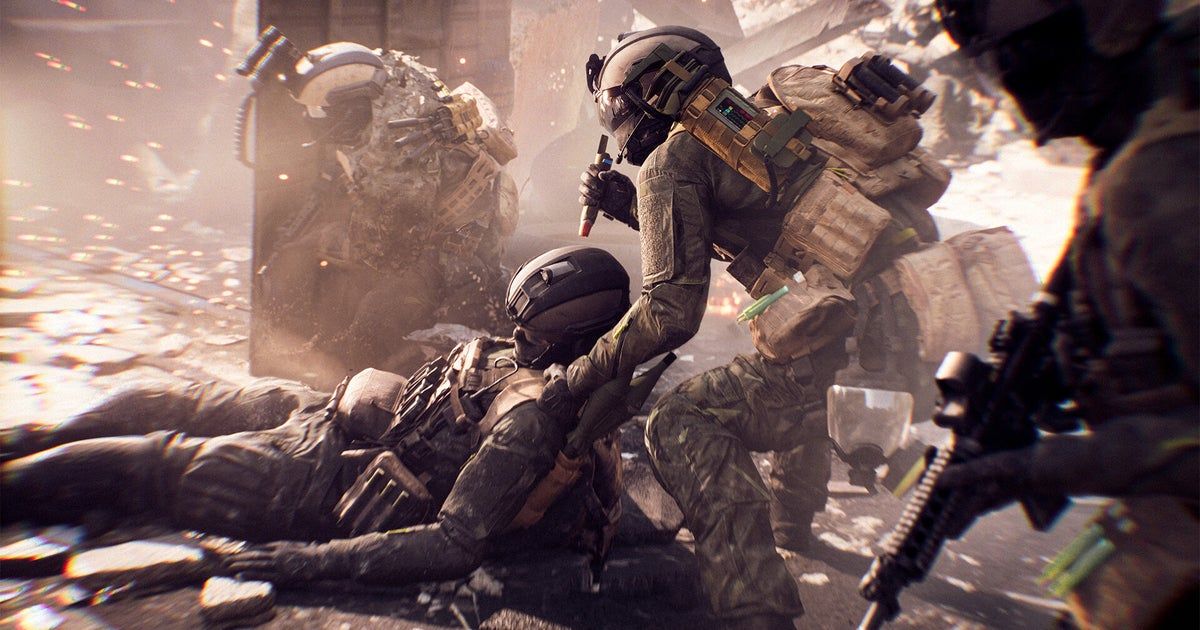

Andrew Wilson compensation reportedly climbed to about $38.6 million after Battlefield 6 success, even as EA cut developers across Battlefield studios and expanded its GenAI strategy.
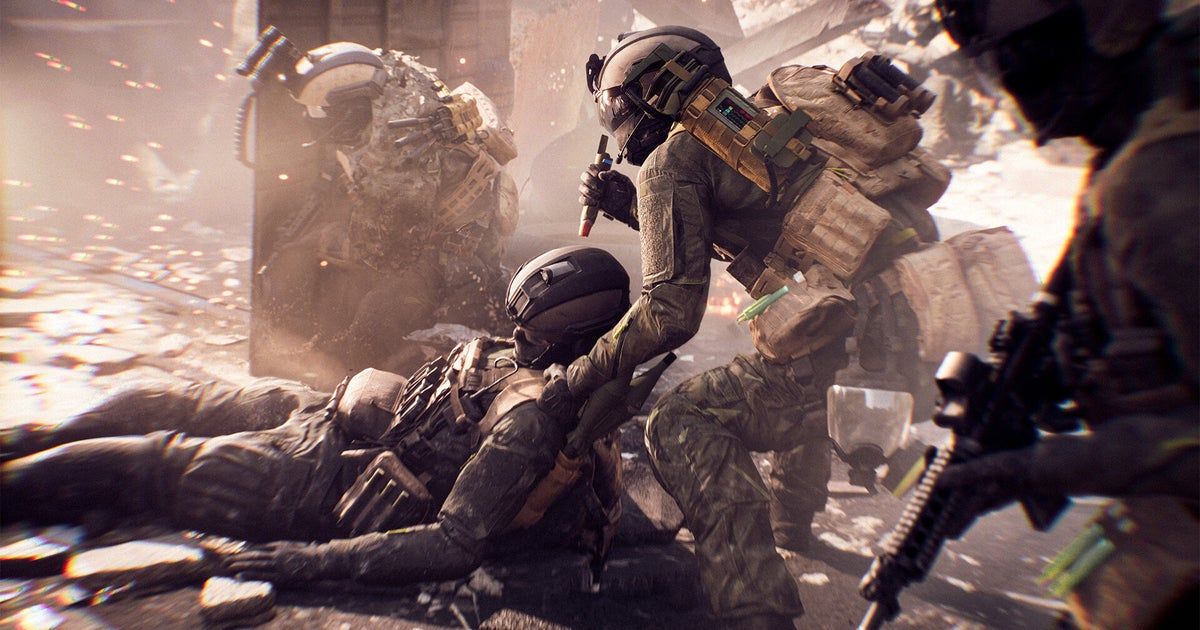
Image: ingamenews.com
EA’s Battlefield win has run straight into a pay controversy
Electronic Arts CEO Andrew Wilson was awarded roughly $38.6 million in total compensation for fiscal year 2026, according to coverage of EA’s new 10-K filing by Game Developer, Polygon, Wccftech, Eurogamer, Metro, and other outlets. The tension is immediate: the same filing credits Battlefield 6 with meeting its launch milestones, while EA laid off an unspecified number of developers across Battlefield studios earlier in the year.
The exact phrasing and totals vary slightly between reports. Game Developer and Polygon put Wilson’s compensation at $38.6 million or $38,649,984. Eurogamer cites $38,694,984 in stock awards and bonus payments. Wccftech breaks the package down as a $1.3 million base salary, $28.48 million in stock awards, a $6.5 million cash bonus, and $2.37 million in “all other compensation.” The shared point across the reporting is that Andrew Wilson compensation rose sharply from the prior year, with Game Developer saying he received $30.5 million in fiscal 2025 and $25.6 million in fiscal 2024.
That is why the EA CEO bonus is drawing heat from Battlefield players and industry watchers. Battlefield 6 did the thing EA needed it to do: it launched strong, kept services stable enough to satisfy internal targets, and helped drive a record year for the publisher. Then the people building and supporting that shooter still saw cuts.
Battlefield 6 hit the milestones EA tied to executive pay
EA’s 10-K, as quoted by Game Developer, says Battlefield “achieved meeting all milestones for a high-quality launch of Battlefield 6 with positive critical reviews and stable services and gameplay, with interim milestones related to future launches being met.” For a live-service shooter, that language matters. A big FPS launch is not judged only by sales. Server stability, gameplay reliability, post-launch readiness, and reception all feed the business case.
Polygon, citing EA’s financial report, says EA recorded $7.531 billion in net revenue last fiscal year, up 9%. Wilson described it as a “record FY26,” highlighted by the “incredibly successful launch” of Battlefield. Polygon also reports that Battlefield 6 was the biggest launch in franchise history, became the first Battlefield to outsell a Call of Duty game released in the same year, and was the highest-selling game in the U.S. in 2025. Polygon attributes the claim that it sold over 20 million copies by December to analyst Rhys Elliott.
From a shooter perspective, this is the rare AAA multiplayer result every publisher wants. Battlefield has historically lived and died on scale, pacing, netcode confidence, map flow, and whether squads trust the sandbox enough to keep queueing. EA’s filing does not give players a patch-by-patch technical breakdown, but its language on “stable services and gameplay” shows those launch conditions were important enough to sit inside the compensation framework.
The layoffs landed across the same Battlefield machine
The criticism sharpens because the success was followed by Battlefield 6 layoffs. Eurogamer reports that EA laid off many Battlefield developers across Criterion, DICE, Ripple Effect, and Motive Studios in March. Polygon and Metro also describe the number of affected employees as undisclosed. These were studios connected to the Battlefield organization that delivered the game EA’s filing later used as evidence of successful execution.
At the time, EA told Eurogamer, and a similar statement was reported by IGN and quoted by Polygon, “We’ve made select changes within our Battlefield organisation to better align our teams around what matters most to our community. Battlefield remains one of our biggest priorities, and we’re continuing to invest in the franchise, guided by player feedback and insights from Battlefield Labs.”
That statement confirms EA framed the cuts as a realignment rather than a retreat from Battlefield. It also leaves the central question unanswered: if Battlefield 6 success met “all milestones” for a high-quality launch, why did the organization need staff reductions so soon after? The public filing explains the reward structure for executives more clearly than it explains the human cost inside the studios.
GenAI is part of the compensation story, not background noise
The 10-K did not only tie executive outcomes to franchise performance. Game Developer reports that EA also credited the implementation of new technologies such as generative AI. The filing says EA achieved transformation goals by entering key strategic AI partnerships, launching a generative AI investment framework, and driving efficiency through AI adoption targets and “meaningful usage in priority areas.”
Eurogamer adds that the company executed on a “bold” AI strategy after Wilson had described AI as the “very core” of EA’s business in late 2024. According to Eurogamer’s account of the filing, EA used AI to advance “research, expansion, and efficiency” across the company.
That word, efficiency, is doing a lot of work. The source material does not say the Battlefield layoffs were caused by AI adoption, and that should not be inferred. What is confirmed is narrower and still significant: EA rewarded executives in a year when the company both expanded GenAI use and cut staff across studios, including Battlefield teams. For developers watching the industry, that pairing is enough to make the incentive structure look brutal.
Executive rewards were broad, and the pay gap is part of the backlash
Wilson was not the only EA executive to receive a large package. Eurogamer reports that chief financial officer Stuart Canfield received around $11.3 million, EA president Laura Miele received $13.7 million, chief people officer Mala Singh received $8.3 million, and chief legal officer Jacob Schatz received $8.4 million. Polygon reports similar totals, with Canfield above $11.3 million, Miele at $13.7 million, Singh at $8.4 million, and Jacob Schatz at $8.5 million.
Wccftech reports that EA’s filing lists the median employee’s total compensation for fiscal 2026 at $126,612, making Wilson’s pay roughly 305 times that of a typical EA worker. Game Developer also notes that an independent security assessment in June 2025 recommended Wilson use private air travel for personal and business trips, with $2.3 million logged as “other compensation” tied to that outlay and possible additional expenses.
Those figures explain why the story has traveled beyond a standard SEC-filing update. Players see a franchise finally landing a strong shot after years of pressure on the Battlefield brand. Developers see the credited labor spread across multiple studios. Investors see a record year and compensation tied to milestones. The friction comes from all three views being true at once.
The next Battlefield question is about trust, not only content
EA says Battlefield remains a major priority and that future decisions are guided by player feedback and Battlefield Labs. The 10-K also says interim milestones tied to future launches were met, according to Game Developer’s quoted language. What the filing does not disclose is how many Battlefield developers were laid off, which roles were affected, or how the cuts changed the staffing plan for future seasons, expansions, or follow-up releases.
For players, the practical guidance is simple: judge the live game by delivery, not by corporate confidence. If patches keep landing, services stay stable, maps maintain pace, and balance work keeps the meta from hard-locking into the same weapons and angles, then Battlefield 6 can continue converting its launch success into long-term trust. If updates slow or quality dips, the March cuts will be the first thing the community points back to.
There is also a transparency issue ahead. Eurogamer notes that if the approved Saudi Arabian leveraged buyout of Electronic Arts proceeds and EA becomes private, the company would no longer have the same obligation to release public reports like the 10-K. That would make future compensation, milestone, and strategy details harder for players, workers, and industry observers to examine.
For now, the confirmed record is clear enough. Battlefield 6 success helped EA celebrate a record year. The company rewarded Andrew Wilson and other executives with major compensation packages. EA also made cuts across Battlefield studios and elevated GenAI as a corporate priority. The controversy is not about whether Battlefield 6 performed. It is about who gets rewarded when it does.