
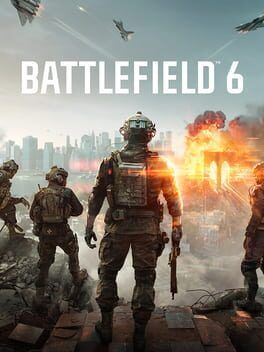

EA’s 2026 roadmap for Battlefield 6 leans into naval warfare, huge new maps, persistent servers, and a proper server browser. Here is how these long‑requested features aim to fix post‑launch complaints and reshape the game’s identity through the rest of the year.
Battlefield 6 is not the same game it was at launch. After a rocky debut and months of frustrated feedback, EA and Battlefield Studios are clearly trying to reposition the shooter for the long haul across 2026. The newly detailed roadmap leans hard into what the community has been asking for since day one: bigger and more meaningful battles, tools that respect dedicated players, and systems that make Battlefield feel like Battlefield again.
At the center of that push are four pillars that define 2026 for Battlefield 6. Naval warfare arriving in Season 4, much larger and more complex maps starting with Railway to Golmud, the introduction of persistent servers, and the long awaited return of a full server browser. Together they read less like a routine content schedule and more like a statement of intent about what this game wants to be.
Season 3 sets the stage with scale and nostalgia
The turnaround begins in May with Season 3. Railway to Golmud anchors the season, a reimagining of Battlefield 4’s fan favorite Golmud Railway that is now billed as the biggest Battlefield 6 map so far. The new version is set in Tajikistan after the campaign events and designed to showcase the kind of scale players felt missing at launch. Early descriptions suggest multiple layered frontlines instead of a thin stretch of capture points, with room for armor columns, flanking infantry, and sustained air support to all coexist.
Later in the season, Battlefield 3’s Grand Bazaar returns as Cairo Bazaar, expanded into a denser, more vertical urban brawl. It is a clear play at nostalgia, but it also shows Battlefield Studios pulling from older entries that understood how to balance chaos with clarity. Season 3 may not be the headline for naval fans, yet it quietly fixes a core complaint. Maps are getting larger, more intricate, and more tailored to the game’s vehicle sandbox instead of feeling like oversized arenas.
On the competitive side, Season 3 also brings Ranked Play to Battlefield REDSEC, the companion experience that is increasingly being used as a testbed for systems that might feed back into the main game. A formal ranking system and talk of Open and Elite series tournaments indicate that EA still wants Battlefield to have an esports footprint. For many long time fans, that only matters if the core game feels worthy of grinding in the first place, which is where the later seasons come in.
Season 4: Naval warfare finally takes the spotlight
Summer’s Season 4 is the point where the roadmap stops tweaking around the edges and starts making bold moves. Naval warfare is finally arriving in Battlefield 6, and it is not as a small side mode. The new Tsuru Reef map is described as the largest warzone yet, built to support sustained air and sea combat with naval vehicles, fully functional aircraft carriers, and a dynamic wave system that directly affects how engagements play out.
Tsuru Reef’s design sounds like a direct answer to years of pining for a modern evolution of the old school naval battles on maps like Paracel Storm or Nansha Strike. Instead of just adding boats to existing layouts, Battlefield Studios is centering an entire season around water based warfare. Combat zones stretch across open sea, constricted channels, and island footholds, turning positioning and fleet composition into real strategic decisions. Carriers operating as mobile spawn hubs and airfields promise the kind of layered combined arms fights players associate with Battlefield at its best.
Classic map Wake Island also returns in Season 4, another deliberate nod to the series’ roots in naval and amphibious assaults. If Tsuru Reef represents the new grand experiment, Wake Island is the familiar proving ground that lets players immediately feel how naval combat in Battlefield 6 differs from its predecessors. Both maps together could redefine what all out warfare means here, shifting the game away from mostly landlocked clashes toward scenarios where the sea is no longer just a backdrop.
Bigger maps and the push toward true all out warfare
Zooming out beyond any single map, the 2026 roadmap makes one thing clear. Battlefield 6 is embracing larger playspaces and more ambitious layouts than anything it launched with. Railway to Golmud and Tsuru Reef are both pitched as record setters in map size, while Season 5 promises three maps in a single season including a new location that has yet to be revealed.
For a community that felt boxed in by launch maps that often funneled chaos without offering meaningful flanking room or vehicle depth, this shift matters. Bigger maps by themselves are not automatically better, but the studio’s language around multi lane fronts, large air and sea spaces, and reworked classics suggests a design philosophy that finally leans into the series’ traditional strengths. If these maps land, they could help move Battlefield 6 away from the identity crisis of trying to be both a hero shooter and a sandbox war game at once, and back toward the latter.
Persistent servers and the return of the server browser
Scale is only part of what made classic Battlefield work. The other part was the social fabric built around servers that felt like real spaces with regulars, house rules, and long running rivalries. That culture was severely weakened when modern entries moved to matchmaking first systems. Battlefield 6’s 2026 roadmap addresses that head on with two of the most requested features since launch. Persistent servers and a robust server browser.
Persistent servers mean that player run or curated spaces can stay online even when their owners are offline, and that progression of matches, rotations, and communities can build over time instead of being wiped away by each matchmaking session. For clans and friend groups, this is the difference between always feeling like guests in someone else’s lobby and actually having a home to return to nightly.
The server browser, meanwhile, is the tool that lets all of this breathe. Instead of blindly queuing into whatever the algorithm chooses, players will be able to sort through active servers by map, mode, ruleset, and region. It restores the ability to seek out 24/7 map servers, hardcore variants, naval only lobbies, or lightly modded experiences that emphasize specific styles of play. Once naval warfare launches, it is easy to imagine Tsuru Reef and Wake Island dedicated servers becoming staples inside that browser, turning Season 4 content into permanent fixtures rather than fleeting playlist experiments.
Together, persistent servers and the server browser could fundamentally shift how Battlefield 6 is played day to day. Battle passes and seasonal drops will still matter, but the real heartbeat of the game will once again come from communities organizing themselves around shared preferences and long running servers. That is precisely the ecosystem fans have been asking to get back since launch.
Quality of life, social tools, and the competitive layer
Outside of headline features, the roadmap is packed with supporting systems that address the friction points players have been mapping out for over a year. Leaderboards and spectator mode both lean into the desire for more serious competitive play, whether that is formal esports or just community tournaments run on persistent servers. Proximity chat adds texture to public matches, whether through quick coordination or the kind of emergent moments that only happen when enemies and allies can actually talk to each other in the heat of a firefight.
Improved battle systems and ongoing quality of life upgrades are less flashy but just as important. Poor feedback, clunky progression, or unbalanced gadgets were all part of the original backlash to Battlefield 6. The studio is framing 2026 as a year of refinement, suggesting that mechanical and UI annoyances will keep being chipped away even as big ticket additions roll out.
If Battlefield Studios delivers on these secondary pieces, they will tie directly into the strength of naval warfare and bigger maps. Spectator tools help showcase massive Tsuru Reef clashes. Leaderboards and ranked structures give players reasons to master specific roles and vehicles. Proximity chat and persistent servers turn large scale maps into repeatable, social memories instead of one off chaotic matches.
Is EA really answering post launch complaints?
Taken as a whole, the 2026 roadmap reads like a direct response to the loudest critiques that followed Battlefield 6’s release. Players wanted a stronger identity rooted in all out warfare, not a confused mix of trends. Naval combat and record breaking maps address that. They wanted agency over how and where they play. Persistent servers and a genuine server browser tackle that. They wanted tools for competition, social play, and long term investment rather than one season and done grinds. Ranked modes, leaderboards, spectator, and community focused features all push in that direction.
There are still big questions. Execution will matter more than promises, and the complexity of naval warfare plus persistent infrastructure is not trivial. Balance issues on maps as large as Tsuru Reef could sour first impressions if not carefully tuned. Server browser and persistent server support will live or die based on how generous EA is with control, filters, and region coverage. Yet even with those caveats, the roadmap signals that EA has heard the message.
Over the rest of 2026, Battlefield 6 has a chance to rewrite its story. If naval warfare delivers the cinematic, system driven chaos fans imagine, if larger maps actually support varied playstyles instead of scattering players, and if persistent servers and a robust browser succeed in rebuilding the series’ old community culture, the game could emerge at the end of the year as something much closer to the Battlefield veterans recognize.
In that sense, the roadmap is more than a checklist. It is EA’s attempt to steer Battlefield 6 toward a clearer identity. Less transient live service shooter, more living war sandbox shaped as much by its players and their servers as by its seasonal marketing beats. The next twelve months will determine whether that new identity sticks.