
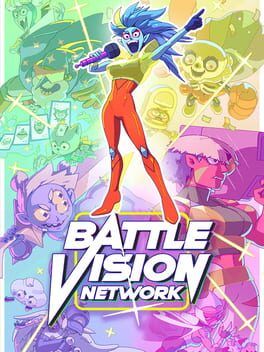

Capybara Games has torn up Battle Vision Network’s original Netflix-backed PvP design and rebuilt it as a PC-first single-player roguelike. Here’s why the pivot happened, what’s changing mechanically, and how it now sits alongside Grindstone and the new wave of puzzle-roguelikes.
Capybara Games did not take the straightforward route with Battle Vision Network. Announced in 2024 as a Netflix-backed, mobile-first online PvP puzzler, it was pitched as a colorful Clash of Heroes successor built around quickfire 1v1 matches, seasonal structure, and live-service growth. In early 2026, that version of the game is effectively gone.
In its place is a PC-first, single-player roguelike campaign that keeps the same core color-matching tactics, but reframes everything else: structure, pacing, progression, even how its sports-broadcast universe is presented. Multiplayer is no longer the selling point, just a note on the roadmap.
This is not a small adjustment. It’s a complete reorientation of what Battle Vision Network is for and who it is built around.
Why Capybara Walked Away From PvP And Mobile
Several overlapping pressures pushed Capybara to step away from the old plan.
First, there is the Netflix factor. The original Battle Vision Network was tightly aligned with Netflix Games, meant to live in the mobile subscription catalog as an ongoing online service. As Netflix’s strategy shifted in late 2024 and the Netflix release was eventually scrapped, the studio suddenly had far less incentive to chase a mobile-centric live-service model. Without that scaffold, the team had the opportunity to ask a hard question: is PvP actually the best expression of this design?
Capybara’s own history suggests a different answer. Grindstone, one of the studio’s most acclaimed successes, is a brutally smart single-player puzzle campaign that layers grindy meta progression, bespoke level design, and a constant trickle of new hazards and perks. It is the opposite of a thinly skinned live-service wrapper. Internally, the developers have also talked about how much more creatively energizing it is to design bespoke encounters, enemy synergies, and power curves than to tune matchmaking and ranked ladders.
On top of that, the online PvP space has only grown harsher. A new competitive puzzler has to fight not only for a player’s money, but for their daily habit and their social graph. That means anti-cheat, networking, balance patches, seasons, cosmetics, engagement funnels. It is a massive ongoing commitment for any independent studio, even one with Capybara’s track record.
By contrast, a focused, premium roguelike puzzle game lives or dies on how good the runs feel. Monetization is simpler, expectations around content cadence are healthier, and the team can lean into what they already do best: dense, interlocking systems wrapped in strong art direction and character work.
So Battle Vision Network’s new direction is not just about escaping a cancelled partnership. It is about taking a hard pivot away from “service first” thinking and back toward authored, replayable single-player design.
From Live-Service Ladder To Roguelike Season
The most important structural change is how a “season” works.
In the old vision, seasons were external: time-limited events, new captains and cosmetics, a live calendar of content you dipped into for daily or weekly goals. The loop revolved around ranked PvP and long-term grind.
In the new roguelike framing, a season is internal to a run. A single-player campaign is now structured as a full season of the in-universe show. You draft or unlock a starting team, then move match by match through a branching schedule, taking on rival squads, special events, and rule-mixing spectacles that slowly crank up the chaos.
Victory in one match does not just mean a bump in elo. It reshapes your build. Between matches you pick from randomized rewards, new abilities, sponsor-style modifiers, and captain upgrades, all of which can warp how your board behaves. Losing a run sends you back to the studio with new permanent unlocks, new captains added to the pool, and fresh wrinkles in the broadcast.
The broad arc will feel familiar to anyone who has sunk hours into Slay the Spire or Hades, but the way it manifests is tailored to Battle Vision’s sports-show fiction. Instead of a dungeon map or an isometric underworld, you are climbing a season bracket. Instead of a demigod’s arsenal, you are tinkering with formation rules, team passives, and spectacular special moves that trigger off the humble act of aligning colored units.
How The Core Puzzle System Has Been Rebuilt For Solo Play
Battle Vision Network’s basic rules still trace back to Might & Magic: Clash of Heroes. You drag and drop colored units on a grid. Vertical matches create attackers that charge and then launch across the field. Horizontal matches form defenders that block incoming strikes. Turns are discrete and tactical rather than real-time.
In a purely competitive 1v1 context, almost every mechanic must be symmetrical and tightly tuned across a small roster. The early designs leaned into that: a handful of captains, each with a signature trick, and a metagame largely defined by who could better exploit the shared ruleset.
The shift to single-player roguelike structure lets Capybara loosen those constraints and go much wilder in several key areas.
1. Enemy Design And Asymmetry
Against AI opponents, the team can build wildly asymmetric squads that would break PvP. You might face a team that weaponizes blockers, turning every horizontal match into a counterattack, or an opponent whose attackers grow stronger the longer they charge, forcing you to race their build-up.
Because players are not fighting other humans, developers can introduce exotic mechanics that are interesting only in one direction. That includes enemy-only tile types, debuffing junk pieces, and rule-bending captains who literally cheat in ways that would feel unfair in PvP, but great in a roguelike where learning the boss’s gimmick is part of the run.
2. Run-Based Buildcraft
The roguelike pivot also tips the puzzle focus away from small, repeated micro-optimizations and toward creative buildcraft.
Each run now presents you with randomized draft choices. Between matches, you might choose one of three new team passives, a powerful but risky special move, or a sponsor contract that applies a condition across the rest of the season. Some options lean into defense-heavy turtling, others reward explosive combos that clear the board in cascades.
Because no two runs offer the exact same sequence of upgrades and captains, you are constantly nudged to explore new synergies. Maybe you build a team that thrives on sacrificial plays, intentionally letting attackers die to trigger on-death effects. Another run might revolve around manipulating turn order and charge times so that a wave of perfectly timed strikes lands on a vulnerable enemy captain.
In multiplayer, such combinations would be a balance nightmare. In single-player roguelike design, they are the point.
3. Difficulty Curves And Encounter Variety
A solo-focused structure allows Capybara to bake a much more dramatic difficulty curve into the campaign.
Early-season matches can function as gentle tutorials in disguise, surfacing new mechanics through themed rival teams: a defensive wall specialist, a glass-cannon attacker squad, a chaos team that throws random junk tiles on your side. As you advance, the show can introduce environmental quirks, hazard tiles, limited turns, or special rules like power-play periods that reward aggressive play.
Because each “season” has a beginning, middle, and end, the developers can shape the pacing of complexity, reserving the most demanding combinations for late-season playoffs and boss matches. And if that still is not enough, higher difficulty leagues and optional modifiers can stack on top for expert players.
None of this relies on human opponents sticking around. It just relies on Capybara’s designers and their long-standing taste for smart, punishing, but fair puzzle escalation.
Grindstone’s Shadow And The Puzzle-Roguelike Moment
Capybara’s last big breakout, Grindstone, quietly did a lot to define what modern premium puzzle-roguelikes look like. It paired a simple path-drawing mechanic with a surprisingly nasty combat loop, then framed it with a long climb up a mountain of hand-authored levels plus a parallel layer of gear, resources, and daily challenges.
Battle Vision Network’s new direction feels like an attempt to merge that Grindstone sensibility with the more systemic, run-based design that has taken over the roguelike space.
Like Grindstone, Battle Vision Network treats its puzzles as combat maneuvers instead of point-chasing exercises. Aligning pieces is a way to position bodies on a battlefield, to control tempo and space. But where Grindstone’s mountain is a mostly linear gauntlet of bespoke stages, Battle Vision’s TV-season frame gives it more flexibility to remix encounters and lean on procedural structure.
This puts it squarely in conversation with other recent puzzle-roguelikes. You can see the kinship with titles like Loop Hero or Let’s! Revolution!, where runs are not just about survival, but about curating a set of powers that twist simple base rules into something broken and beautiful. Battle Vision Network approaches that from a match-and-formation angle rather than a pathing or card-play angle.
It also distinguishes itself by leaning hard into sports broadcast theming. Where many roguelikes lean on fantasy or horror to justify their runs, Battle Vision Network borrows the language of leagues, playoffs, and studio chatter. The meta-campaign is not about slaying a god or escaping a curse. It is about climbing the standings of a galaxy-wide puzzle-sport, season after season, with commentary and character reactions binding your runs into a larger fiction.
Why PC-First Matters For This Reboot
Choosing PC as the lead platform is not just a distribution decision. It shapes the play pattern.
The old mobile-first version of Battle Vision Network emphasized brisk sessions and low-friction matchmaking, in line with Netflix’s catalog needs. That implied smaller boards, quicker matches, and UI tuned for touch and portrait or landscape constraints.
The PC-first roguelike approach assumes a more deliberate pace. It invites longer runs at a desk, dense information on screen, and more granular control inputs. That in turn frees Capybara to build more complex boards, add clearer telegraphs for multi-turn setups, and pack the interface with team stats, upgrade trees, and broadcast dressing that might have felt cramped on a phone.
A PC launch also pairs naturally with the current Steam audience’s appetite for roguelikes. There is an established language around runs, seeds, meta progression, and early access-style iteration. While Capybara has not committed to early access, Battle Vision Network’s reboot leans toward that mental model where players expect a deep sandbox of systems and are eager to explore edge-case builds.
Multiplayer As A Future Accent, Not The Frame
Capybara has been clear that multiplayer is still on the roadmap. That matters, because the original concept of intergalactic puzzle-sport still sings as a competitive fantasy.
But in the new structure, multiplayer is conceived as an accent. The foundational promise is a strong solo roguelike where every run tells a little story about your team’s rise or flameout on the big stage. If and when head-to-head modes arrive, they slot onto a base that is already satisfying by itself.
That reverses the priorities of the original Netflix-era pitch, where single-player was essentially a tutorial and grind track for the “real” ladder. Now the ladder is optional and the campaign is the real show.
A More Capybara Kind Of Future
Battle Vision Network’s pivot from live-service PvP to a PC-first single-player roguelike is not just crisis management. It is a studio snapping back to its center of gravity.
Instead of chasing a crowded competitive market on someone else’s platform, Capybara is betting that there is still room for a premium, carefully authored puzzle-roguelike with a strange, specific voice. By exaggerating the sports-broadcast framing, letting captains and teams get weirder and more mechanically extreme, and embracing the run-based structure that modern players understand intuitively, the new Battle Vision Network suddenly looks less like a content treadmill and more like a sibling to Grindstone and the best of the genre.
If Capybara sticks the landing, 2026’s version of Battle Vision Network may end up feeling less like a salvaged project and more like the form the game was always supposed to take: a dense, replayable tactics puzzle where every season of the show is another attempt to engineer the perfect run.