

A look at Baptiste, the Kickstarter‑backed psychological horror game coming to Nintendo’s next‑gen Switch 2, its family‑tragedy premise, and how it could tap the new hardware while standing apart from recent indie horror hits.
Psychological horror has quietly become one of the most interesting spaces in indie games, and Baptiste is positioning itself as the next creep-out to watch. Funded through Kickstarter and targeting a 2026 launch on Nintendo’s upcoming Switch 2, Firenut Games and Digital Dream’s haunted‑mansion chiller builds its scares around a broken family, a cursed doll and a house that seems to feed on grief.
A family running from tragedy, straight into it
Baptiste opens in the aftermath of something terrible. Sara and her son Tom are shattered by a family tragedy, leaving their old life unsustainable. Looking for any kind of reset, they head to a clifftop mansion at Jagged Shore Cliff, hoping isolation and a fresh start will help them heal.
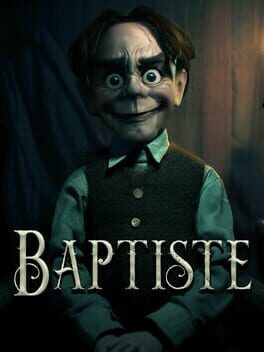
The house immediately pushes back against that idea. Among the antique furniture and locked rooms, they discover a doll named Baptiste, sealed behind glass with a single instruction: never release this from its prison. Horror tradition tells you exactly what is going to happen next, but the hook here is that the doll is less a simple monster and more a catalyst. As Tom explores the mansion, its corridors warp around his trauma, twisting familiar domestic spaces into reflections of loss, guilt and anger.
You play as Tom, whose unresolved grief over his father’s death is baked into the level design. The game leans heavily on first‑person immersion, so the suffocating hallways, whispers behind doors and sudden shifts in architecture are framed as extensions of his deteriorating mental state. Baptiste is still the looming threat, but the real question is whether Tom’s mind is turning against him faster than the house is.
From Kickstarter pitch to full‑scale nightmare
Baptiste is not a surprise drop from a big publisher. It is a project that has had to sell itself to horror fans piece by piece. Firenut Games and Digital Dream brought it to Kickstarter, inviting backers to effectively co‑sign a specific kind of horror experience. That campaign highlights a few things the developers see as core pillars.
First is what they call total immersion. Baptiste is built as a slow‑burn first‑person horror game where you spend long stretches walking, listening and peering into the dark rather than sprinting from jumpscare to jumpscare. Notes, environmental details in cracked walls and warped portraits and the way light shifts in the hall become clues to the broader mystery of the mansion and the family’s past.
Second is a strong emphasis on presentation. The team talks up masterful dubbing and a soundtrack designed less like background music and more like a character that breathes with each scene. In a genre where audio is half the scare, Baptiste aims to use voice acting to keep you locked on Tom’s emotional state while sound effects chart the unseen movements of the doll and other entities.
Finally there is an aesthetic that tries to blend beauty and horror instead of just coating everything in grime. Trailers linger on stained‑glass windows, elegant staircases and richly decorated rooms that gradually acquire wrongness. The idea is that the mansion should feel alluring even as it tightens around you, like a place that wants you to stay forever for all the worst reasons.
How Baptiste could use Switch 2’s hardware
Because Baptiste is also coming to PC, PlayStation 5 and Xbox Series X|S, it is being built for modern hardware first and then targeting Switch 2 rather than being scaled up from a weaker baseline. That gives Firenut and Digital Dream room to think about how Nintendo’s next system can help their particular brand of horror.
The most obvious opportunity is visual fidelity. Baptiste lives and dies by atmosphere, so higher resolution, more stable performance and modern lighting are not just visual sugar. Ray‑style lighting and deeper shadow detail would let the mansion’s hallways feel truly light‑starved, with small pockets of illumination pulling your eye while shapes linger just outside clarity. On current Switch hardware, many horror games compromise with flat lighting and aggressive blur. Switch 2’s rumored power level should let Baptiste bring over richer texture work on wallpapers, floorboards and props that carry story clues.
Audio is at least as important. With stronger sound hardware and better support for surround and spatial audio, Switch 2 can help Baptiste sell the idea that the house is listening. The scrape of Baptiste’s porcelain limbs along a floor above you, muffled arguments echoing from behind a wall that is no longer physically there and the sudden crack of something breaking in a distant room all gain punch when properly positioned in 3D space. Played with headphones, that sort of soundscape can turn an otherwise simple corridor walk into an exercise in self‑inflicted dread.
There is also the controller itself. If Switch 2 follows recent trends with more advanced haptics and improved triggers, Baptiste has easy ways to fold that into its design. The heartbeat‑like vibration as Tom approaches a memory he has tried to bury, subtle rumbling when the doll is near even if you cannot see it, or a sudden hard jolt when a door slams behind you are all tiny touches that tie physical sensation to psychological stress. Even small features like controller speaker output or light indicators could be used to make Baptiste feel like it is bleeding into the player’s space, not just living on the screen.
Finally, raw performance matters. Horror games benefit enormously from consistency. A smooth framerate helps camera movement feel deliberate rather than jittery, which is crucial when your main verb is to slowly turn your head toward a sound you really do not want to investigate. Switch 2’s extra headroom compared to Nintendo’s current hardware should give Baptiste the stability it needs to keep players inside the moment instead of reminding them they are dealing with technical compromises.
What makes Baptiste’s psychological horror approach different
The last few years have produced a wave of well regarded indie horror titles like MADiSON, Visage, Signalis and Iron Lung, each staking out its own corner of the genre. Baptiste shares some surface DNA with games like MADiSON in particular, thanks to its first‑person perspective, domestic setting and emphasis on a cursed object. The difference lies in where it focuses its dread.
Many recent psychological horror games lean into abstraction or cosmic scale. Signalis twists reality through retro‑sci‑fi surrealism. Iron Lung is a minimalist nightmare about being trapped in a rusty submarine in an impossible ocean. Others like Visage and Layers of Fear go for extended haunted‑house trips anchored to a disturbed artist or homeowner, but they often escalate toward the theatrical or the outright fantastical.
Baptiste, at least from its early materials, seems more interested in keeping one foot firmly in grounded family drama. The tragedy that drives Sara and Tom out of their old life is not treated as an excuse for spectacle so much as a wound that never properly heals. The house they move into does not just weaponize ghosts; it unpacks their memories and leaves them lying around like old photographs in places you do not expect to see them.
That choice affects how Baptiste structures its scares. Instead of relying primarily on reality‑breaking setpieces, it puts a lot of weight on micro horror found in small spaces. A scuff on the floor that implies a piece of furniture has been moved repeatedly in the night, a child’s drawing that changes detail as you return to it, a familiar voice calling you from a staircase that should be empty. These moments are less about shocking the player than about slowly eroding any sense of safety in what should be an ordinary home.
The cursed doll at the center of everything is a deliberate lean into classic horror iconography, but Baptiste treats it as an active intelligence with its own agenda rather than just a prop. It is implied to stalk the mansion, shifting positions, influencing what Tom sees and perhaps rewriting bits of the house itself. Compared with the more puzzle‑box entities in some indie horrors, Baptiste’s antagonist is more like a toxic family member who will not leave, needling at vulnerabilities you wish you did not have.
Add to that the developers’ focus on meticulous audio work and environmental storytelling, and you get a game that aims to unsettle less through gore and more through a slow, inhaled dread. The mansion is not just a level; it is a character that shares the same bruised emotional palette as Sara and Tom, making every room a possible argument, confession or relapse given physical form.
A promising nightmare on Nintendo’s horizon
There is still plenty we do not know about Baptiste, including how much agency players will have over its story and how deeply it will explore Sara’s side of the family tragedy instead of focusing solely on Tom. But taken as a whole, the pitch is compelling. A family trying to outpace their trauma, a coastal mansion that feeds on their pain and a doll that seems to enjoy orchestrating the whole thing are a strong foundation for psychological horror.
If Firenut Games and Digital Dream can deliver on their promises of dense atmosphere, strong performances and subtle scare design, Baptiste could land on Switch 2 as a showcase for how Nintendo’s next hardware handles slower, more suffocating horror. For players who have already burned through recent indie standouts and are looking for something that digs into familial wounds instead of cosmic ones, this cursed doll might be worth inviting in, as long as you are ready for it to never really leave.