
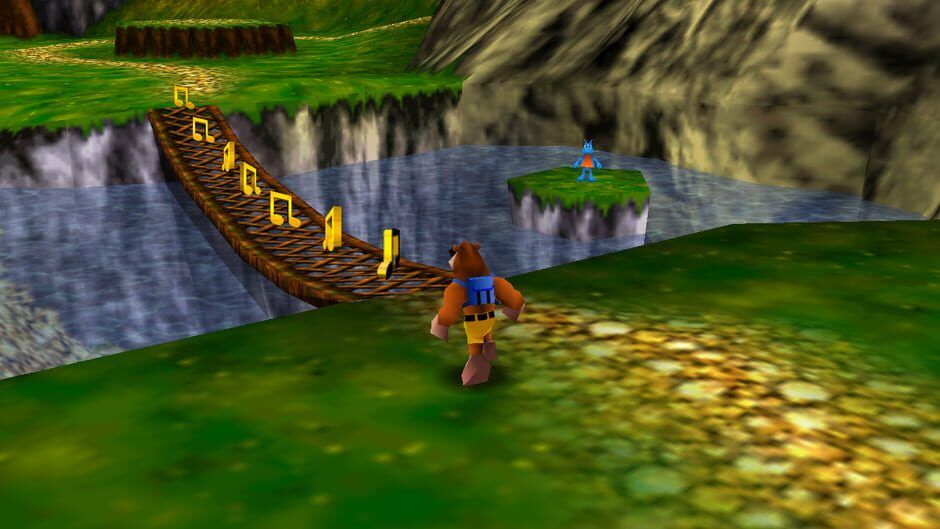

How a fan-made native PC port brings Banjo-Kazooie to 4K, 120 fps, ultrawide and a full mod future, while walking the preservation and legal gray line responsibly.
Banjo-Kazooie has quietly arrived on PC in the way many fans always suspected it would: not through an official remaster, but through an ambitious fan effort. Banjo: Recompiled, a new native PC port built by community developers, is more than a novelty. It feels like the moment Banjo-Kazooie truly crosses from a preserved classic to an actively evolving platform for modders.
What Banjo: Recompiled Actually Is
Banjo: Recompiled is not an emulator setup or a wrapper trick. It is a native PC version of the original Nintendo 64 Banjo-Kazooie, created using a toolchain called N64: Recompiled. In basic terms, the original game code is transformed so it can run directly on modern hardware, then paired with a new rendering backend and a suite of modern features.
Under the hood, the project leans on two pillars that have reshaped the retro scene over the last few years. First is decompilation work that translates the N64 game into readable C-style code. Second is static recompilation, which takes that code and rebuilds it for current platforms like Windows, Linux and macOS. Banjo: Recompiled sits on top of this groundwork and adds a renderer (RT64) plus a thick layer of quality-of-life upgrades.
The result is what feels less like a hack and more like a PC-native release, with an options menu and responsiveness closer to an official port than a hobby project.
All The Modern Features The N64 Could Never Handle
If you have only ever played Banjo-Kazooie on original hardware or via classic-style emulation, Banjo: Recompiled is a shock. The bear-and-bird adventure suddenly behaves like a contemporary PC platformer.
The most obvious upgrade is resolution and performance. The port supports 4K rendering and, crucially, uncapped frame rates. You can target 60 fps, 120 fps or simply let the game run as fast as your hardware will drive it. Combined with RT64 as the rendering backend, the image is razor sharp, camera motion is smoother and input latency is dramatically lower than typical emulator setups.
Equally transformative is display support. Rather than stretching the original 4:3 image, Banjo: Recompiled offers proper widescreen and ultrawide aspect ratios, filling 16:9 and ultrawide monitors without warping the scene. Camera FOV and projection are adjusted so Spiral Mountain and Gruntilda’s Lair look correctly framed instead of pulled like taffy across extra pixels.
Controls have been modernized as well. The game exposes dual-stick style camera options, remappable inputs and improved deadzones that match modern controllers. Swapping between keyboard and gamepad feels natural, and platforming sequences that once fought the N64 stick’s stiffness benefit from smoother, more predictable input.
On top of that sits a comprehensive options menu that looks more like a mid-2010s PC port than a mod. You can tune graphics, tweak camera behavior, adjust sensitivity, toggle quality-of-life patches such as modernized note saving and fine-tune presentation. For many players this will quietly be the definitive way to play Banjo-Kazooie, not just an interesting experiment.
Built-In Mod Menu And A New Era Of Banjo Modding
Where Banjo: Recompiled becomes a true scene milestone is in its embrace of modding. The developers did not simply get the game running and stop there. They built the port to be mod-first.
Front and center is integrated mod support and a mod selection menu. Instead of juggling patchers, external loaders or fragile ROM hacks, you can manage custom content directly from the in-game interface. That applies to tweaks, QoL mods and full custom levels.
To prove it is not just a theoretical feature, the release trailer shows a Doom-themed puzzle room running inside Banjo’s world, an unmistakable signal that the engine can be bent into novel shapes. On release, several substantial romhacks and custom worlds created over the years were already in the process of being brought into the new ecosystem, with the goal of making them easier to install and share.
This matters because decompilation and recompilation fundamentally change what modders can do. Classic ROM hacking works within tight constraints on the original N64 engine. A native PC port with a flexible renderer and higher-level code opens the door for more complex logic, bigger levels, richer visual effects and potentially even fan-made sequels built in the Banjo framework.
There has long been talk of "Banjo-Threeie" style projects in the community. Banjo: Recompiled does not deliver that on day one, but it gives modders the tooling, headroom and convenience they would need to attempt something on that scale.
How The Port Was Possible
The technical story behind Banjo: Recompiled starts years before the actual port. Banjo-Kazooie’s code base went through a painstaking decompilation process, where dedicated fans disassembled the original binary and reconstructed functionally equivalent source code. That project reached full completion in 2024, which is the moment porting stopped being hypothetical and started being inevitable.
Once Banjo-Kazooie sat in readable code form, it could be fed into N64: Recompiled, a toolset created to turn N64 games into native builds. Instead of interpreting original hardware instructions at runtime, the game’s logic is converted into new code that your CPU executes directly. Pair that with a modern renderer and you have the basis of a flexible, high-performance PC version.
This technique has already been proven on other N64 titles, including notable Zelda projects. Banjo: Recompiled takes those lessons and applies them to Rare’s platformer, adding its own layer of UI work, input handling, renderer configuration and mod hooks.
Because it is static recompilation based on decompilation, the port behaves consistently across supported platforms. Windows, Linux (including SteamOS / Steam Deck) and macOS builds all share the same core logic, and tweaks such as higher frame limits or input latency improvements benefit every platform equally.
The Legal Gray Area, And How To Approach It Responsibly
Projects like Banjo: Recompiled exist in a legal gray zone that most preservation and modding communities have grown familiar with. The port’s developers are careful about what they distribute. The executable and supporting tools are theirs to share, but Banjo-Kazooie’s actual assets and game data are not.
To run Banjo: Recompiled, you must provide your own copy of the original game. More specifically, the port expects the North American 1.0 N64 version, dumped from a cartridge you own. During setup, the port extracts the necessary data from that ROM and uses it to build the playable game.
This separation between code and content is important. It does not magically eliminate all legal risk, but it aligns Banjo: Recompiled with long-standing community norms. Emulators have used similar approaches for decades, and high-profile decompilation-based PC ports of other classics have followed the same pattern.
For players who want to experience the project responsibly, there are some practical guidelines:
First, you should already own Banjo-Kazooie in some form, whether as an original N64 cartridge or via an official re-release. Second, rather than downloading random ROMs, you should dump your own cartridge or follow platform-agnostic legal advice that applies in your region. Third, you should treat Banjo: Recompiled as a complement to official offerings, not a replacement for supporting the series when it appears on legitimate storefronts or subscription services.
By approaching it this way, players can enjoy the technical and creative breakthroughs of the port while respecting the underlying work of the original developers and rights holders.
What It Says About Demand For Banjo-Kazooie Today
The simple fact that a volunteer team invested years into decompiling Banjo-Kazooie, then building and polishing a native PC port with modern features, is a statement in itself. There is still real appetite for this style of 3D platformer and specifically for Banjo-Kazooie as a living series rather than a nostalgic footnote.
Modern players have also shown that they expect more than basic emulation. Banjo: Recompiled does not just run the game on PC; it runs it like something made for PC. High refresh-rate monitors, ultrawide displays, portable PCs like the Steam Deck and flexible control schemes are now baseline expectations. When fan projects hit those marks, they set the bar higher for any future official versions.
At the same time, the project underlines how central preservation has become to the health of older series. Without decompilation, without preservation-minded fans and without open tooling, Banjo-Kazooie would be stuck in a narrow set of rereleases with limited room for growth. With them, the game can be preserved at higher fidelity, experimented on and expanded well beyond its original design.
Banjo: Recompiled is not a new canonical entry in the franchise, and it does not need to be. It is a signal that Banjo-Kazooie matters enough for a community to rebuild it from the ground up for modern hardware, all while keeping the original spirit intact.
A New Home For A Classic
If you strip away the technical vocabulary, Banjo: Recompiled is something very simple. It is fans taking a game they love and making sure it can live comfortably on today’s machines, while opening it up for new creative work. 4K support, 120 fps, ultrawide displays, better controls and a built-in mod menu are the visible surface of that effort.
Beneath that surface is a broader shift in how we care for and interact with classic games. Preservation, modding and responsible play are no longer separate lanes. In projects like Banjo: Recompiled, they merge into one: keep the original game accessible, give players better ways to experience it and give creators room to push it somewhere new.
For Banjo-Kazooie fans, that future now starts on PC.