
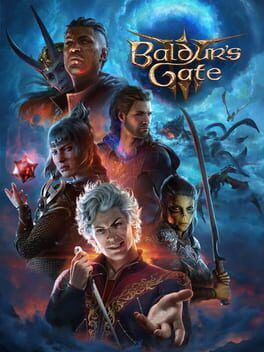
Swen Vincke says Baldur’s Gate 3 on Switch 2 “wasn’t our decision.” Here’s what his comments likely mean, the licensing and technical realities behind them, and how it shapes the future of big CRPGs on Nintendo hardware without turning it into a console war.
Swen Vincke’s Comments, In Context
When asked in a recent Reddit AMA whether Baldur’s Gate 3 would come to Nintendo’s next system, Swen Vincke gave a short but loaded answer:
“We would have loved to, but it wasn’t our decision to make.”
That single line confirms two important things. First, Larian genuinely had interest in seeing Baldur’s Gate 3 on Nintendo’s upcoming hardware. Second, and more crucially, the call about a Switch 2 version sits outside Larian’s control.
The original reports from outlets like Video Games Chronicle and My Nintendo News both trace the story directly back to this AMA quote. There is no additional official explanation from Larian or Nintendo at the time of writing. That means everything beyond Vincke’s sentence is interpretation rather than hard confirmation.
Even so, taken together with how Baldur’s Gate as a series is licensed and how platform deals usually work, there are some educated guesses we can make about why a Switch 2 version is not happening.
Licensing: Who Really Owns Baldur’s Gate?
Perhaps the biggest factor is that Larian does not own Baldur’s Gate as an intellectual property. The world, lore and brand sit under Wizards of the Coast and its parent company Hasbro, via the Dungeons & Dragons license. Larian is the developer and publisher of Baldur’s Gate 3 on current platforms, but it is operating within that licensing framework.
For any additional platform, especially a new console generation, there are several layers of approval that generally need to line up. The IP holder has to be comfortable with the release timing, platform strategy and long term brand plan. The developer has to be confident they can deliver a version that hits both quality and certification requirements. Platform holders have their own timelines and technical requirements.
Vincke’s wording hints that somewhere in that triangle, a decision was made that blocked or deprioritized a Switch 2 port. That could be a choice from the IP side about where Baldur’s Gate 3 fits into the wider D&D roadmap. It could be tied to existing agreements around platforms and storefronts. It might even connect to future projects or unannounced D&D games where platform positioning matters.
None of that is confirmed, but the fact that Larian “would have loved to” bring the game over yet could not decide on their own shows how licensing can quietly dictate platform reach even for award winning titles.
Technical Reality: Could Switch 2 Actually Run Baldur’s Gate 3?
Whenever a big RPG skips a Nintendo device, the conversation quickly turns to hardware limits. In this case though, both the structure of Baldur’s Gate 3 and the general expectations around Switch 2 suggest that pure technical impossibility is not the main story.
Baldur’s Gate 3 already runs on PlayStation 5, Xbox Series X and S and reasonably specced PCs. It is heavy on CPU side simulation, dense with scripting and packed with cinematic performance capture. That makes optimization a serious job, but not an unheard of one.
Early technical discussions around Switch 2 from developers and analysts frame it as a major step up from the original Switch, closer to a modern home console that just happens to be portable. That still leaves a gap with high end PCs, but a carefully tuned version of Baldur’s Gate 3 seems at least plausible, even if it meant lower resolution, dynamic scaling and tighter asset streaming.
What is more likely is that the combination of technical compromise, certification work and long term support costs had to clear a higher bar than usual. A game with the branching density of Baldur’s Gate 3 is notoriously hard to QA on already mature platforms. Adding a brand new hardware ecosystem multiplies those variables at the tail end of a long development cycle.
Given that Larian has been transparent about wanting to move on to new projects rather than iterate endlessly on Baldur’s Gate 3, the studio may simply not have been in a position to shoulder another major port, even if the raw hardware could in theory handle a cut down version.
So while the original Switch likely would have struggled badly with a faithful port, the decision around Switch 2 feels more like a strategic and licensing choice layered on top of practical resourcing realities, rather than a blunt “it cannot run” conclusion.
Avoiding The Console War Narrative
It is tempting to read platform decisions as scorekeeping between hardware makers, but Vincke’s comment does not support that view. There is no hint that Nintendo refused the game, nor that Larian favored competing consoles out of loyalty.
Instead, what we see looks more like a typical big IP scenario. An RPG adapted from a tabletop giant is governed by a complex mix of contracts, long running brand plans and multi platform release strategies. Within that space, a single highly demanding port on a new platform can be pushed off the table for reasons that have little to do with fan preference.
From Nintendo’s side, the platform has historically thrived without needing every major Western RPG. From Monster Hunter to Xenoblade to Fire Emblem and various indies, it builds its own role playing identity. Meanwhile, many third party publishers pick and choose which of their heaviest titles they bring over based on cost, projected audience and technical fit.
Baldur’s Gate 3 skipping Switch 2 fits that pattern more than it signals some turning point in a rivalry between ecosystems. It is a missed opportunity for overlap, not a sign that one platform is inherently unsuited to deep role playing experiences.
What It Means For CRPGs On Nintendo Hardware
If Baldur’s Gate 3 is not coming, the obvious question is what that implies for the broader CRPG genre on Nintendo’s next system. The answer is more optimistic than this one case suggests.
Even during the original Switch era, Nintendo owners saw a steady stream of isometric and systems heavy RPGs. Divinity: Original Sin 2, another Larian title, arrived in a well received port. Classic PC style games from smaller studios and publishers carved out an audience willing to trade some visual fidelity for handheld convenience.
With a stronger baseline in Switch 2, that niche is likely to expand rather than contract. Mid scale CRPGs and tactics RPGs, especially those built with scalable engines and stylized art, should benefit from the extra headroom. Studios that target PC first but keep consoles in mind from the start may find it easier than ever to support Nintendo hardware.
The absence of Baldur’s Gate 3 does highlight a ceiling. Top end cinematic CRPGs that push voice, performance capture and multi hour cutscenes as hard as they push systems will always face tougher porting decisions. Every fully voiced companion, every bespoke animation set and every late game branch multiplies file size and testing needs. That is challenging everywhere, but handheld hardware with strict storage assumptions and portable use cases adds extra pressure.
Still, it would be a stretch to read this as a genre wide rejection. It is more accurate to see it as a singular collision between a uniquely massive RPG, a complex licensing situation and a studio that is ready to look beyond its biggest hit.
The Bigger Picture For Larian And Baldur’s Gate
For Larian, Baldur’s Gate 3 has already reached an enormous audience across PC, PlayStation and Xbox. The studio has repeatedly suggested it does not plan to live in this world forever and is more interested in creating new IP and returning to its own universes. That makes it less surprising that it is not pushing for fresh platform versions years after launch.
From the Baldur’s Gate side, the future almost certainly runs through Wizards of the Coast’s broader Dungeons & Dragons strategy. Whether the IP resurfaces as another full scale CRPG, a different genre or a multimedia project, platform availability will be determined from that higher level view more than from any single studio’s wishes.
In that light, Vincke’s line about the decision not being Larian’s carries a note of closure. Baldur’s Gate 3 is, in many ways, complete. Players who hoped to experience it on Nintendo’s next system are left out, but the choice appears to be a reflection of business and licensing reality rather than a judgement on the viability of complex CRPGs on Switch 2.
Nintendo’s audience has already shown an appetite for thoughtful, text heavy, mechanics forward games. As the hardware improves, that appetite will likely be met by a mix of first party experiments, returning series and inventive mid budget projects, even if one of the genre’s recent crown jewels stays elsewhere.