
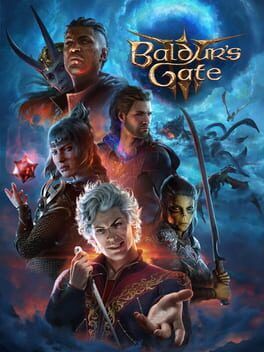

Nearly three years after launch, Baldur’s Gate 3 is breaking out of the screen and onto the bookshelf. Astarion’s dark prequel novel, complete with an audiobook narrated by his original actor, shows how Larian and Wizards of the Coast are turning a beloved CRPG into a long‑term transmedia fantasy brand.
Baldur’s Gate 3 was already the rare RPG that felt bigger than the game that contained it. It spawned viral fan art, in-depth character meta, tabletop adaptations and a fandom that treated its companions like lifelong book protagonists instead of quest dispensers. Now it is quite literally becoming a set of books.
The first major step is the newly announced prequel novel, Baldur’s Gate 3: Astarion, which pulls everyone’s favorite pale disaster vampire out of your party and into his own standalone story. Written by acclaimed fantasy and horror author T. Kingfisher and set years before the events of the game during Astarion’s servitude to Cazador Szarr, it is a signal that Larian, Wizards of the Coast and publishing label Random House Worlds see Baldur’s Gate 3 not just as a hit game but as a universe that can sustain traditional fantasy fiction on its own.
This is not a throwaway merch tie in. It is a test of whether one of 2023’s biggest games can make the jump to being a long running transmedia franchise built around character driven storytelling.
Astarion, from romance option to gothic novel lead
In the game, Astarion’s arc is about agency after abuse. He starts as a flirty, cruelly funny rogue who cracks jokes about murder and fashion, but his romance route and companion quests peel back centuries of enslavement under Cazador Szarr. His story brushes up against themes of grooming, coercion and identity in ways that hit hard for a lot of players.
A prequel set before the mind flayer tadpole ever lands in his skull risks regressing that growth, which is why the choice of author matters so much. T. Kingfisher is known for fantasy and horror that sit in exactly this space, where trauma and monstrosity coexist with wry humor and painfully human characters. Her involvement suggests the novel will not treat Astarion’s backstory as simple villain origin fodder, but as dark, tragic character work that can stand alongside the game’s writing instead of feeling like an off brand side story.
The book focuses on Astarion’s time under Cazador in the years leading up to Baldur’s Gate 3. That period has always been sketched in through dialogue, codex snippets and implied horror. The novel is a chance to slow down and inhabit that era without the pressures of combat encounters and approval meters. For fans who romanced Astarion, or just kept him in the party long enough to earn his trust, this is an invitation to revisit his history from the beginning and reframe what they know about the brittle, needy, razor sharp man at camp.
The audiobook turns continuity into a selling point
If Baldur’s Gate 3: Astarion was simply a print novel, it would still matter for the franchise. What truly locks it into the existing fandom, though, is the audiobook. Neil Newbon, Astarion’s original actor, is narrating the entire thing.
Performance is a huge part of why Baldur’s Gate 3’s companions feel so real. Newbon’s vocal work layered smirking charm over centuries of hurt, then let the mask crack in long, quiet scenes by the campfire. Bringing that same voice into the audiobook blurs the line between game and prose. For many players, the “sound” of Astarion’s thoughts is already Neil Newbon; the audiobook makes that literal.
From an industry perspective, this is smart transmedia strategy that respects fan attachment. The easiest way to sour a tie in is to swap out a beloved actor or flatten their interpretation into generic narration. By centering Newbon, the publishers are treating the audiobook as a continuation of the role, not a separate adaptation.
It also points to a future where game characters are not just licensed out to print but carried across formats with the same performers and narrative oversight. Baldur’s Gate 3 senior writer Stephen Rooney consulted on the project to keep lore and characterization aligned. Between that and Newbon’s involvement, the Astarion novel reads less like outsourced merchandising and more like an officially sanctioned extra chapter of the story.
A broader book line built on a single game
Astarion’s prequel sits inside a larger partnership between Wizards of the Coast and Random House Worlds built specifically around Baldur’s Gate 3. Alongside the novel, the lineup includes a Necromancy of Thay themed notebook patterned after the sinister in game tome, an official coloring book and A Feast for a Tenday, a cookbook with recipes drawn from the Forgotten Realms.
On paper it looks like the usual franchise expansion of journals, art books and kitchen tie ins. In practice it signals something important about how Dungeons & Dragons and Larian view Baldur’s Gate 3. This is not a one and done hit that will quietly fade into the background while attention moves to the next mainline DnD project. It is being positioned as its own pillar inside the larger Dungeons & Dragons ecosystem.
The cookbook and coloring book lean into the cozy, domestic side of the fandom that has already been thriving in fan communities. Players have been recreating camp meals and painting their own versions of party banter for years. The Necromancy of Thay notebook takes an infamous in game artifact and turns it into an everyday object you can write your to do list in. Together with the Astarion novel they form a small but clear statement that the world of Baldur’s Gate 3 is worth living in even when the PC is off.
Why Baldur’s Gate 3 has the staying power for transmedia
Not every successful game can make this leap. Plenty of blockbusters get art books or a quick tie in novel and then vanish from book catalogs after a year or two. Baldur’s Gate 3 has a few advantages that give it a better shot at lasting as a transmedia property.
First is character loyalty. CRPGs naturally invite long term attachments because you spend dozens of hours talking to companions and making choices alongside them. Larian then pushed that even further with layered cinematics and romance arcs that rival many visual novels in intimacy. Astarion is one of the most popular of that cast, a character who dominated fan polls, mod scenes and social media discourse for months. Building the first major novel around him taps into an already fervent audience.
Second is genre fit. Baldur’s Gate 3 already lives in a classic secondary world fantasy tradition, complete with city politics, dungeon crawls and long running DnD lore. Readers do not need to make a leap from futuristic shooter to bookshelf; they are moving from one familiar fantasy format to another. Casting a respected fantasy author like T. Kingfisher positions the book not as “good for a game tie in” but as a fantasy novel that can stand in the same section as other genre heavyweights.
Finally, there is timing. By the time the Astarion novel arrives, Baldur’s Gate 3 will be approaching three years from its initial 1.0 launch and even longer from its early access debut. Many single player games see conversation die down after that window. Instead, Baldur’s Gate 3 is entering a second phase defined less by patch notes and more by permanence, where the question is not what DLC is coming but how the world and characters will live on.
Books, and especially audiobooks narrated by the original cast, are one of the cleanest ways to extend that life without fragmenting the player base or demanding more development crunch.
A test case for the future of game born fantasy
For Larian, Wizards of the Coast and Random House Worlds, Baldur’s Gate 3: Astarion is a proof of concept. If this works, it opens doors for more character centric novels, anthologies set in the broader Faerûn of the game and narrative experiments that might have been too risky as full expansions.
For fans, it is an invitation to reengage with a game that may have been sitting idle in their Steam library. Hearing Newbon slip back into Astarion’s voice for an entirely new story will be a reminder of why people sunk hundreds of hours into Baldur’s Gate 3 in the first place, and a chance to see that performance tested against darker, more intimate material than even Larian could fit into a branching RPG.
And for the wider industry, it is a sign of where successful narrative games are headed. As development cycles grow longer and budgets balloon, the pressure to turn each breakout into an ecosystem instead of a single release only intensifies. The cautionary tale is the shallow cash in, the rushed novelization or spin off that dilutes what people loved.
Baldur’s Gate 3 is trying something more careful. By anchoring its first major novel to its strongest character, recruiting a writer known for the exact themes that character embodies and keeping the original voice acting and narrative staff involved, it is treating transmedia not as an afterthought but as an extension of craft.
If Baldur’s Gate 3: Astarion lands, it will not just flesh out one vampire’s tragic past. It will mark the moment Baldur’s Gate 3 stopped being only a game and officially joined the ranks of shared fantasy worlds that exist comfortably across screens, pages and voices.