
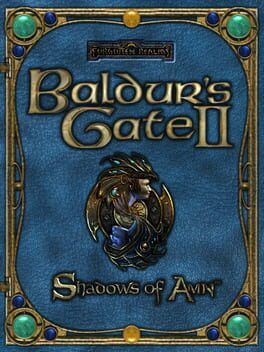

Breaking down the Baldur’s Gate 2 remake reports, the role of original co-lead designer Kevin Martens, how you update Infinity Engine design for a post–BG3 audience, and where BG1 & BG2 remakes fit in the series’ future.
What’s Actually Being Reported About A Baldur’s Gate 2 Remake
Multiple outlets, led by PC Gamer and echoed by Rock Paper Shotgun and IGN, are all circling the same story: Wizards of the Coast is reportedly working on a full remake of Baldur’s Gate 2, with Baldur’s Gate 1 “likely” to receive similar treatment.
The key points that line up across reports are:
PC Gamer cites a source familiar with the project who says Baldur’s Gate 2 is being rebuilt as a proper remake, not just another pass like the Beamdog Enhanced Edition. This implies a new engine, overhauled visual presentation, and at least some degree of system-level rethinking.
That same report also says Kevin Martens, co-lead designer on the original Baldur’s Gate 2, is back and already working on the project with Wizards of the Coast. Martens left BioWare long ago and more recently has been attached to WotC’s Archetype Entertainment, the studio behind upcoming sci-fi RPG Exodus.
Crucially, nothing here is officially announced. Wizards of the Coast declined to comment on the rumors and Martens has not publicly confirmed his involvement. For now, this all sits in that hazy preannouncement space where insider reporting tends to live for a while before anything concrete is shown.
Still, when multiple outlets, each with its own sourcing and editorial standards, converge on the same core claims, it is fair to treat the remake as very likely in active development, even if it could still be years away.
Why Kevin Martens’ Involvement Is A Big Deal
Baldur’s Gate 2’s reputation is not just about its combat rules or loot tables. It is remembered as the point where BioWare truly learned how to blend systemic depth with authored storytelling and reactive, character-driven quest design. Kevin Martens was central to that work.
His CV runs through much of the genre’s modern history. Beyond Baldur’s Gate 2 and Throne of Bhaal, he worked on Jade Empire, Neverwinter Nights, Mass Effect, and then shifted to Blizzard, where he helped reshape Diablo 3 with its later expansions and endgame loops.
Bringing Martens back does two things for a remake project.
First, it gives Wizards of the Coast access to someone who actually understands why Baldur’s Gate 2 worked in the first place. A remake that just slaps higher resolution art on top of the same encounters would miss the deeper structure that made Athkatla feel so alive. A designer who was there the first time has a better chance of preserving that.
Second, Martens has spent the intervening decades wrestling with problems that Baldur’s Gate 2 did not have to think about: long-term progression loops, live balance updates, and quality-of-life standards modern players treat as nonnegotiable. He has guided games aimed at much broader audiences than a 2000s CRPG. That experience is essential if Wizards wants these remakes to resonate with a crowd whose baseline is now Baldur’s Gate 3.
What “Modernizing” Infinity Engine Design Could Actually Mean
The original Baldur’s Gate duology sits in a very specific design tradition: real-time-with-pause combat, dense 2D pre-rendered backdrops, small party size, and heavy reliance on AD&D rules. For some players, that is the charm. For others, it is a wall.
When people hear “remake” in 2026, they often imagine the Final Fantasy 7 Remake model, which freely rearranges structure and tone, or Resident Evil remakes, which modernize controls and presentation while staying faithful to the beats of the original. Where might a Baldur’s Gate 2 remake land on that spectrum?
Combat is the first big question. The Infinity Engine’s real-time-with-pause style has a rhythm that feels very different from Baldur’s Gate 3’s turn-based take on 5e rules. Switching fully to a BG3-like turn-based system would immediately change the pace and tactics of hundreds of encounters, from the first muggers in Athkatla’s streets to the asylum and the planar prison. It would also require rebalancing everything from spell durations to resting cadence.
On the other hand, keeping real-time-with-pause and simply layering in modern UI clarity, clearer feedback, and better AI scripting would preserve the original’s feel while cutting away much of the friction. Today’s players expect combat logs that are readable, combat states that are visually legible, and difficulty options that can swing between story focus and tactical crunch without forcing a reinstall.
Presentation is another obvious target. Pre-rendered backgrounds can look stunning today with 4K pipelines and better lighting, but they need new animation rigs, improved character readability, and camera work that respects both nostalgia and legibility. Even something as simple as letting players zoom in farther without the art turning into a pixel soup would demand rebuilt assets.
Then there is narrative delivery. The script of Baldur’s Gate 2 is beloved, but it was written for CRT monitors and lower standards for pacing. Long, unvoiced dialogue boxes read differently to an audience that just spent hundreds of hours in fully voiced cinematics in Baldur’s Gate 3. A remake has choices to make around voice acting coverage, cutscene framing, and how much to tighten or selectively expand certain arcs while leaving the overall plot and companion beats intact.
The trick is to avoid “fixing” things fans do not consider broken. The danger of modernizing Infinity Engine design is that much of its identity is tied to its constraints. A respectful remake would look for spots where the original struggled against its own tech, or where simple quality-of-life changes can retain the feel while discarding frustration.
Possible Design Pillars For A Baldur’s Gate 2 Remake
If you treat the reports seriously and imagine the design conversations Martens and Wizards’ internal teams are likely having, a few pillars almost certainly sit at the center of the pitch.
One is accessibility without dilution. This could mean fully reworking onboarding and tutorials so that new players understand how hit rolls, saving throws, and spell schools interact without needing an external wiki. It also suggests more robust difficulty sliders and assist options that make inventory and rest management less punishing without trivializing the core fantasy of piloting a fragile adventuring party through lethal dungeons.
Another is systemic clarity. The original Baldur’s Gate 2 is brilliant at giving you mechanically distinct classes and spell lists, but it is also happy to let you walk into a room and die instantly because an invisible mage opened with a spell combo you had never seen. A modern remake could preserve that lethality while surfacing more information in the UI, highlighting enemy buffs and debuffs, and improving spell descriptions so that experimentation feels fair rather than opaque.
There is also the question of progression pacing. Extended early chapters in Athkatla could be restructured so that critical companion quests kick in sooner, or so that players get a more readable sense of which districts are appropriate for their current level. Smart encounter tuning can reduce the sense of wandering blindly into content designed for much later chapters.
Finally, the remake has a chance to integrate content that was constrained by the original’s production realities. Companion interjections, romance arcs, and late-game epilogues could all be touched up with an eye toward the emotional expectations of players arriving from Baldur’s Gate 3, without rewriting the tone into something unrecognizable.
How BG1 And BG2 Remakes Could Bridge To A Post–BG3 Future
Larian has made it clear it is done with Baldur’s Gate as a series, and Wizards of the Coast has equally made it clear that it has no intention of letting a brand with this much heat sit dormant. That creates a strange moment for the franchise.
Baldur’s Gate 3 is the new entry point for millions of players who have never touched the Infinity Engine games. For them, the saga starts with a mind flayer ship rather than a Candlekeep library. BG1 and BG2 remakes are a way to reconcile that.
Handled well, they can function as a kind of bridge trilogy that connects the modern sensibilities of BG3 to the Bhaalspawn story that defined the name in the first place.
They need to do a few things to pull that off. First, they cannot feel like museum pieces. If they land as historically interesting but mechanically archaic curiosities, they will not sustain interest long enough to anchor new games.
Second, they should respect BG3’s success without trying to impersonate it. Larian’s approach is deeply tied to its own engine, systemic chaos, and improvisational combat design. Wizards and whichever partner studio it ultimately tasks with the remakes will need to find a direction that makes sense for this specific story, these specific companions, and the more grounded, street-level tone of Athkatla.
Third, they can quietly set expectations for whatever “Baldur’s Gate 4” eventually becomes. If the remakes lean into a certain combat style or presentation, players will start to see that as the baseline for the series under Wizards’ direct stewardship. In practice, BG1 and BG2 remakes are likely to be read as a soft relaunch of the brand.
The Risk And Reward Of Revisiting A Canonical Classic
Remaking a game with Baldur’s Gate 2’s status is inherently risky. For many players, it is not just a favorite RPG. It is the template against which entire generations of Western role-playing games are measured. Every change will be litigated.
At the same time, the upside is enormous. Modern tech can finally do justice to the scale and mood that the original’s 2D backdrops only hinted at. Character performance and cinematography can better sell arcs like Jaheira’s grief, Viconia’s shifting loyalties, or the twisted mirror of Irenicus himself.
Bringing back a key original designer signals that Wizards is at least aware of the stakes. If the reports are accurate, Kevin Martens is in a unique position to answer the core question these remakes must wrestle with.
What does it mean to make Baldur’s Gate 2 feel the way it did in 2000 for players who have grown up on Baldur’s Gate 3, Mass Effect, and Diablo 3? If the team can land on an answer that respects the original’s density and player agency while speaking in the language of contemporary RPG design, these remakes could do far more than simply repackage a classic. They could quietly define what Baldur’s Gate looks like for the next decade.