
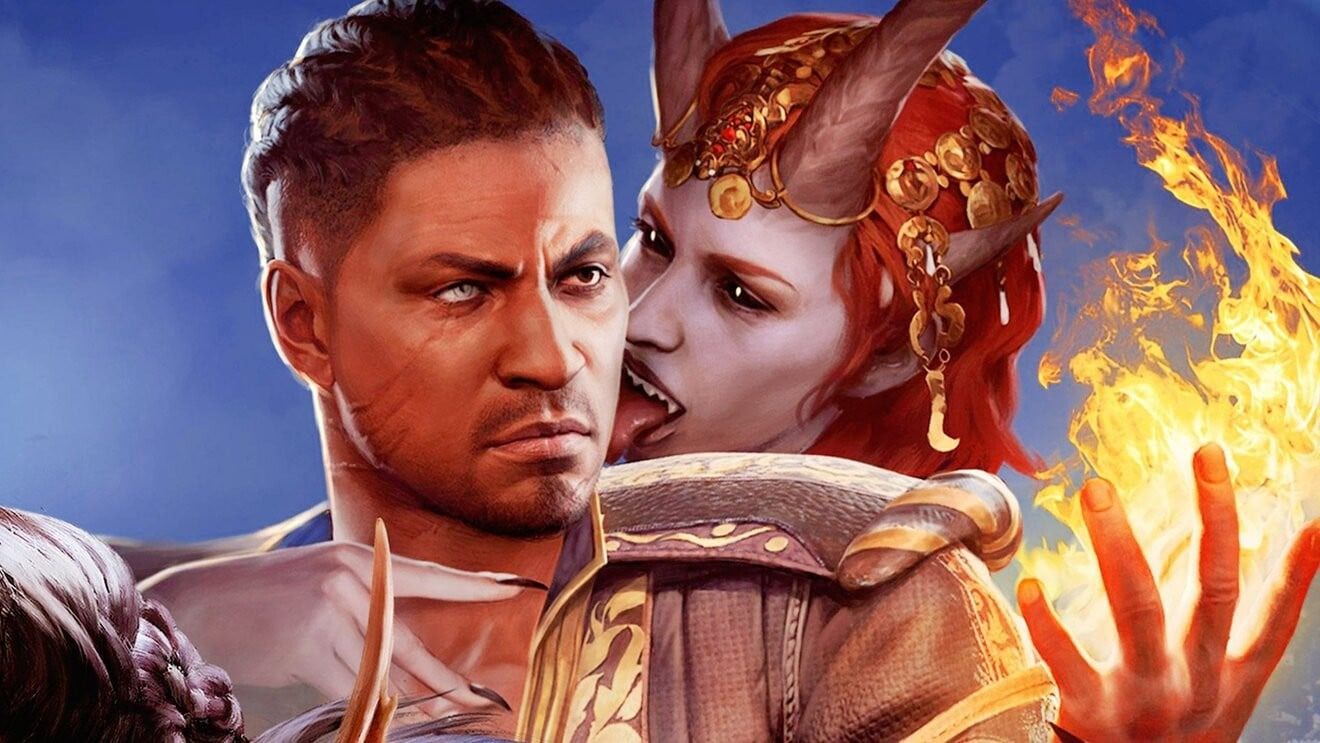

Owlcat Games has not announced Baldur's Gate 4, but co-founder Alexander Mishulin says the Rogue Trader studio would consider it a great challenge. Here is what was actually said, and why CRPG fans are watching the succession after Larian.
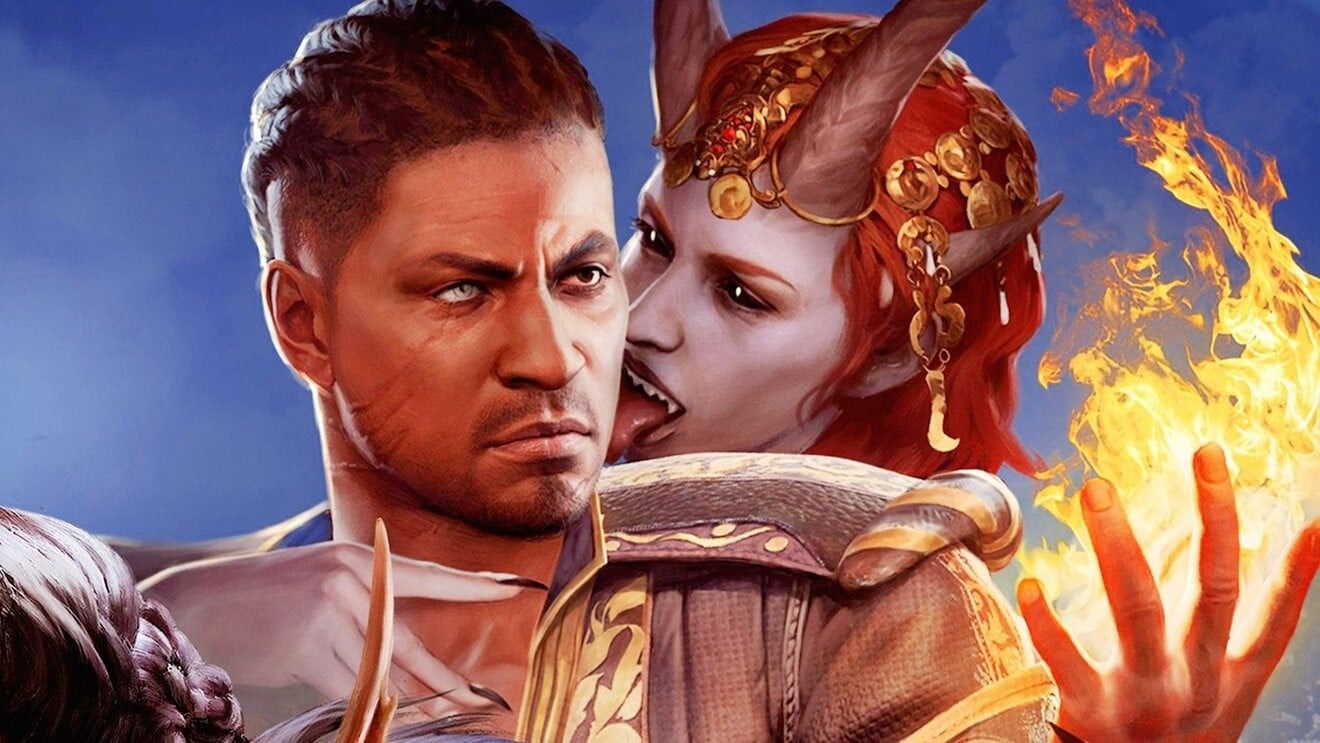
Image: gameblog.fr
Owlcat’s Baldur’s Gate 4 answer is interest, not an announcement
Owlcat Games co-founder and creative director Alexander Mishulin told IGN that the studio would consider Baldur’s Gate 4 “a great challenge” if the opportunity ever came its way, while also making clear that any future sequel would need to be its own game rather than an attempt to copy Larian’s Baldur’s Gate 3.
That is the concrete news here, and it is also where the speculation has to stop. IGN asked Mishulin whether Owlcat would answer the call if Hasbro approached the studio about making Baldur’s Gate 4. He did not confirm talks, a deal, a pitch, or any production work. His answer was framed as gratitude toward players who think Owlcat Games could handle the series.
“First of all, I would like to thank all the players, all your audience that consider us to be able to do that,” Mishulin told IGN. “It’s a really great honor. You already said that we are a little bit masochistic. So yeah, we will consider it a great challenge!”
For CRPG fans, that is enough to keep the conversation alive because Baldur’s Gate currently sits in an unusual place. Larian made one of the defining role-playing games of the decade with Baldur’s Gate 3, then decided against making Baldur’s Gate 4 and left Dungeons & Dragons behind to work on Divinity, according to IGN and Wccftech. The license still exists, the audience is enormous, but the studio that set the current standard is gone from the table.
What Mishulin actually said about following Larian
The most important part of Mishulin’s answer was not the willingness to consider the challenge. It was his warning about imitation. Wccftech, quoting the IGN interview, reports that Mishulin said Larian created “their own vision” of what a Baldur’s Gate sequel should be, and that another studio would be making “their own game in the Baldur’s Gate setting.”
His reasoning is systems-minded and blunt. Mishulin said Baldur’s Gate 3 reflects Larian’s long-developed formula, including its approach to combat, its mixture of Dungeons & Dragons with the studio’s own design ideas, and its co-op structure. In his view, any studio trying to replicate that directly is “bound to fail.”
That is a useful correction to the usual fan-casting around Baldur’s Gate 4. The question is not simply which developer has shipped a party-based RPG before. The harder question is whether a studio can make a Dungeons & Dragons game that feels legitimate without becoming a cover version of Baldur’s Gate 3. Larian’s game was shaped by years of Divinity design, encounter interactivity, systemic improvisation, and an unusually accessible presentation for a dense tabletop ruleset. Mishulin’s answer suggests Owlcat understands that inheritance as a design problem, not a trophy handoff.
Why Owlcat keeps coming up in the CRPG succession debate
Owlcat Games is being discussed because its recent work sits close to the kind of problem Baldur’s Gate 4 would pose. IGN identifies the studio as the developer of Warhammer 40,000: Rogue Trader and notes that the 2023 CRPG drew comparisons to Baldur’s Gate 3 at release. IGN also describes Rogue Trader as one of the best Warhammer 40,000 video games, citing its characters, story, and scale of over 100 hours.
The fit is not one-to-one. Rogue Trader is built around Games Workshop’s grimdark science-fantasy setting, while Baldur’s Gate is rooted in Dungeons & Dragons and the Forgotten Realms. But the overlapping craft is obvious: party composition, companion arcs, dialogue consequences, faction friction, long-term build planning, and the constant tension between role-playing fantasy and rules mastery. Exputer also points to Owlcat’s Pathfinder: Kingmaker, Pathfinder: Wrath of the Righteous, and Rogue Trader as examples of the studio’s experience with dense rulesets, branching narratives, companions, and player-driven choices.
That is why the studio’s name carries weight among CRPG players. Owlcat has repeatedly shown interest in campaigns where character progression is a commitment rather than a cosmetic layer. Its games ask players to live inside build choices, quest flags, mythic or factional identities, and party roles across very long arcs. A Baldur’s Gate 4 from Owlcat, if it ever existed, would likely be judged on whether it could translate that appetite for density into a D&D game with the clarity, reactivity, and production expectations that Baldur’s Gate 3 created.
The workload problem is real, even for a larger Owlcat
The timing is where the fantasy becomes complicated. Rock Paper Shotgun reports that Owlcat has grown to around 600 people while working on two major games: The Expanse: Osiris Reborn and Warhammer 40,000: Dark Heresy. IGN likewise frames those projects as part of a wider discussion about Owlcat’s growth over the last decade.
That matters because Baldur’s Gate 4 would not be a small licensing job. A sequel would be expected to support a large campaign, voiced companions, substantial player choice, combat depth, cinematic storytelling, and a standard of systemic reactivity that players now associate with the name. Even a studio with hundreds of developers would have to decide what to pause, staff up, outsource, or risk diluting.
Rock Paper Shotgun argues that Owlcat does not appear to be in an ideal position to take on Baldur’s Gate 4 while already developing The Expanse: Osiris Reborn and Warhammer 40,000: Dark Heresy. That is analysis rather than an official statement from Owlcat, but it reflects the production tension in the available facts. Owlcat may be bigger than it was during its Pathfinder years, yet it is also publicly committed to major licensed RPGs that come with their own demanding fanbases.
The wider industry context makes the caution more understandable. Rock Paper Shotgun reports that Archetype Entertainment, the studio behind Exodus, was offered a chance at Baldur’s Gate 4 according to former studio head James Ohlen. Wccftech similarly reports that Ohlen, who worked on the first two Baldur’s Gate games, turned down Wizards of the Coast when offered the chance to helm the sequel. In other words, experienced RPG developers are not treating Baldur’s Gate 4 as a guaranteed victory lap.
Owlcat is expanding beyond classic CRPG form, but says it is not leaving the genre
One reason the Owlcat conversation is especially interesting is that the studio is currently stretching its format. The Expanse: Osiris Reborn, Owlcat’s upcoming sci-fi RPG, has been compared in coverage to BioWare-style cinematic RPGs because of its third-person presentation, companion-driven structure, and science-fiction setting. Exputer notes that the game has drawn inevitable Mass Effect comparisons, while also reporting that Owlcat does not consider itself a direct successor to BioWare’s series.
That shift could worry players who know Owlcat mainly for isometric, rules-heavy CRPGs. Mishulin addressed that broader concern in comments to PCGamesN quoted by Rock Paper Shotgun: “We will continue to make CRPGs because we love them.” He added that the studio does not want to become stagnant and will try different approaches to RPG design to find the best fit for each idea.
For a hypothetical Baldur’s Gate 4, that philosophy cuts both ways. On one hand, a studio willing to adapt its form may be better positioned to handle the audience Larian brought into the series, including players who value cinematic readability as much as mechanical crunch. On the other hand, Baldur’s Gate 4 would punish unclear priorities. If it leaned too far into old-school density, it could alienate the broader BG3 audience. If it chased Larian’s presentation without its systemic confidence, it could disappoint the CRPG core that wants meaningful builds, hard choices, and quests that remember what the player did ten hours ago.
What is confirmed, what is open, and what fans should watch next
There is no announced Baldur’s Gate 4 developer in the provided source material. There is no confirmed Owlcat project, no release window, no platform list, no price, and no store page. Hasbro or Wizards of the Coast would need to make any official announcement about the future of the series, and nothing in Mishulin’s comments should be read as confirmation that such an announcement is close.
What is confirmed is narrower but still notable. Larian has moved on from Baldur’s Gate and Dungeons & Dragons to work on Divinity, according to IGN and Wccftech. Owlcat Games, known for Warhammer 40,000: Rogue Trader and its Pathfinder CRPGs, would consider Baldur’s Gate 4 “a great challenge” if asked, according to Mishulin’s IGN interview. Mishulin also believes a future developer should bring its own studio identity to the setting rather than trying to reproduce Larian’s Baldur’s Gate 3 formula.
For players, the practical guidance is patience. If you are watching Baldur’s Gate 4, the next meaningful signals will be official publisher movement, hiring patterns tied to Dungeons & Dragons, licensing comments from Hasbro or Wizards, or a named development partner. Owlcat’s current slate points attention elsewhere for now: Warhammer 40,000: Dark Heresy for CRPG fans who want another dense licensed campaign, and The Expanse: Osiris Reborn for players curious about how Owlcat handles a more cinematic sci-fi RPG.
The reason Owlcat remains in the conversation is not that it has been chosen. It is that Mishulin’s answer identifies the central challenge correctly. Baldur’s Gate 4 cannot win by pretending Baldur’s Gate 3 was a template anyone can simply reload. The next studio, Owlcat or otherwise, will have to make a game that respects Dungeons & Dragons, understands the expectations Larian created, and still has enough confidence in its own systems to survive comparison.