
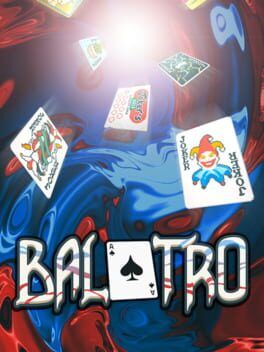

Poker roguelike phenomenon Balatro makes the jump to Nintendo Switch 2 with smoother performance, sharper visuals, new control perks, and a perfect fit for portable, run-based play.
Balatro has already chewed through thousands of hours on PC and the original Switch by taking something as rigid as poker and twisting it into a wild roguelike deckbuilder. On the surface it looks like a familiar deck of cards, but within a few antes you are stacking multipliers, breaking the rules of poker, and watching chip counts explode in a shower of neon CRT fuzz.
The basic hook is simple. You build poker hands to earn chips, use those chips to buy upgrades between rounds, then try to clear a series of increasingly punishing blinds. The genius lies in the Jokers, Tarot, Vouchers, and Planet cards that warp the rules. One Joker might double the value of a hand you almost never play, nudging you to chase weird straights. Another might reward you for discarding instead of playing. Over time your deck bends around these effects until each run feels like solving a new strategic puzzle.
On PC and the first Switch this formula became a phenomenon because it is both approachable and endlessly deep. Runs are quick, the interface is clean, and the synergies are powerful enough to make nearly every session feel like it could be the one where everything breaks wide open. It is a perfect podcast game and a brilliant “five minutes became fifty” time-sink.
The Nintendo Switch 2 version keeps that core intact, but layers in a handful of key upgrades that make this the definitive console way to play.
First is the price. On Switch 2 Balatro launches digitally at a discounted $11.99 on the eShop, undercutting a lot of other early library staples and making it an easy impulse buy for new system owners. If you already own the original Switch version digitally, you can upgrade to the Switch 2 build for free, which is generous given how much time most players are already getting out of it.
Performance is the big quality-of-life change. The original Switch release ran at 30 frames per second. That was serviceable for a card game, but noticeable in menu snappiness and the flow of animations. The Switch 2 version targets a smooth 60 frames per second with higher internal resolution, which makes card art and UI text crisper both docked and in handheld. The psychedelic CRT-style filters and synthwave glow hold up better on a sharper screen, and the whole presentation feels closer to the PC experience.
Beyond the raw performance bump there are a few hardware specific perks. Most notably, Switch 2 support includes a mouse-style control mode using the Joy-Con 2 pointer functionality. You can move a cursor directly, click on cards, and drag across the table in a way that mimics playing on PC with a mouse. It is not mandatory, but for players who like a more tactile interface, it makes snappy deck management even faster.
HD rumble style haptics on Switch 2 are subtle but effective. Every played hand, every reroll in the shop, and every boss blind carries a light response in the controllers. The game does not lean on heavy rumble, instead it adds a soft pulse as feedback when you confirm plays or land a big scoring combo. It helps sell the fantasy of shuffling cards and slamming chips onto the felt without ever becoming distracting during long runs.
Visual options also see a small but meaningful lift. Balatro’s faux CRT presentation was already striking, but on Switch 2 the higher resolution helps the scanlines and bloom pop without muddying text. The options menu lets you ease off the strongest screen effects if you want a cleaner look, and the UI scales comfortably both on the handheld display and on a 4K TV through the dock. If the original Switch version ever felt a bit soft or cramped when played on a big screen, this goes a long way toward fixing that.
All of this wraps around a structure that is almost absurdly well suited to Switch 2’s portable nature. A typical run is sliced into quick rounds, each one just a handful of hands before you face the next blind. That makes it easy to chip away at a session on a commute, during a break, or while half watching something else. Suspend and resume on Switch 2 means you can instantly duck out mid-ante and pick up later without losing your progress.
Crucially, Balatro’s depth is not tied to huge time commitments. A “short” session can still produce wild builds and tense final blinds. Unlocks drip feed new Jokers, decks, and modifiers across dozens of runs, so your knowledge of the card pool and potential synergies grows even if you rarely reach the final ante. For handheld play that makes Balatro feel alive and rewarding whether you have ten minutes or an entire flight to fill.
With a launch discount price, a free upgrade path for existing owners, smoother performance, sharper visuals, and smart use of Switch 2’s control and haptic features, Balatro lands on Nintendo’s new hardware in ideal form. If you just picked up a Switch 2 and want a deep, endlessly replayable indie that can live on your home screen for months, this poker deckbuilder belongs near the top of your list. It is the sort of game you keep installed forever because there is always time for just one more hand.