
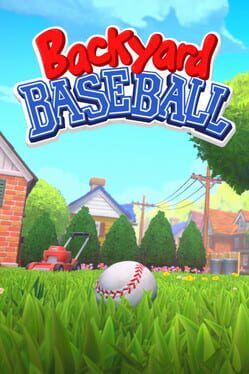

Mega Cat Studios and Playground Productions are reimagining Backyard Baseball for a new generation, with chunky 3D visuals, returning kid legends like Pablo Sanchez, and a slate of modes that try to honor 90s PC chaos on modern consoles.
If you grew up hunched over a beige PC tower, lining up pitches with a ball the size of a softball and muting your speakers so your parents would not hear the aluminum bat sound at midnight, the phrase “Backyard Baseball is back” hits a very specific nerve. After almost fifteen years on the bench, Playground Productions and Mega Cat Studios are dusting off the classic kid-sports series for a full reimagining on PC, Mac, and modern consoles in July 2026, and the pitch is clear. This is meant to feel like the game you remember, not the one you would see in a screenshot.
A new look that still feels like the old neighborhood
The original Backyard Baseball lived and died on its flat, storybook art. Kids looked like they had been doodled in the margins of a notebook, with simple animations that left plenty of room for your imagination. For 2026, Mega Cat is shifting the series into full 3D, but the team is careful not to chase realism. Player models are chunky and exaggerated, with oversized heads, squashed proportions, and bright colors that look closer to toys on a playroom floor than a licensed sports sim.
Stadiums are where the glow-up is most obvious. The new game ships with 11 remastered fields that reinterpret favorites like generic suburban backyards and sandlot diamonds with more detail but the same scrappy soul. You still get fences that look like they were thrown together from scraps of lumber, improvised bases, and background details hinting at neighborhood stories, only this time they are built for modern cameras and lighting. Dugouts, tree houses, and rickety bleachers are all modeled out so fly balls and long shots can whip past them with a sense of place the old pre-rendered backgrounds could only suggest.
Mega Cat describes this shift as “sliding into the third dimension” rather than an attempt to turn Backyard Baseball into a modern MLB sim. That distinction matters. Uniform textures and dirt kick-up effects look sharp in the trailer, but characters snap into big, readable poses, and the camera often pulls in close so you can see the kids’ reactions on every pitch. It is trying to tap into the same personality heavy vibe that made the original screens so instantly recognizable, just translated into a format that makes sense on a 4K TV.
Pablo Sanchez and the gang step back up to the plate
Any revival of Backyard Baseball lives or dies on its roster, and Playground clearly understands that. The new game launches with 30 playable Backyard kids pulled from across the classic series, with Pablo Sanchez front and center again as the undisputed king of the neighborhood. The trailer and early write ups call him out specifically as the same quiet powerhouse fans remember, hinting at an approach that respects old stat lines and archetypes rather than rewriting them from scratch.
Familiar faces from the late 90s and early 2000s lineups return alongside him. Speedsters, power hitters, glove-first infielders, and lovable klutzes are all part of the 30 character lineup, with each kid keeping their signature strengths and quirks. Voice clips and animations are new, but the idea is that you should be able to recognize a favorite kid from their stance, their pre pitch jitter, or the way they react when they whiff on a big swing.
The structure around them is similarly faithful. The 24 original teams have been rebuilt with modern presentation, but their identities, color palettes, and rough pecking order seem to remain intact. If you had a favorite squad you always drafted or a rival lineup you dreaded facing, chances are you will be able to recreate those exact matchups with little friction. This underlines the game’s central nostalgic appeal. You are not just playing a new kid baseball game. You are getting the band back together.
Six ways to play in your digital backyard
Where Mega Cat and Playground are trying to modernize things is in how you actually spend time with the game. Backyard Baseball 2026 ships with six modes that layer on top of that familiar roster and stadium set, ranging from pure nostalgia to full on new designs built around modern expectations.
Classic pick up games return as the mode that feels most like booting up the original on a Saturday afternoon. You draft kids, pick a field, tweak some house rules, and jump straight into a single game without needing to fuss with season stats or meta progression. The focus here is on low friction fun that feels right at home for local multiplayer nights or quick sessions on a Switch in handheld mode.
For players who want more structure, there are fuller league and season style options that lean into one of the biggest differences between the 90s and now. Kids who grew up with the original are adults today, used to progression systems, unlock tracks, and achievements. Backyard Baseball 2026 leans into that with unlockable characters, cosmetics, and stadium variants that act as long term goals. The key distinction is that the developers are promising to keep everything strictly earnable through play, with no microtransactions muddying the waters.
Batting practice also comes back in a bigger role than before. In the old PC games, practice modes were handy but barebones. Here, the reworked batting practice resembles a lightweight training playground, with challenge conditions, scoring targets, and potentially leaderboard chasing that give it more staying power. If the team delivers, this mode could be a quiet star for families sharing a console, letting younger players build confidence while older siblings chase perfect runs.
The rest of the mode lineup points directly at modern expectations. The game supports single player, local multiplayer, co op, and split screen play, with online details still to be fully nailed down in previews. There are hints at goofy side modes built around home run derbies or trick style objectives, and the achievements list is being pitched as something you actually want to chase, not just a checklist. The idea is that whether you have ten minutes or an evening, there is always a flavor of Backyard Baseball that fits.
Kid chaos in a grown up game landscape
Mechanically, Backyard Baseball 2026 is not trying to compete with licensed sims like MLB The Show on depth or realism. Instead it leans into the arcadey, “play like a kid” rule set that made the original so distinct. That mantra shows up in the design through the return of wild power ups. Pitchers can once again throw Fire Balls and Crazy Balls that bend logic along with physics, while batters can tap into Crazy Bunts, Undergrounders, and the infamous Aluminum Power Bat for cartoonish blasts.
Those power ups are not just nostalgia bait. In a landscape full of realistic sports games, they give Backyard Baseball an immediate identity on a store shelf or digital storefront. A well timed Undergrounder that vanishes and pops up behind the outfield is both a comeback mechanic and a reminder that this is a game about childhood imagination more than clean box scores.
Rules and difficulty are similarly flexible. You can toggle errors, use a tee for batting if you are teaching someone the basics, or lean into more advanced baseball tactics like bunting and stealing once everyone is comfortable. Importantly, injuries are off the table entirely, and the game is built to avoid frustrating fail states that might kill the fun for younger players. That accessibility focus extends into options and tutorials that try to make every system readable whether you are 8 or 38.
In that sense, Mega Cat and Playground are aiming at two overlapping audiences. For returning fans from the 90s and 2000s, Backyard Baseball is designed to revive old muscle memory, the ritual of scanning rosters for Pablo and building your dream lineup. For new players, it is framed as their first baseball game, a colorful, forgiving space where they can learn the sport’s language without worrying about pitch clocks or WAR.
A 90s classic rebuilt for the living room
One of the quiet challenges with any PC era revival is moving a design built around mice and small monitors to a couch and controller. Early footage suggests the team is thinking about that translation carefully. Menus are big and clean, built for quick navigation on a gamepad. Camera angles are staged to keep both fielding and batting readable without the dizzy cuts you see in more hyper realistic games. Input windows appear generous, and pitching interfaces are simple enough that kids should be able to grasp them without needing a tutorial video.
Handheld play on Switch and portable PCs is another factor. Backyard Baseball’s low pressure pacing makes it a natural fit for short sessions, something the original accidentally pioneered on PC during after school computer time. With cloud saves and cross platform launches now expected features in this type of release, there is a real chance for Backyard Baseball 2026 to become that comfort game you bounce into for a couple of innings between heavier titles.
Perhaps most importantly, the lack of microtransactions and season pass talk in the initial reveal signals a different philosophy from many modern sports titles. Progression is there to give you reasons to keep picking up the controller, not to lock core content behind purchases. For a series rooted in the fantasy of kids cobbling together games with whatever they have on hand, that approach feels thematically honest.
Will it live up to your memories?
Nostalgia can be unforgiving. The Backyard Baseball games that live in people’s heads are smoother and funnier than the late 90s tech they actually ran on. Mega Cat and Playground are trying to thread a tight needle. They are preserving the kid centric, power up heavy chaos and the cast of neighborhood legends, while rebuilding everything else for a world of widescreen TVs, online play, and players who expect their games to last for months, not weekends.
Whether the 3D art hits the right note or the new modes feel essential rather than filler will only become clear once we are all back in those digital sandlots. For now, the fundamentals look sound. Pablo Sanchez is still a cheat code. The fields are brighter and more detailed but recognizably scruffy. The rules are bendy in all the right ways. And this time, the backyard fits right into your living room.