
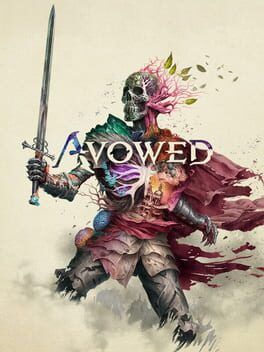

Obsidian’s fantasy RPG Avowed hits PS5 one year after launch alongside a major anniversary update. Here’s what the new modes change and what the port signals about Xbox’s evolving first‑party strategy on rival hardware.
Avowed’s trip to PlayStation 5 is about more than one more platform on the box. Obsidian’s first‑person fantasy RPG arrives on Sony’s console on February 17, almost exactly a year after its original debut on Xbox Series X|S and PC, and it comes bundled with the game’s biggest overhaul yet in the form of a free anniversary update. For PS5 players, that means getting Avowed in its most complete state from day one. For Xbox, it is another concrete sign that strict hardware exclusivity is no longer the default for first‑party releases.
What the anniversary update actually adds
Obsidian has been talking about expanding Avowed since launch, and the anniversary update is where most of those roadmap promises finally land. The headline addition is New Game Plus, but it is not a simple restart toggle. When you roll into a new run you reset back to level 1 yet carry over all of your previously earned gear, abilities and build decisions. The twist is that enemies are not just scaled up damage sponges. Obsidian is layering in combat modifiers that can grant resistances or other unique properties, changing which tools are effective and demanding different loadouts and tactics on a second or third playthrough.
That structure quietly fixes one of Avowed’s launch complaints. The original release was a largely one‑and‑done experience once the main story wrapped, with little systemic reason to revisit earlier content. New Game Plus with enemy modifiers reframes the campaign as a playground for experimenting with late‑game builds from the opening hours, and it gives the RPG’s flexible combat more long‑term legs.
The anniversary patch is also the update where Avowed finally delivers full character‑creation fantasy. At launch, players were locked into a human protagonist, which always felt at odds with the Pillars of Eternity universe the game draws from. The new version introduces three additional playable races drawn from Eora’s lore, including staples like dwarves and more exotic options such as Aumaua and Orlan. These new bodies are more than palette swaps. Obsidian has talked about the amount of work required to make the game’s traversal, parkour and weapon systems function properly with different silhouettes and animations, so PS5 players are seeing a feature that has quietly been in the works for much of the post‑launch year.
A new weapon type rounds out the combat side of the update. Exact details vary between previews, but the intent is clear. Obsidian wants to reinforce Avowed’s mix‑and‑match sandbox of swords, guns, spells and shields rather than simply inflating stats. A fresh weapon category naturally opens more hybrid builds once paired with the carried‑over gear in New Game Plus.
Outside moment‑to‑moment combat, the anniversary update folds in the kind of quality‑of‑life upgrades that can make a second or third run appealing. A fully featured photo mode lets players frame the Living Lands’ dense forests, coastal cliffs and ruins without UI noise. Additional character presets make initial creation quicker for those who do not want to tweak every slider. The patch also includes broad tuning and polish across quest logic and progression, aimed at making Avowed feel like a more rounded package than it did in February 2025.
Why PS5 players are getting the best version on day one
For anyone who skipped Avowed on Xbox or PC, the PS5 release sidesteps the early growing pains entirely. Obsidian’s first pass at the game drew praise for sharp writing, punchy combat and the way its handcrafted environments sold the strangeness of the Living Lands, but it also carried some structural rough edges. The lack of New Game Plus, rigid quest resolution and the limited character options all contributed to a sense that this was a strong foundation that could benefit from iteration.
On PS5, that iteration is baked into the baseline. New players will meet a version of Avowed where build experimentation is encouraged, replayability is explicitly supported and role‑playing possibilities are broader from character creation. In practical terms the port looks less like a late, stripped‑down version of an Xbox game and more like a definitive edition dropping at the moment the design feels fully realized.
This matters because it reframes what it means for an Xbox first‑party title to arrive on rival hardware. Instead of an aging port limping in long after the conversation has moved on, Avowed’s PS5 version is synchronized with a major content milestone. It positions the PlayStation release as part of the game’s ongoing life rather than an afterthought.
One year later: how the timing fits Xbox’s new philosophy
The exact timing of Avowed’s PS5 move is not accidental. A one‑year gap preserves a clear window where the game helps sell Xbox consoles and Game Pass, while also allowing Microsoft to later tap into a new audience once the initial rush has tapered off. By pairing the PS5 launch with a substantial free update across all platforms, Xbox changes the story from “former exclusive goes multiplatform” to “major anniversary patch arrives everywhere, including a new console.”
This approach is increasingly visible across Microsoft’s portfolio. The company has been steadily moving away from tying the value of Xbox Game Studios solely to a single box under the TV. Instead it is treating first‑party releases as ecosystem anchors that live across hardware, subscription and now even competing platforms. Avowed hitting PS5 with feature parity and cross‑timed updates is another proof point in that strategy.
For Obsidian specifically, the benefits are obvious. The studio already ships to PC and two console SKUs, and Avowed is a mid‑budget RPG in a genre where word of mouth and long tails matter as much as launch week. A PS5 version a year on allows the team to reach the largest single console audience in the market with a more stable, feature‑rich build, extending the game’s lifespan without needing to produce traditional expansion packs right away.
What the port signals about future Xbox first‑party releases
Avowed’s PS5 jump does not mean every Xbox game will land on PlayStation or Switch, but it does help sketch the outlines of an evolving policy. Day‑and‑date simultaneous launches on rival hardware would undercut one of Xbox’s remaining unique selling points. A staggered cadence with sizable updates, on the other hand, lets Microsoft have it both ways. Xbox and PC players get first access, early adopters feed back into post‑launch patches and content, and then a more complete version expands the audience later.
The choice of Avowed as a cross‑platform emissary also says something about where Xbox sees safe experimentation. This is not Halo Infinite or Forza Motorsport, brands historically tangled up with the Xbox identity. It is a new fantasy IP tied more closely to Obsidian than to the console itself, built in a genre where PC and PlayStation audiences already overlap heavily. By moving Avowed to PS5, Microsoft can test appetite for timed first‑party exclusivity turning into broader availability without immediately touching the most iconic Xbox franchises.
For PlayStation players, the takeaway is straightforward. The wall around Xbox’s more experimental and mid‑scale projects is getting lower. A year after launch, with major systems like New Game Plus, new races, combat modifiers and quality‑of‑life features in place, Avowed arrives on PS5 as a substantially improved version of the game that debuted in 2025. For Xbox, that same move is another step toward a platform strategy where the brand’s strength comes less from keeping games out of rival ecosystems and more from making sure those games have the longest possible reach once their first‑year exclusivity has done its job.