
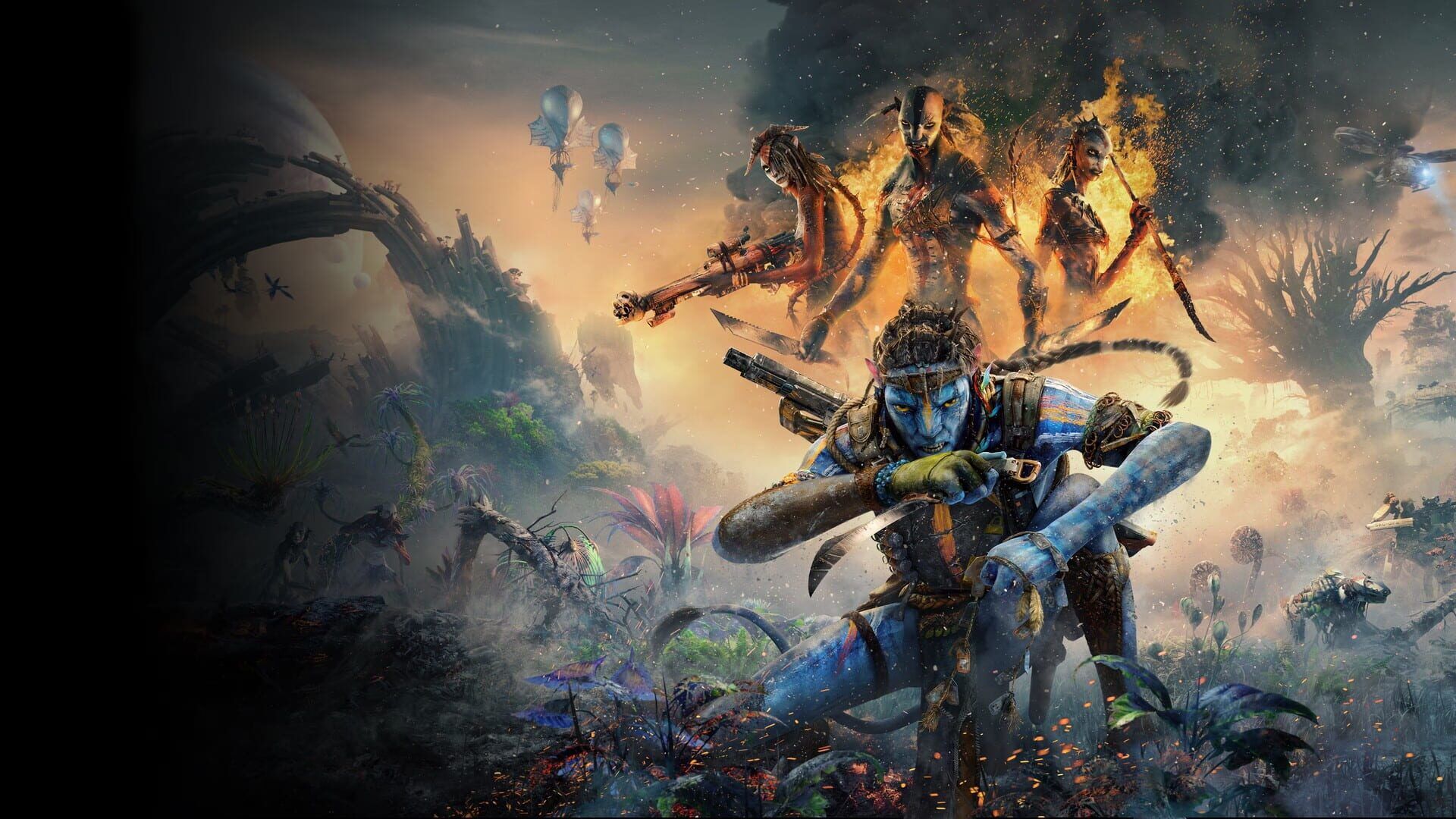

Breaking down So’lek as a new playable Na’vi, the Trr’ong clan storyline, new regions and activities, and whether From the Ashes truly expands Avatar: Frontiers of Pandora or just delivers a combat-focused side story.
Avatar: Frontiers of Pandora – From the Ashes arrives as the first major story expansion for Massive’s open‑world shooter, timed to hit alongside the next Avatar film. It puts you in the role of So’lek of the Trr’ong clan, a veteran Na’vi warrior fighting both the returning RDA and a troubling new enemy faction, the Ash clan.
This DLC is pitched as a character‑driven war story and a chance to revisit Pandora with fresh tools and a new corner of the map. In practice, From the Ashes does deepen the game’s combat sandbox and provides some standout set pieces, but it rarely pushes far beyond the formulas established in the base game.
A New Playable Na’vi: Who Is So’lek?
Instead of importing your Sarentu character, From the Ashes has you step into the skin of So’lek, a battle‑hardened Trr’ong warrior. Where the base game framed you as a learner rediscovering your roots, So’lek begins as someone who has already paid the cost of resistance.
He wakes in the aftermath of an ambush, his clan scattered and the landscape literally burning thanks to the RDA’s latest extraction push. The Ash clan, a Na’vi group willing to collaborate with humans, turns the conflict from a simple colonizers‑versus‑locals dynamic into a more personal civil war. That tension is where So’lek works best as a protagonist. He is angry, stubborn, and constantly being forced to choose between revenge and protection, which gives the story sharper edges than the earnest optimism of the base campaign.
Mechanically, So’lek is still governed by the same systems as your original character. You level, invest points, and equip weapons and gear that follow familiar archetypes. The twist is in how his toolkit is framed: early missions emphasize aggressive play, close‑quarters skirmishing, and rapid hit‑and‑run tactics that fit a guerrilla veteran. Dialog and optional lore reinforce that this is someone who already knows every RDA trick and is tired of playing defense.
If you were hoping for radically different abilities that change how you navigate or fight, you will not find them here. So’lek is more about a fresh narrative lens and tone than a completely new class.
The Trr’ong Clan And The Ash Clan: A Civil War On Pandora
The most compelling element of From the Ashes is the way it foregrounds Na’vi‑on‑Na’vi conflict.
The Trr’ong clan is introduced as a wartime culture, one that has been living with the RDA’s encroachment long enough to adapt their traditions to constant battle. Their rituals, camps, and leaders reflect a community defined by sacrifice. Story missions gradually pull back the curtain on the cost of that adaptation as you meet Trr’ong warriors who can no longer imagine a life not framed by war.
Set against them is the Ash clan, Na’vi who have been seduced or coerced into working with the RDA. The DLC spends welcome time showing why someone might make that choice. There are families trying to survive, opportunists who believe they can bend human power to their will, and true believers who see the Trr’ong as reckless extremists. Missions that put you into skirmishes against fellow Na’vi feel more intimate and morally complicated than blasting another RDA outpost.
Unfortunately, moment‑to‑moment structure still leans on familiar objectives. You infiltrate facilities, sabotage equipment, rescue prisoners, and eventually trigger large‑scale battles. Narrative framing is fresh, but the way you interact with these factions is often a remix of things you have done across the base map.
New Regions: A War‑Torn Slice Of Pandora
From the Ashes adds a sizeable new region of Pandora for you to explore. It is not as large as a full biome from the base game, but it is dense, visually distinct, and tailored to the expansion’s themes.
The first impression is fire and scars. Forests you might expect to be lush are charred and smoldering, with pockets of toxic haze and industrial machinery grinding into the soil. Massive’s environmental art is still striking, and the contrast between surviving pockets of bioluminescent beauty and outright devastation sells the idea that Pandora is at a tipping point.
Verticality remains a strong suit. The new zone weaves elevated cliff paths, hanging roots, and ruined RDA scaffolding into arenas that reward both stealthy navigation and aggressive gliding assaults. A few standout locations tie directly into Trr’ong culture, like ceremonial grounds repurposed into forward bases, and Ash clan camps that look unsettlingly hybridized with human tech.
If you came back to Frontiers of Pandora primarily for more vistas and more spaces to soar across on your ikran, the new area delivers that fantasy. It does not reconfigure how you traverse Pandora, but it gives you new lines to trace through the sky.
Added Activities: Familiar Loops With A Sharper Edge
The expansion folds a series of new activities into its war‑torn biome, but most of them sit comfortably within categories you already know.
There are new RDA facilities to dismantle, which often pair human soldiers and mechs with Ash clan fighters acting as shock troops. These encounters encourage more reactive play as you prioritize Na’vi sharpshooters on elevated perches while managing armored human hardware.
Hunting and gathering spots return, now flavored as efforts to reclaim scorched land or secure resources for displaced Trr’ong families. A few side quests frame these as tough tradeoffs: do you risk civilians by keeping them close to fertile ground, or send them deeper into the wilds where RDA patrols are thinner but the environment is harsher? The choices rarely branch the story in a major way, yet they add emotional stakes to otherwise familiar scavenging loops.
The DLC also introduces expanded challenge hunts and wave‑based defense events that bring in Ash clan raiding parties. Combat in these scenarios is snappier and more chaotic than equivalent activities in the base game, leaning into So’lek’s veteran skillset and the feeling that the front line can shift at any moment.
If you were hoping for completely new systemic pillars, such as base building, clan management, or deeper creature bonding, those do not materialize. From the Ashes is focused very clearly on combat scenarios and story missions.
Does From the Ashes Meaningfully Expand The Base Game?
Evaluated purely as a systems expansion, From the Ashes is fairly conservative.
Progression still follows the same broad track, gear works within existing rarity tiers, and crafting remains a matter of gathering materials and taking them back to familiar vendors or workbenches. There are new weapons and armor pieces, often themed around the Trr’ong resistance, but they slot into known archetypes rather than carving new playstyles. Think incremental upgrades and a handful of situational perks, not a reimagined endgame.
Where the DLC does stretch a bit is in encounter design. Fights that mix RDA vehicles, infantry, and Ash clan units can become layered problems, asking you to juggle armor‑shredding tools, precise archery, and mobility in tighter windows. Set‑piece story missions take better advantage of vertical level design, rewarding those who understand when to dive in and when to loop out and reposition.
Stealth and open‑world systems, however, are largely unchanged. Outposts can still be approached from any angle and cleared silently or loudly, but the AI behaves much as you remember. Wildlife interactions mostly serve as ambient flavor or resource sources without gaining new behavioral depth.
If your main criticism of Frontiers of Pandora was that its systems felt a bit safe, From the Ashes will not change your mind. It refines and concentrates what the base game already did rather than transforming it.
A Combat‑Heavy Side Story, Elevated By Perspective
Looked at through a narrative lens, From the Ashes is stronger.
So’lek’s perspective allows Massive to tell a more focused and morally complex story about what prolonged resistance does to people and cultures. The presence of the Ash clan undercuts any easy binary of good Na’vi and bad humans, and several late‑game missions lean into uncomfortable confrontations with people who share your history and biology but not your philosophy.
The writing is still tuned to the broad strokes and emotional sincerity that define the Avatar films, but there is more bite here. Side characters within the Trr’ong and Ash clans get enough screen time to feel like more than quest givers, and the final act pays off several early doubts and grudges in satisfying ways.
That story is almost always delivered through combat. Dialogue, cutscenes, and the occasional quieter exploration sequence stitch together what is essentially a chain of battles escalating from skirmishes to full‑scale assaults. If you enjoy the feel of Frontiers of Pandora’s archery, gunplay, and aerial tactics, the DLC is an easy recommendation. If you were hoping for more emphasis on exploration, spiritual connection to Pandora, or systemic role‑playing, the combat‑first structure may feel limiting.
Verdict: Who Is From the Ashes For?
From the Ashes is best understood as a concentrated, combat‑heavy campaign set in a fresh slice of Pandora, centered on a grimmer Na’vi hero and an internal conflict that gives the world more texture.
It does not reinvent Avatar: Frontiers of Pandora at a mechanical level. Your progression, your basic tools, and most of your activities will feel familiar. What you are getting for your time and money is a sharper story about the cost of endless war, a new region that showcases some of Massive’s best environmental work, and a series of engagements that push the combat systems as far as they can go without rewriting them.
If you came away from the base game wishing there had been more narrative focus and more demanding fights, From the Ashes is worth the return trip. If your main desire was for deeper systems or a broader reimagining of how you live on Pandora, this expansion will likely play more like an intense side story than a true evolution.