
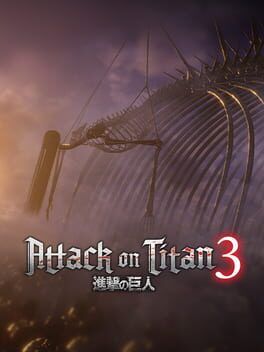

Omega Force returns with Attack on Titan 3, a full adaptation of the manga and anime that refines aerial ODM combat, revisits fan favorite systems, and sets expectations for the series’ most ambitious game yet.
Attack on Titan 3 is being pitched as the culmination of Koei Tecmo and Omega Force’s long running adaptation of Hajime Isayama’s manga, and this time the team is going for it all. After Attack on Titan: Wings of Freedom and the well regarded Attack on Titan 2, the third game is designed as a single, sweeping retelling of the entire story, built specifically for current hardware like PS5, Xbox Series X|S, Nintendo Switch 2, and PC.
A Complete Retelling From The First Wall Breach To The Final Battle
Previous entries did a strong job of following the anime as it aired, but they were always chasing a moving target. Attack on Titan 2, even with its Final Battle expansion, had to work around a story that was still evolving. Attack on Titan 3 finally arrives after both manga and anime have concluded, which lets Omega Force structure the game knowing exactly where every character arc ends.
The campaign is framed as a seamless journey from the fall of Wall Maria and the 104th Cadet Corps’ training days, through the political struggle inside the Walls, the mystery of the Basement, and into the brutal war across the sea and the Rumbling itself. Press materials highlight that this is a full beginning to end adaptation, not a partial season selection padded with side material.
That scope opens up room to re pace sections that felt rushed in earlier games. Extended time in Shiganshina, for example, can be mirrored later by lengthy operations on Marley’s front lines instead of compressing major arcs into a couple of missions. Key twists such as the revelation of the Armored and Colossal Titans, or Eren’s evolving ideology, can be foreshadowed in gameplay and cutscenes across the full runtime rather than dropped in as sudden pivots.
Crucially, this is also the first Attack on Titan game to promise properly playable confrontations with all Nine Titans in a single package. Previous titles dabbled in Titan vs Titan combat, but they were always bound by where the show was at the time. Here, Omega Force can build boss encounters that reflect the complete abilities of each Titan shifter, whether that is the Armored Titan’s tank like defense or the surreal scale of the Founding Titan during the Rumbling.
Aerial Combat Rebuilt For Current Hardware
For many fans, Omega Force’s real achievement in the earlier games was how well they captured the feel of omni directional mobility gear. Attack on Titan 3 is leaning into that reputation by advertising major upgrades to aerial movement and combat. On paper, this sounds less like a small tuning pass and more like a full overhaul that should make darting around Titans feel faster, more acrobatic, and more responsive.
One of the headline ideas is sharper control over altitude and momentum. The previous games already offered satisfying swings, but it could be easy to drift off course or lose speed if your anchor placement was not perfect. The new system is described as giving players more deliberate ways to gain or bleed speed, making it easier to chain steep ascents, wall runs, and last second direction changes into a single flowing route around a Titan’s body.
Omega Force is also emphasizing cinematic finishers and more intricate weak point targeting. Rather than only zipping in for the classic nape strike, Attack on Titan 3 appears to support multi stage dismemberment and coordinated takedowns. This lines up with the press descriptions of battles that grow more acrobatic and intense as you carve away at armored limbs or strip a Titan of its mobility before going for the kill.
The bigger, more complex battlefields of the later arcs are a good test of these changes. Early wall defense missions are still here, but the campaign now has to account for urban warfare in Marley’s cities, open field clashes against enemy soldiers, and the chaotic nightmare of the Rumbling, with colossal Titans flooding the landscape. Smarter ODM traversal should matter far more when your line of sight is cluttered with collapsing towers and the footing beneath you is constantly destroyed.
Classic Omega Force Systems With Modern Tweaks
If you spent dozens of hours in Attack on Titan 2, you will recognize a lot of structural DNA returning in the sequel. Omega Force is not throwing out what already worked so well, but is instead layering new ideas on top.
The base building and regiment management systems that previously let you expand facilities, recruit allies, and upgrade gear seem to be returning in evolved form. Expect another hub driven loop where downtime between missions is spent refining blades, upgrading gas and anchors, and investing materials into structures that give passive buffs or unlock new support options in the field.
Character relationships were a major draw in earlier titles, with social events and side episodes that deepened your understanding of side characters. With the full story available and no need to leave arcs hanging, Attack on Titan 3 can rework those interactions to better match each character’s fate. Training ground bonding sequences in the early game can echo in late war conversations on the front lines, and original episodes can help smooth some of the rougher transitions between seasons.
Combat support systems, such as issuing orders to squadmates, calling in artillery, or using mobile bases for resupply, are also poised to return. Omega Force has a long history of building layered action systems in its Warriors series, and that expertise shows in how the studio approaches everything from cooldown abilities to area control tools. The expectation is that these elements now operate more cleanly, taking advantage of current gen CPU and memory to keep larger numbers of allies and enemies active without the pop in that occasionally plagued older versions.
What Fans Should Expect From The Sequel
Going into Attack on Titan 3, fans should expect something closer to a definitive box set than a seasonal tie in. This is not a side story or a spin off. From the marketing to the platform list, everything points to Omega Force treating this as the final word on the Attack on Titan action game formula.
On a basic level, that means a lengthy single player campaign that marches through every major arc with updated visuals, denser cutscene direction, and far more fully realized set pieces. Returning players can look forward to refined ODM mechanics and a chance to revisit story beats that were only partly covered before, while newcomers get a one stop way to experience the entire saga interactively.
It is also reasonable to expect post launch support. Koei Tecmo’s history suggests DLC episodes, bonus scenarios, or cosmetic packs tied to character outfits and alternate what if battles, even if the main narrative is complete out of the gate. The important part is that the core promise is already clear: a full adaptation, a deeper and flashier aerial combat system, and a familiar yet expanded layer of Omega Force progression systems binding it all together.
If Omega Force can stick the landing and maintain performance across PS5 and the broader platform list, Attack on Titan 3 has a strong chance to become what its early trailers suggest, the ultimate way to play through one of anime’s most intense stories.